




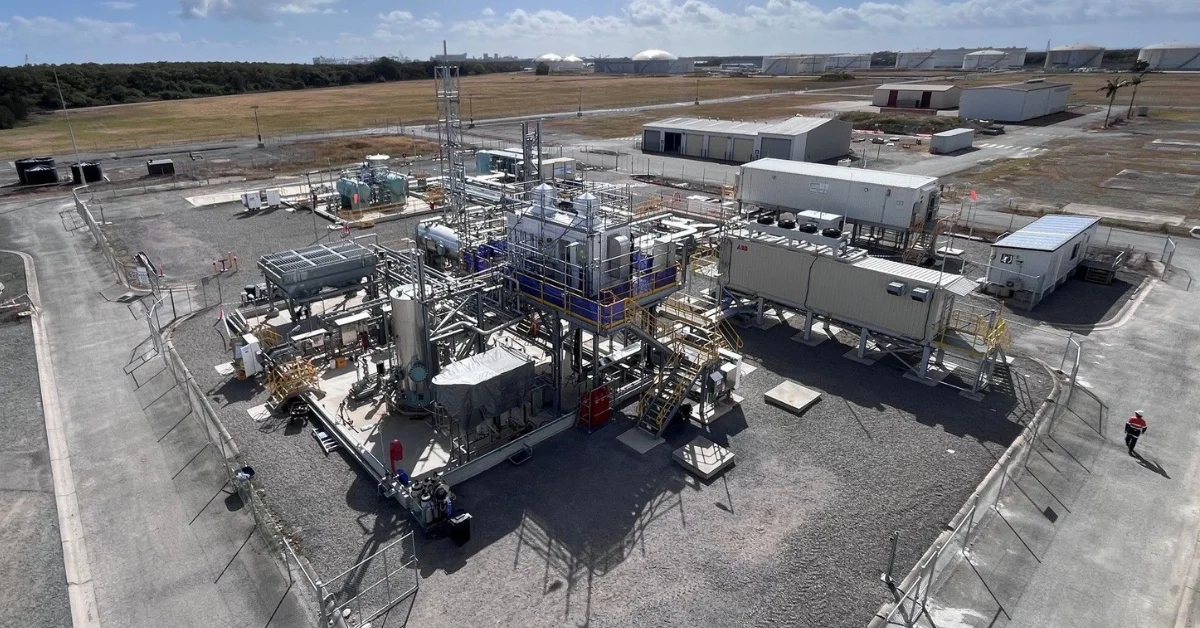
A new $200 million hydrogen demonstration facility at Bulwer Island has officially opened, bringing Japanese energy technology to Brisbane as its developers prepare to test a potential pathway for supplying hydrogen to international markets.
Read: Viva Energy Opens Pinkenba SAF Hub to Help Cut Aviation Emissions at Brisbane Airport
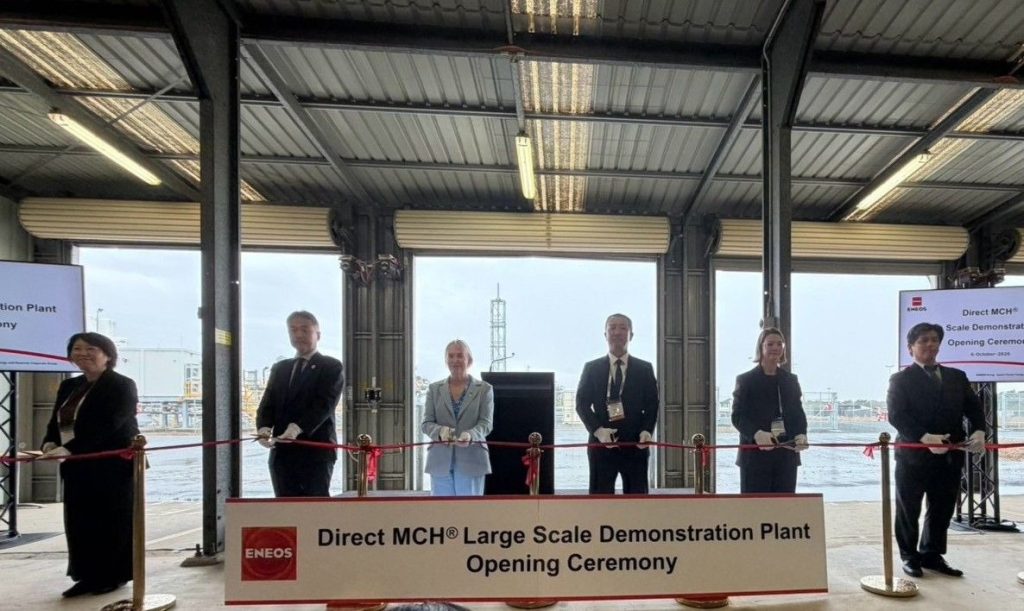
Japanese energy company ENEOS held an opening ceremony at the Brisbane site on October 6, marking another step in its efforts to develop a more cost-effective way to produce and transport hydrogen.

The facility is designed to demonstrate ENEOS’ proprietary Direct MCH technology, which uses electricity, water and toluene to produce methylcyclohexane (MCH), a liquid carrier capable of storing hydrogen at normal temperature and pressure. The project aims to gather technical data needed to assess whether the technology can be commercialised and used in larger-scale hydrogen supply chains.
ENEOS expects the facility to support more than 100 specialist jobs across Queensland over the life of the project, according to the Queensland announcement.

A Different Approach to Hydrogen Transport

ENEOS says green hydrogen produced using renewable energy could play a role in achieving a carbon-neutral society. However, reducing the cost of producing and transporting hydrogen remains a significant challenge.
The company is testing whether its Direct MCH process can help address some of those barriers. Under conventional methods, hydrogen produced through water electrolysis must be stored and then reacted with toluene to form MCH. ENEOS’ technology combines the process into a single electrochemical reaction, using electricity to produce the liquid hydrogen carrier.
The resulting MCH can be stored and transported at normal temperature and pressure. This allows hydrogen to be carried in liquid form without requiring it to be handled as highly compressed or liquefied hydrogen gas.


According to ENEOS, MCH can carry the equivalent hydrogen in about one-500th of the volume required by hydrogen gas. The company aims to use this approach to lower costs across the supply chain. A portion of the project’s MCH production is intended for Japan, linking the Brisbane facility to a potential overseas supply chain.
Demonstration Operations Planned for 2027
Trial operations will take place before the facility begins its planned demonstration operations in January 2027. ENEOS expects the demonstration period to run for approximately two years.
The plant is designed for a maximum MCH production capacity of nine tonnes per day and will use an electrolyser approximately eight times larger than the unit deployed in the company’s previous demonstration in 2023.
During operations, ENEOS plans to evaluate the technology’s performance, assess degradation behaviour and collect data on how the plant operates at this scale. The findings will help the company assess technical progress alongside economic viability and market conditions as it pursues potential commercial deployment.
The project forms part of a wider research and development initiative supported through Japan’s Green Innovation Fund, administered by the New Energy and Industrial Technology Development Organisation.
Read: Pinkenba Emerges As The Future Home Of A New Steel Mill
Bulwer Island is now home to a demonstration project testing how hydrogen can be converted into a liquid carrier for transport between countries. Whether ENEOS’ technology can deliver a commercially viable supply chain will depend on the results gathered during the upcoming demonstration period.
Published 12-October-2026