Nundah Man Secures $200,000 Windfall on His Birthday

A local man from Nundah has received the ultimate birthday gift in the form of a $200,000 windfall that will fund a long-awaited medical procedure.


The local man received the news of his luck through a phone call on Friday, 13 February 2026. The timing was particularly special as the announcement coincided exactly with his birthday. The North Brisbane resident had purchased an entry into the Lucky Lotteries Mega Jackpot 1767, which resulted in a first-place win of $200,000. Upon hearing the news, the winner expressed total shock and noted that his heart was racing from the excitement. 

He mentioned that he had originally intended to have a very quiet evening at home, but the unexpected financial boost meant those plans would likely change to something more celebratory.

While many might look toward luxury cars or overseas holidays, this winner has a very specific and practical goal for his windfall. He shared that he has wanted to undergo a major dental procedure for a long time but had been held back by the potential expense. With the $200,000 now secured, he intends to finally book the work to get a new set of teeth. 


He explained that being able to afford the dental work without any financial stress was a dream come true. The man described the situation as a beautiful way to mark his birthday and expressed deep gratitude for the win.

Published Date 27-February-2026

Nundah Two-Bedroom Apartment Smashes $1M in Suburb Milestone

When Apartment 603 at 1 York Street sold for more than $1 million, it joined a very short list — becoming one of the highest prices ever paid for a two-bedroom apartment in Nundah, a suburb where only a handful of units have cracked seven figures.


Read: Nundah Windfall Win Among Back-To-Back Brisbane Region Results


In a market that has delivered strong results across Brisbane in recent years, this one still stood out. The sale unfolded during a busy auction weekend across South East Queensland, where 149 properties were scheduled to go under the hammer. Preliminary figures from Domain recorded a 54.5 per cent clearance rate from 99 reported results, with 14 properties withdrawn. Yet it was the Nundah two-bedder auctioned by Ray White that drew particular attention.

Photo credit: Ray White New Farm

Bidding reportedly opened in the $700,000s before climbing steadily past reserve and eventually breaching the $1 million mark, which is a rare feat for a two-bedroom apartment in the suburb. According to Domain’s latest House Price Report, Nundah’s median unit price now sits at $715,000, representing a 19 per cent increase over the past 12 months. Five years ago, the median was $385,000 — underscoring the scale of change.

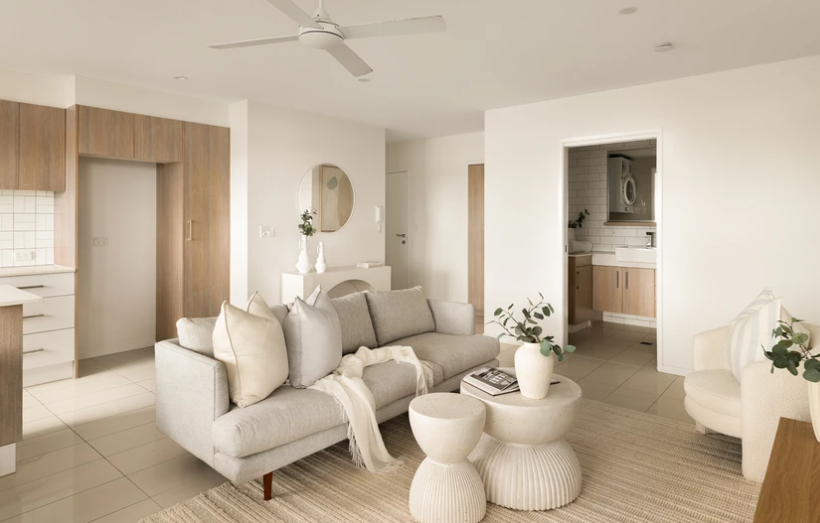
The property itself helps explain the strong competition. Apartment 603 is positioned within a modern complex in the heart of Nundah Village. The residence features two well-proportioned bedrooms, including a master with ensuite, alongside an open-plan living and dining area filled with natural light. 

Photo credit: Ray White New Farm

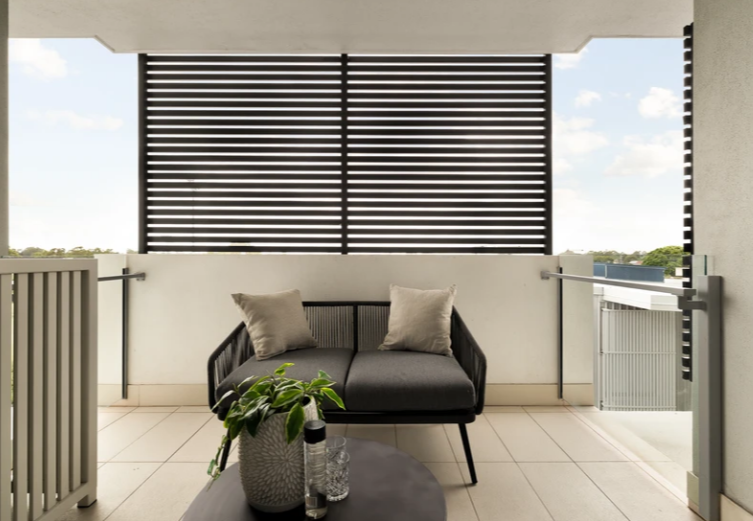
A private balcony extends from the living space, while the contemporary kitchen is fitted with quality appliances and ample storage. The layout includes a main bathroom with integrated laundry, secure car accommodation and additional internal storage, with lift access servicing the building. Its location, which is just moments from cafés, shops and public transport, places it squarely within the walkable village precinct that has become central to Nundah’s appeal.

Photo credit: Ray White New Farm

Nundah, located about eight kilometres north of the CBD, has steadily evolved over the past decade. Once seen as a more affordable alternative to neighbouring Clayfield and Wooloowin, it has benefited from urban renewal projects, improved infrastructure and the continued revitalisation of Nundah Village. Rail connectivity, proximity to the Airport Link tunnel and access to major arterials have further strengthened its appeal.

Brisbane’s broader market performance provides context. Since the pandemic, the city has experienced significant value growth, fuelled by interstate migration and comparatively affordable housing relative to Sydney and Melbourne. While higher interest rates have prompted some buyers to reassess borrowing capacity, activity remains steady, particularly for well-presented properties in tightly held pockets.

For local homeowners, the seven-figure result will likely be seen as a milestone, a tangible proof that Nundah has come of age. For first-home buyers, it may signal a narrowing window of opportunity in a suburb once prized for its relative affordability.


Read: Brisbane City Plan Update: Nundah Avoids Height Increase but Faces Housing Review


Whether the $1 million two-bedder proves to be an outlier or a sign of more to come, the benchmark has now been set. And for Nundah, that benchmark speaks volumes about how the suburb is viewed — not as an underdog, but as a confident inner-north contender firmly on Brisbane’s property map.

Published 19-February-2026

$940M Quantum Computer Project at Brisbane Airport Faces Delays as Consultation Period Stalls

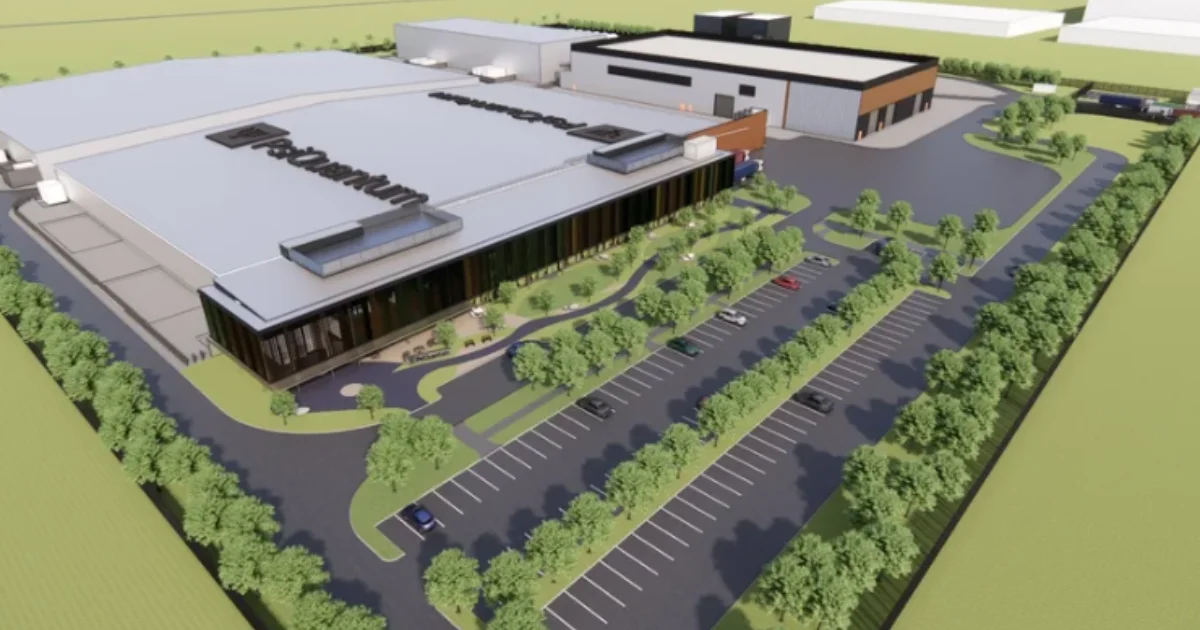
More than a year after it was scheduled to begin, construction of a $940-million quantum computing facility at Brisbane Airport has remained stalled, with the site remaining vacant as regulatory hurdles continue to push back the timeline for Silicon Valley tech firm PsiQuantum’s project.


Read: Brisbane Airport Industrial Precinct Set to Become Global Quantum Hub


The 13-hectare site tucked behind the airport was scheduled to see construction activity in 2025, but the land remains empty with no indication of when work might commence. A mandatory two-month public consultation process—the first step in securing Commonwealth approval—has yet to start, which may affect PsiQuantum’s stated target of completing the facility’s infrastructure by 2027.

Federal and state authorities have committed $470 million each to the venture through share purchases, grants, and loans. The project aims to establish what PsiQuantum describes as the world’s first commercially useful, fault-tolerant quantum computer.

Photo credit: PsiQuantum

The location behind Brisbane Airport was selected for its strategic advantages. Proximity to the Port of Brisbane enables transportation of large computing components, whilst high-capacity power infrastructure can support the energy-intensive operations required for quantum computing.

Brisbane Airport Corporation, which leases the land from the Commonwealth, must submit a major development plan before any construction activity can begin. That process cannot proceed until public consultation concludes and submissions are reviewed—steps that remain pending.

When questioned about the timeline during Senate estimates hearings in October, the federal Department of Industry, Science and Resources indicated it had not prepared contingency plans for delays extending beyond 2025.

Photo credit: PsiQuantum

Brisbane Airport’s Scott Norris, executive general manager for commercial operations, verified the airport’s engagement with PsiQuantum on precinct matters but did not elaborate on delay factors.

PsiQuantum has stated the project remains on track despite the visible lack of activity. A company spokesperson noted the importance of following proper development approval processes, indicating that construction will begin once Brisbane Airport receives the necessary permissions.

Behind the scenes, preparatory work continues. Engineering consultancy Jacobs has finalised the schematic design for the complex, whilst construction firm Lendlease has been engaged early to provide expertise on buildability and logistics.

The facility’s design is substantial in scope and technical complexity. Plans include a main office building, quantum computing operations buildings housing hundreds of cryogenic cabinets containing silicon photonic chips, and an enormous cryoplant that will maintain temperatures of minus 269 degrees Celsius, a mere four degrees above absolute zero.

That cryoplant, described as a critical component of the facility, is currently being manufactured in partnership with Linde Engineering and remains scheduled for delivery in 2027. The company has indicated building completion is still targeted for that year, with the quantum computer becoming operational several years later.

The project centres on quantum computing technology with potential applications in drug discovery, materials science, and complex system modelling. If completed as planned, the facility would position Queensland as a participant in quantum computing infrastructure development.

Queensland Treasurer David Janetzki has said the Crisafulli administration, which reviewed and ultimately proceeded with the agreement, expects PsiQuantum to fulfil its commitments. The venture is projected to generate up to 400 technology jobs in Brisbane.

Meanwhile, PsiQuantum’s related project at Griffith University’s Nathan campus faces its own timeline adjustments. A test and validation laboratory originally scheduled to open in 2025 has been rescheduled to May due to renovation work tied to broader building upgrades. That facility will feature a custom cryostat, described as one of Australia’s most powerful cryogenic systems, for testing quantum components before their integration into the main computer.


Read: Quantum Cooling Facility to Power Computer Project Near Brisbane Airport


The company has been expanding its Brisbane presence, establishing local headquarters in the CBD last year. Recent leadership transitions saw Australian co-founder Jeremy O’Brien move from chief executive to executive chairman, with industry veteran Victor Peng stepping in as interim CEO.

As 2026 progresses, observers are watching to see whether PsiQuantum can navigate the regulatory process in time to meet its 2027 construction deadline. The vacant site at Brisbane Airport remains a visible indicator that Australia’s largest quantum computing investment has yet to commence construction.

Published 17-February-2026

Mary MacKillop College Names 2026 College Captains In Nundah

Two students at Mary MacKillop College in Nundah have been selected to lead their school community in 2026 as part of Brisbane Catholic Education’s annual student leadership appointments.


Leadership Appointments Announced For 2026

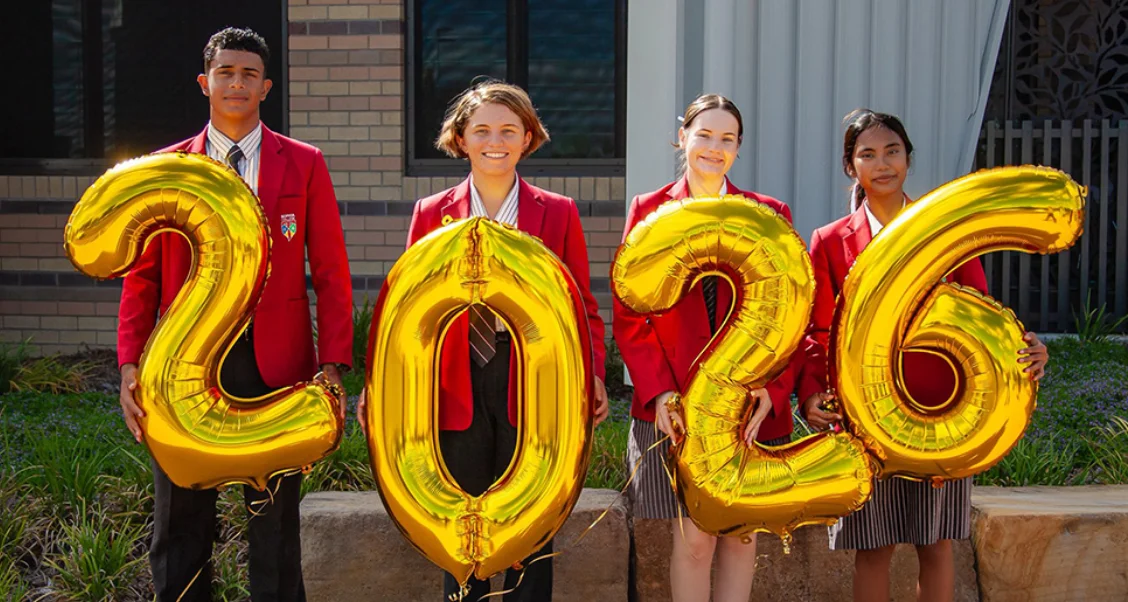
Mary MacKillop College in Nundah has appointed Isabella and Giselle as its College Captains for the 2026 school year.

The announcement was included in Brisbane Catholic Education’s update published on 11 February 2026, marking the beginning of the academic year across its 146 schools in South East Queensland. A total of 86 College Captains were confirmed across secondary and Prep to Year 12 camp

Integrity Theme At Mary MacKillop In Nundah

For 2026, Mary MacKillop College in Nundah has adopted Integrity as its annual theme. The newly appointed captains outlined a focus on encouraging collective responsibility among students and within the broader college community throughout the year.

Brisbane Catholic Education
Photo Credit: Brisbane Catholic Education

The appointments form part of the wider leadership announcements made across Brisbane Catholic Education secondary schools for 2026.

About Mary MacKillop College, Nundah

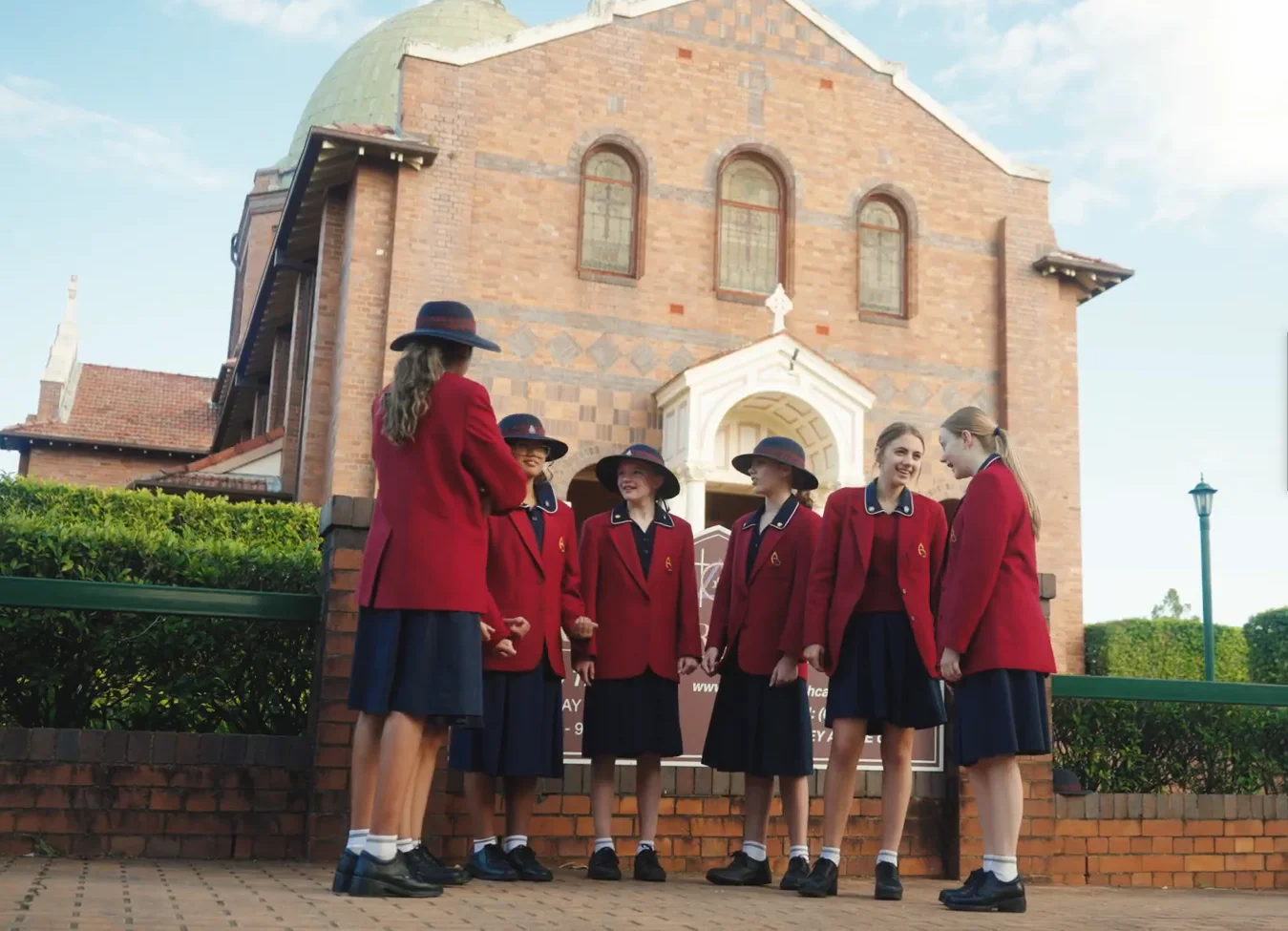
Mary MacKillop College is a Catholic girls’ secondary college for Years 7 to 12 located at 60 Bage Street, Nundah QLD 4012. The college was founded by the Sisters of St Joseph and serves approximately 500 students.

The school outlines a commitment to supporting students’ intellectual, physical, social and spiritual development. It delivers a diverse curriculum and operates a one-to-one laptop program, with each student provided access to a computer for learning.

In addition to standard classroom programs, the college offers extended opportunities including social justice initiatives, university studies, work placements, school-based apprenticeships and traineeships. Students are supported through a Learning and Enrichment Faculty, as well as access to a Career Advisor and Counsellor.


Brisbane Catholic Education’s 2026 announcement confirms student leadership appointments across its network as the school year commences, with Mary MacKillop College in Nundah among those represented.

Published 16-Feb-2026

New Seminarians Welcomed At Holy Spirit Seminary In Banyo

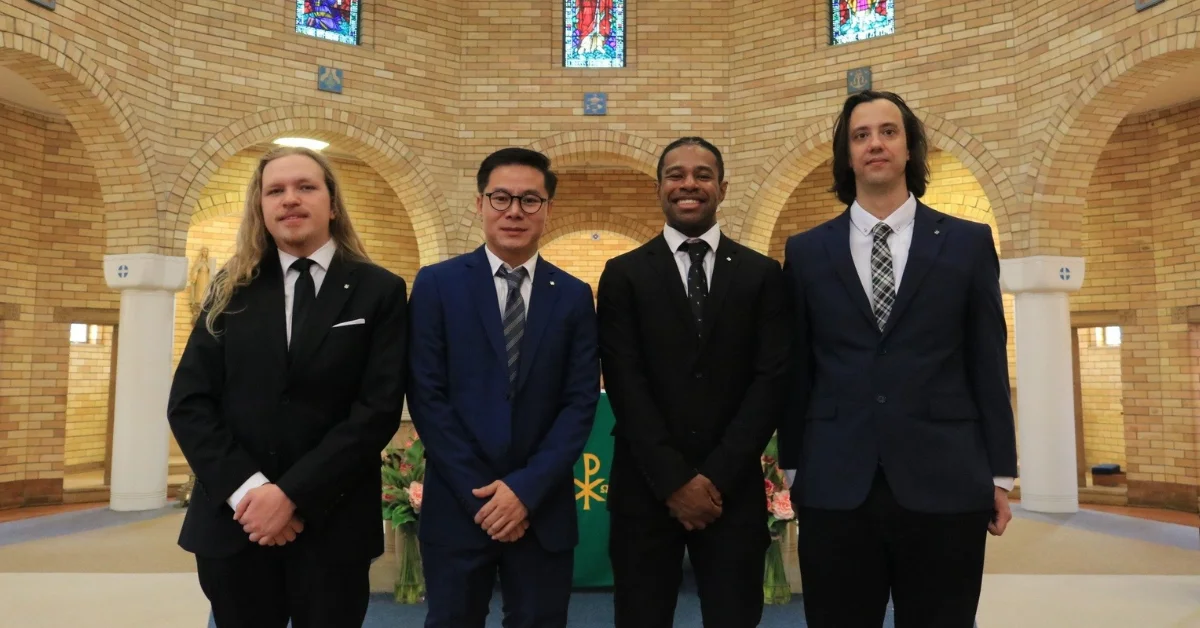
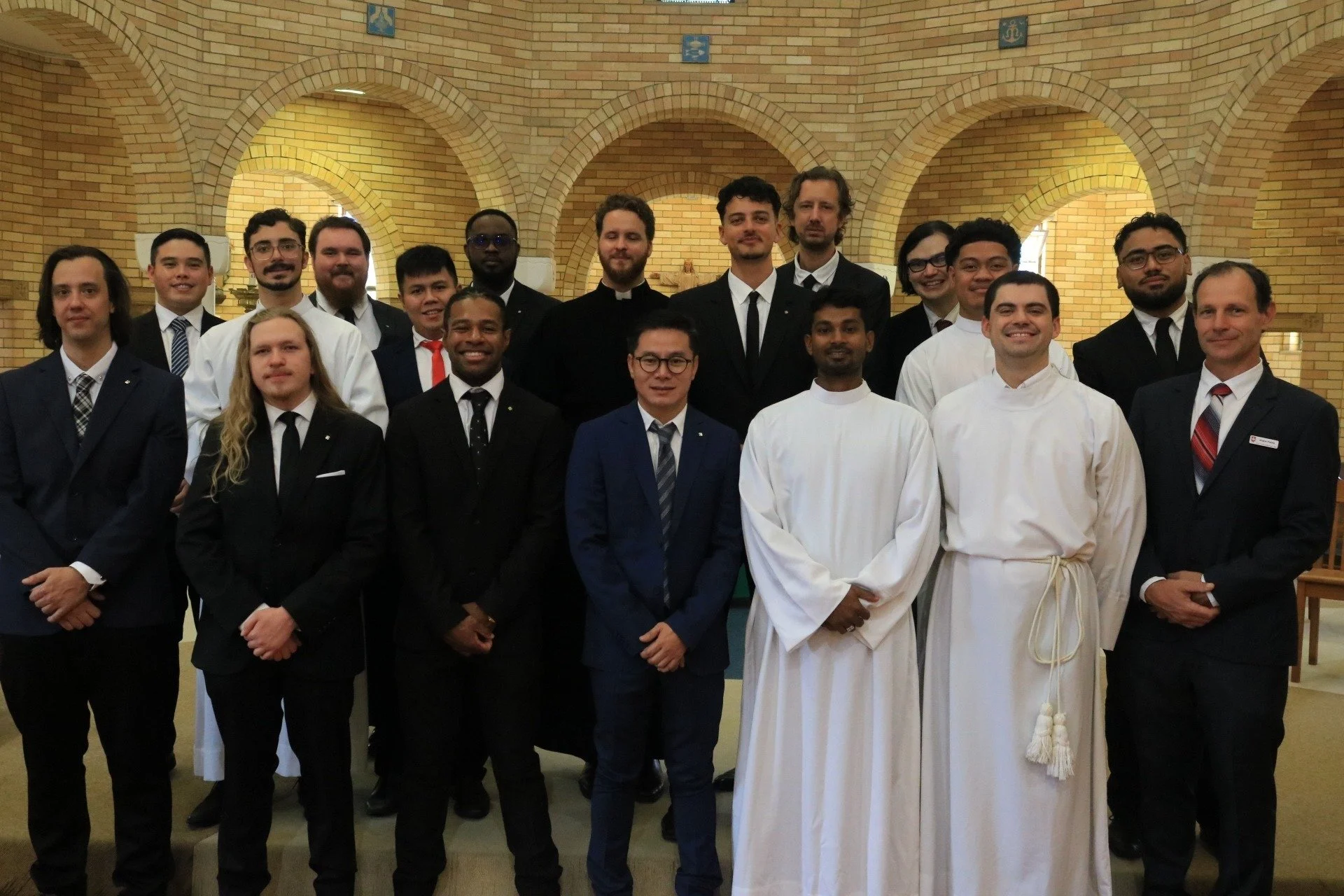
Four men have entered Holy Spirit Provincial Seminary in Banyo and were welcomed during a Mass marking the beginning of their formation.


Welcome Mass At Banyo Seminary

Noah Keenan, Daniel Pietrobon, Vincent (Phu Quoc) Nguyen and Xavier Mape were welcomed into Holy Spirit Provincial Seminary at the annual opening Mass held this week.

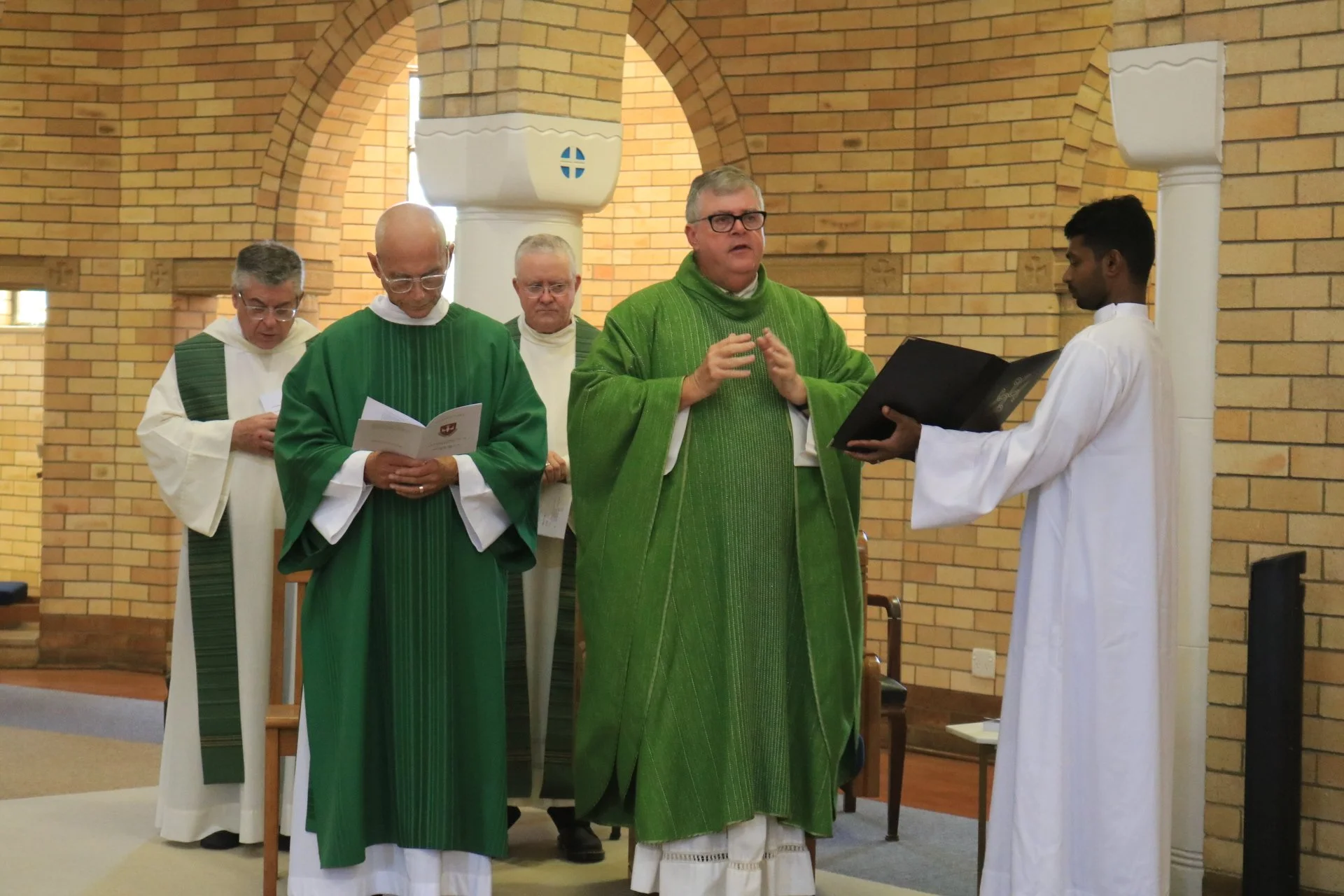
A Welcome Mass was celebrated at the Holy Spirit Chapel to mark the occasion. Families, friends, formators and supporters gathered for the liturgy as the four men began their journey of faith and formation in Banyo.

 Holy Spirit Seminary
Photo Credit: Archdiocese of Brisbane/Facebook

Focus On Faith And Discernment

Seminary rector Fr Neil Muir addressed the congregation during his homily, reflecting on the meaning of faith lived in community.

He spoke about the call to be a gift in the world and used the imagery of salt and light to describe how faith should influence daily life. He also emphasised that seminary life is not separate from the realities of the wider community, but part of a process of discernment and growth.

The new seminarians were encouraged to recognise their gifts and continue responding to their vocation through formation.

Banyo seminary intake
Photo Credit: Archdiocese of Brisbane/Facebook

Seminary Community And History

There are 19 seminarians in formation this year, described as sustained growth in the Brisbane archdiocese.

Holy Spirit Provincial Seminary has been a place of formation since 1939. The Banyo seminary community now includes the four new entrants alongside those already undertaking formation.

Community Support

Public messages shared online offered congratulations and prayers for the four men. Supporters expressed encouragement as they begin this new stage of preparation for the priesthood at the Banyo seminary.


The Welcome Mass formally marked the start of their formation year within the seminary community.

Published 12-Feb-2026

Todd Winther of Nundah Advocates for Mandatory Fire Sprinklers in Disability Housing

Todd Winther, a 42-year-old Nundah resident with cerebral palsy, leads advocacy efforts to mandate fire sprinklers in all Specialist Disability Accommodation properties across Australia, citing severe safety risks for residents unable to evacuate independently during emergencies.


Winther lives in a two-bedroom, two-bathroom High Physical Support SDA property in Nundah, approximately 15 minutes north of Brisbane CBD. His home includes water sprinklers, but he describes the terror of knowing such safety features remain optional rather than mandatory in disability accommodation despite residents’ heightened vulnerability.

The wheelchair user cannot get out of bed independently and acknowledges that even when mobile, evacuating his apartment would take considerable time. Fire sprinklers provide another safety barrier for someone unable to handle fire extinguishers independently, yet current regulations only recommend rather than require these systems.

Disability Community Fire Risk

People with disability face disproportionate risk from residential fires. A 2019 Bushfire Cooperative Research Centre report found that 62 per cent of Australians who died in preventable residential fires between 2003 and 2017 had a disability, despite this group comprising a much smaller proportion of the overall population.

More than 15,500 NDIS participants currently live in SDAs designed to help them live more independently, according to the NDIS Quarterly Report released in September. These properties house residents with extreme functional impairment requiring very high support levels, yet fire sprinklers remain recommended rather than required.

Current SDA design standards mandate smoke alarms in bedroom and living spaces alongside evacuation plans. However, sprinklers carry recommendation status only. The National Disability Insurance Agency confirmed SDA design standards are under review, with outcomes expected later this year.

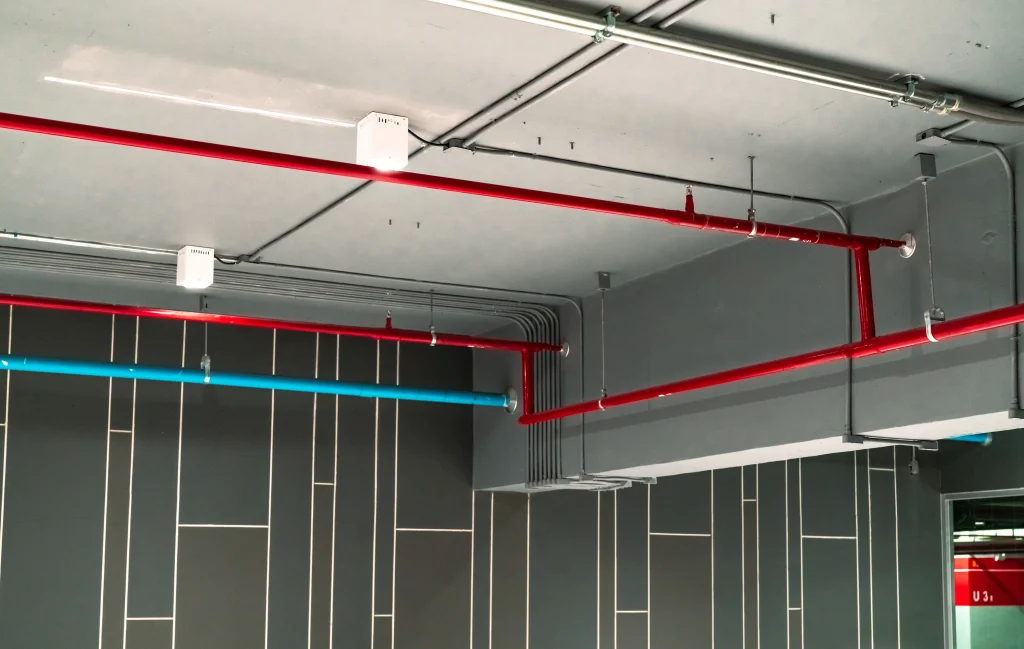
fire sprinkler
Photo Credit: Vecteezy

Advocacy Campaign and Technology Effectiveness

The Specialist Disability Accommodation Alliance, led by CEO Jeramy Hope, has called for mandatory home fire sprinklers and interconnected smoke alarms across all SDA properties. Hope reports that SDA residents express fear at night, knowing inadequate safety measures could prove fatal.

The alliance positions fire sprinklers as proven technology costing between $5,000 and $20,000 per dwelling. Hope characterises this as fairly inexpensive implementation that prevents people with disability dying in their homes.

Mark Whybro, chair of Home Fire Sprinkler Coalition Australia and former assistant commissioner of Fire and Rescue New South Wales, advocates for the same regulatory changes applied to aged care following the 2011 Quakers Hill nursing home fire that killed 11 elderly residents. Whybro successfully campaigned for retrofitting sprinklers in residential aged care in New South Wales, which subsequently became mandatory nationally under the National Construction Code.

smoke alarm
Photo Credit: Vecteezy

Smoke alarms alone provide approximately 50 per cent improvement in surviving typical house fires whilst doing nothing to suppress blazes. Home fire sprinklers deliver around 90 per cent improvement in surviving house fires by managing flames to allow evacuation.

Modern fires involving plastics, synthetics, and polystyrene foam can engulf entire rooms in two to three minutes. Fire sprinklers manage fire spread to allow people to exit safely, particularly critical for residents requiring assistance or using mobility devices.

Background and Advocacy

Todd Winther works as NDIS subject matter specialist, providing training for service providers on housing policy, best practice, and the social model of disability. His professional expertise combines with personal experience as NDIS participant receiving approximately 7 hours per day of support through core funding, plus Supported Independent Living funding of approximately $140,000 annually.

His SIL funding operates under the Concierge model, where funding across tenants of 10 high physical support apartments combines to enable emergency on-call response mechanisms outside core hours. This represented the first time Winther could choose where he lived with consumer power to determine the best options.

Winther authored the Australian Disability Dialogue on Housing discussion paper in 2023, examining how housing and living supply responses can be more innovative and aligned with participant needs. The paper explores foundational principles of choice, change, community, and cost-benefit in disability housing.

His discussion paper identifies that only 6 per cent of NDIS participants receive purpose-built accommodation or SDA funding. The work questions how legacy group housing models can transform into systems offering real choice and control.

Living in SDA has transformed Winther’s life, enabling full-time employment and independent living that facilitated meeting his wife. Without disability accommodation, he would likely still be living with parents. Winther emphasises SDAs as one of the most important parts of the NDIS, stressing the need for enhanced safety measures including mandatory fire sprinklers.

NDIS Housing Context

Todd Winther’s discussion paper examines tensions between choice and control for people with disability and commercial imperatives to deliver sustainable supports. The number of NDIS participants with housing and living supports has doubled in the last four years, creating opportunities for investment whilst supply lags behind demand.

SDA active participants increased 18 per cent annually over three years, reaching 22,680 as of March 2023. Average plan budgets increased approximately 12 per cent per annum, leading to total SDA supports rising around 31 per cent annually from $156 million to $353 million. The Australian Disability Dialogue framework identified design challenges focusing on participant voice, community connections, models that people want, and long-term economic independence.

Nundah and Fire Safety Advocacy

Nundah, located approximately 8 kilometres northeast of Brisbane CBD, developed as railway suburb following the 1882 opening of Nundah railway station. Public transport access via the station and multiple bus routes enables residents with mobility requirements to access Brisbane services.

The suburb’s relatively flat topography and established footpath network support wheelchair accessibility. Proximity to medical services, shopping facilities, and community amenities creates suitable environment for independent living through NDIS supports.

Specialist Disability Accommodation Alliance continues advocacy efforts whilst awaiting NDIA design standard review outcomes, urging immediate action to mandate fire sprinklers in all SDA properties.


Published 08-February-2026.
Banyo Land Sale Puts 400 Homes on the Table

A six-hectare block on Blinzinger Rd in Banyo, once used as an Energex depot and left idle for about a decade, will be the first site brought to market under the new Land Activation Program. The site, which sits close to transport links, shops and schools, is expected to deliver up to 400 new homes and is being promoted as a way to lift housing supply more quickly in Brisbane’s north.


The Banyo site covers just over six hectares and has remained fenced and unused despite growing demand for housing in the surrounding suburbs. 

Program material published by Economic Development Queensland states the land is suitable for residential development and could support several hundred dwellings. Information about how industry participants can register interest and submit proposals is available on the Economic Development Queensland Land Activation Program page.

How the Program Works

The Land Activation Program allows private developers to identify under-used public land and register interest in building housing, while public agencies are expected to flag sites that are no longer required for operational use. Economic Development Queensland will assess proposals to determine whether land is genuinely surplus and suitable for housing, with additional sites expected to be released across the state following the Banyo rollout. 

Details of the program were published through an official statement outlining the aim of accelerating land supply and reducing delays tied to planning and approvals.

The Key Flashpoint: Affordability

Unlike earlier land partnership models, the current approach does not require social or affordable housing to be included when sites are sold to private developers. Supporters of the program argue that removing these conditions allows housing to be delivered faster and at lower upfront cost. 

Critics say the absence of affordability settings means the plan is unlikely to help households on low incomes or those waiting for social housing, particularly as prices and rents continue to rise.

Why the Approach Has Shifted

The move follows reporting on a KPMG review of the former Ground Lease Model, which found the approach would have required significant public funding while delivering a limited number of homes. That analysis estimated a cost of $1.7 billion for 715 dwellings, prompting a shift toward a market-led strategy focused on releasing land rather than subsidising rents. 

Property forecasts cited in recent reporting warn Brisbane home values could continue climbing, intensifying debate about whether increased supply alone will ease affordability pressures.

History of the Energex depot site in Banyo

The site on Blinzinger Rd in Banyo has a long industrial past tied to the electricity network in Brisbane’s north. A public notice about remediation works states that the facility was originally built for the electricity arm of Brisbane City Council and was later transferred to the former South East Queensland Electricity Board in 1977, before becoming known locally as the Energex Banyo depot. 

The property operated from the 1950s until 2007, including use as an electrical transformer refurbishment facility. It was listed under Queensland’s Environmental Management Register due to its historical use for oil storage.


Planning material within Brisbane’s City Plan neighbourhood plan documents flags the Blinzinger Road precinct and notes housing outcomes tied to the site’s future once it was no longer needed for its former purpose.  Separately, an industry project page on a replacement distribution centre states that the new facility was intended to replace the ageing Banyo operation for warehousing needs, supporting the view that activities shifted away from the Banyo depot over time. 

Published 3-Feb-2026

Nundah Windfall Win Among Back-To-Back Brisbane Region Results

A Nundah windfall win has delivered a $1 million division one prize after a ticket purchased in the suburb secured the top result in a national weekday draw.


Nundah Windfall Win Confirmed In Weekday Draw

The division one entry was recorded in Weekday Windfall draw 4655, conducted on Friday 23 January 2026, with a total prize of $1 million.

The marked 16-game entry was purchased at TSG & Lucky at Nundah News, Shop 9, 89 Buckland Road, Nundah.

The winning numbers for draw 4655 were 2, 1, 37, 23, 20 and 32, with supplementary numbers 39 and 19.

Across Australia, there was one division one winning entry in that draw, recorded in Queensland.

Nundah windfall win
Photo Credit: Pexels

Early Retirement Plans Following Nundah Windfall

The Nundah resident indicated the outcome would allow him to bring forward plans to retire. He intends to continue working through the year before stepping away from employment.

He also outlined plans to travel overseas to visit extended family in Vietnam, including his mother-in-law.

Buckland Road Nundah
Photo Credit: Pexels

Second Brisbane Region Win In Weekend Draw

The weekday result was followed by another division one outcome in Saturday Gold draw 4645, conducted on Saturday 24 January 2026.

A Logan woman held one of five division one winning entries nationally and received $1,286,602.77. Her entry was purchased at Slacks Creek Discount Drug Store, 1/268 Kingston Road, Slacks Creek.

The winning numbers for draw 4645 were 29, 24, 22, 33, 28 and 8, with supplementary numbers 27 and 19. Nationally, five division one entries were recorded — two in New South Wales and one each in Queensland, Victoria and South Australia.

What Happens Next


Both winners are expected to proceed through standard prize claim processes. No identifying details have been released.

Published 18-Feb-2026

Speed Awareness Monitors Back on Duty as Nundah Students Return to School

The familiar sight of ‘Slow for SAM’ (Speed Awareness Monitors) signs has returned to streets around Nundah as thousands of Brisbane students head back to school, with speed awareness monitors working overtime to protect children during the busy morning drop-off and afternoon pick-up periods.


Read: How Campus Life Helps Young Adults with Disability Transition to Work and Study


For parents navigating the school run along Nudgee Road and surrounding streets, the bright yellow signs serve as a crucial reminder to ease off the accelerator. It’s a message that couldn’t be more relevant to local drivers—data from the past year revealed Nudgee Road in Nundah recorded one of the most shocking speeding violations across Brisbane’s entire monitoring network, with one driver clocked at 187km/h in a 60km/h zone.

What are SAMs?

Buckland Rd, Nundah (Photo credit: Google Street View)

Speed awareness monitors, or SAMs, are designed to encourage drivers to slow down by displaying real-time speed feedback. Brisbane now operates more than 250 SAMs across over 800 locations throughout the city. One hundred of these monitors are permanently positioned around schools, forming a dedicated network focused on protecting students during school hours.

Unlike speed cameras, SAMs don’t issue fines or capture number plates. Instead, they display speed information to encourage immediate behaviour change.

Proven Results Across Brisbane

Brisbane’s dedicated school zone speed awareness monitors were first introduced in 2021, with 100 now in operation as part of Brisbane’s broader traffic safety monitoring network.

The numbers tell a compelling story about the program’s effectiveness. Since 2013, more than 1.4 billion vehicles have passed Brisbane’s ‘Slow for SAM’ signs, with the monitors achieving an average speed reduction of 6.3km/h. Between April and September last year alone, over 82 million vehicles were recorded citywide, with approximately half of speeding drivers adjusting their behaviour to travel under the speed limit after encountering a SAM.

The success stories vary across Brisbane. Drivers using Frasers Road in Ashgrove showed the most improvement, with average speeds dropping by 9km/h in a 50km/h zone. Meanwhile, motorists travelling along Leopard Street in Kangaroo Point demonstrated exemplary behaviour, with 1.66 million vehicles recorded driving at or below the school zone speed limit.

While the data captured through the ‘Slow for SAM’ program cannot be used for enforcement purposes, it provides valuable intelligence that informs police driver safety campaigns and helps identify problem areas requiring additional attention.

A Comprehensive Safety Approach

Photo credit: Facebook/BCC

The SAM initiative forms just one component of Brisbane’s comprehensive school safety program. It works alongside flashing school zone signs, high-visibility road markings, and infrastructure upgrades designed to create safer environments for students.

Since 2015, the city has installed 140 school zone signs at 70 schools with support from the State. These physical improvements complement behavioural programs aimed at reducing traffic congestion and improving safety around schools.

This year, almost 17,000 students from 30 schools across Brisbane are set to participate in the Council’s Active School Travel program, which encourages safe walking and cycling to school. The initiative not only promotes student health and wellbeing but also helps reduce the number of vehicles on roads during peak school times.

Future Improvements

Looking ahead, Brisbane’s school safety infrastructure is set for significant expansion. Safer School Precinct upgrades are rolling out across multiple suburbs, with consultation recently completed in Kedron, Mansfield, and Wynnum Manly. Work on the first Safer School Precinct in Kedron is expected to begin mid-2026, while consultation for a new Indooroopilly Safer School Precinct will commence in early 2026.


Read: Music and Arts Boost for Banyo School with New Hall Upgrade


For Nundah families, the return of SAMs to local school zones offers reassurance during what can be a chaotic time of year. As students settle back into their routines and parents navigate the school run, these unassuming yellow signs continue their quiet work—reminding drivers that a few seconds saved simply isn’t worth a child’s safety.

The message is simple: when you see SAM, slow down. It’s a small action that makes Brisbane’s streets safer for everyone.

Published 29-January-2026

Music and Arts Boost for Banyo School with New Hall Upgrade

A Banyo primary school is set to expand its creative arts capabilities with the approval of a new construction project that turns an open undercroft area into dedicated learning spaces.


Converting Space for Creativity

School
Photo Credit: DA A006768975

St Pius V Primary School has secured permission to build extensions associated with its existing Multi-purpose Hall located on Apperley Street and St Vincents Road. The approved development focuses on using the space underneath the current hall structure to create two new multi-purpose rooms. 

These additions are designed to provide a new home for music classes, which will relocate from other areas of the campus to this central hub. Alongside the classrooms, a dedicated music store will be built to house instruments and equipment securely.

Weather-Proofing for Year-Round Use

School
Photo Credit: DA A006768975

A key feature of the upgrade involves making the facility usable regardless of the weather conditions. The design, prepared by CVN Consultants, outlines the partial enclosure of the existing hall structure. 

Aluminium glass louvres will be installed on the north-western and south-eastern sides of the building. The report indicates that closing these openings will allow students and staff to utilise the hall comfortably throughout the year, protecting them from wind and rain while maintaining natural light.


Practical Campus Additions

Beyond the educational spaces, the project addresses practical needs for the school community. The plans include a new bike storage area capable of holding 40 bicycles, encouraging active transport to school. A maintenance shed will also be constructed within the undercroft footprint. The site works are strictly confined to the existing footprint of the hall, ensuring no additional land is taken up by the construction.

Published Date 15-January-2026