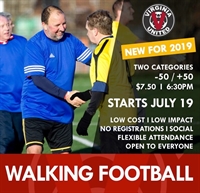
Nundah residents now have a less physically demanding alternative to staying fit and active as Virginia United FC introduces Walking Football, a slower low-impact version of soccer, beginning 19 July 2019.
Walking football is a low-impact sport with absolutely no running or jogging. However, VUFC envisions their walking football to be a more inclusive game, rather than just targeting the elderly, to include parents and their kids and everyone else regardless of gender, age, and ability.
Walking football, as a general rule, requires players to have at least one foot on the ground at all times. Participants get many benefits from playing the sport at VUFC, such as quick recovery rate, low cost, less impact compared to other sports, and flexible attendance apart from being extremely enjoyable and social.
Photo Credit: Virginia United FC / virginiaunitedfc.com.au
Playing Walking Football at VUFC is easy as there is no advance registration required and no long season commitment needed. However, VUFC only asks that you complete the name and contact email form, so you can be updated if a session is cancelled for any reason, and that’s it!
Once you arrive, just need to pay $7.50 by cash or EFTPOS at the club canteen and take your token to the coordinator on Field 3. The game is open to anyone and is divided into an under 50 and over 50 years old categories with five or six players each team. Also, games are self refereed and played on a 30-metre wide by 40-metre long grass fields, with 3-metre wide and 2-metre high goals.
So, head out to Virginia UFC at 547 Nudgee Rd in Nundah and tag everyone along! The game starts at 6.30pm and will run for one hour and 15 minutes.
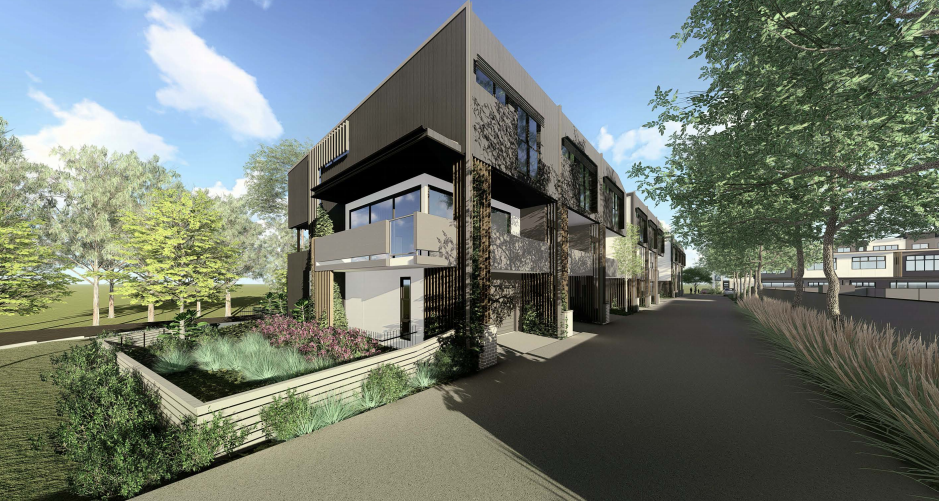
Nundah residents are urging the Council, through an online petition, to take all the necessary steps to stop the proposed development at 77 Walkers Way.
“Petitioners request Council fiercely defend its decision to reject this development in the developer’s current appeal in the Planning and Environment Court,” the online petition said.
Some of the concerns raised by the residents and supporters include :
the development area being substantially flooding affected
increased traffic and parking problems
the fact they want to build three storeys overlooking backyards
the fact this area is zoned as rural.
Photo Credit: Brisbane City Council / pdonline.brisbane.qld.gov.au
Developer Dennis Family Corporation Pty Ltd’s proposal is for a multiple dwelling comprising of 32 3-bedroom townhouses divided into clusters of 3-4 per row with a maximum building height of 3 storeys. The application also proposes the removal of the existing single detached dwelling to facilitate the development.
“The development proposes a maximum building height of 3 storeys to Hedley Avenue and the Kedron Brook Creek. Whilst it is noted that the maximum building height for the Rural zone is 2 storeys, commensurate to the surrounding low density residential development, it is considered that the proposed building height does not result in an overbearing outcome,” the Wolter Consulting Group’s Assessment Report said.
Photo Credit: Brisbane City Council / pdonline.brisbane.qld.gov.au
“This design ensures that the development is not overly bulky and reduces the visual appearance of the built form through a combination of high quality architectural design, substantial articulation and breaks in built form and landscaping treatments.”
Photo Credit: Brisbane City Council / pdonline.brisbane.qld.gov.au
On 26 April 2019, the Council refused the application because it was inconsistent with the Strategic Framework, conflicts with the relevant provisions of the Nundah district neighbourhood plan code, Multiple Dwelling code, Streetscape hierarchy overlay code, Flood overlay code, Biodiversity areas overlay code, and the Rural zone code.
In its Notice of Appeal dated 24 May 2019, DFC (PROJECT MANAGEMENT) PTY LTD said that Council’s decision to refuse the development application is “erroneous, unreasonable and unlawful… .”
On the matter of bulk and scale, the Appellant said that “the bulk, scale, form and intensity of the proposed development has been designed to integrate with the existing and intended neighbourhood structure for the area.”
The Appellant also stated that“…the proposed development is designed to safely and effectively mitigate the flood hazard in a defined flood event and that no unacceptable risks to person or property will arise.”
Residents and supporters have until 11 August to sign the ePetition, which has so far gathered 117 signatures.
Brisbane Airport currently serves more than 23 million passengers per year, which is projected to more than double by 2040. Once approved, the Master Plan will form the basis for future development of airport facilities over the next 20 years, with particular focus on the next five years.
The 2020 Master Plan’s Development Objectives are grouped into four main pillars of focus: growing aviation markets, excellence in customer satisfaction, supporting business growth, and driving economic prosperity.
Current BNE projects underway:
Brisbane’s New Runway – Once the new parallel runway opens in 2020 the airport capacity is projected to effectively be doubled.
BNE Auto Mall – Due to open as the new BNE Auto Mall, a first of its kind development that includes a test track, among other facilities, is expected to attract more visitors to the airport.
International Terminal Check-in and Domestic Terminal Retail Upgrades – The $12.6-million upgrade of check-in facilities has had four of the six check-in rows already upgraded including the provision of 96 new self-service. The Domestic Terminal retail upgrade will deliver 50 new and refurbished retail offerings.
Multi-storey Car Park – The facility will provide up to 2,800 additional parking bays.
Building Brisbane’s new runway | Video Credit: Brisbane Airport / YouTube
Some possible future projects:
Domestic and International Terminals expansion – The draft master plan aims to address that future demand with a host of expansions to extend the capacity of International and Domestic Terminals as well as identification of areas for new expansions.
Aviation Support facilities and services – To meet existing and future needs, new precincts for aviation support facilities expansion are identified including a potential airside road connection
Future Northern and Western Terminal – BNE’s development strategy for the Domestic Terminal will focus on the development of the future Northern and Western Terminals. The Future Northern Terminal could be located with direct connectivity to the cross link taxiway system and both runways, whilst the Future Western Terminal could be situated with frontage to Brisbane’s new runway.
Potential Mass Transit System – A potential airport precinct future development option is the mass transit system comprising an airside MTS connecting the Terminals; a new rail station at Skygate; and a feeder bus shuttle service to ancillary airport precinct locations.
Will there be a new terminal when the new runway opens? | Video Credit: Brisbane Airport / YouTube
2020 Brisbane Airport Master Plan Timeline:
Planning and technical studies: October 2017 – March 2018
Engagement with government and key stakeholders: March 2018 – April 2019
Public comment period: 27 May – 21 August 2019
2020 Brisbane Airport Draft Master Plan and supplementary report produced: September – November 2019
Final draft submitted to Federal Minister: January 2020
Master Plan adopted, pending Ministerial approval: January 2020
Implementation: 2020 – 2024
The final draft of the Master Plan will be submitted to the Federal Government in December 2019.
For more information about the 2020 Brisbane Airport Master Plan, click here.
The Shorncliffe line will have extra 12 train services per week out of the 430 extra weekly train services to be introduced across the South East Queensland network beginning 29 July 2019.
As announced by Queensland Rail, a total of 430 extra weekly train services across SEQ will be added, 85 of which will run in peak times and 142 will run on a Friday.
There will also be an upgrade of 59 existing services from three-carriages to six-carriages which equates to 200,000 extra seats per week. The extra services will add to the 32 weekly peak time services introduced last May 2019 and the 193 three-carriage upgrades, as well as the 46,000 extra seats added last December 2018.
The introduction of extra train services from 29 July, will restore the 8,290 services per week that was promised with the Redcliffe Peninsula Line opening, increasing current service levels by 5.5 percent.
Additional services to the Shorncliffe line:
Departure station
Departure time
Arrival station
Arrival time
Days services are added to
Central
9.13am
Shorncliffe
9.50am
Monday to Thursday
Central
6.58am
Shorncliffe
7.35am
Friday
Central
5.58pm
Shorncliffe
6.35pm
Friday (peak)
Shorncliffe
6.09am
Central
6.46am
Monday to Thursday (peak)
Shorncliffe
5.39pm
Central
6.16pm
Friday
Shorncliffe
6.39pm
Central
7.16pm
Friday
430 extra weekly train services | Video Credit: Queensland Rail / YouTube
To keep the Monday to Friday timetable consistent, a couple of changes to the service origins and departures will be implemented:
Shorncliffe service departing Central at 6.43am will depart Sandgate at 7.18am and arrive at Shorncliffe at 7.20am consistently Monday to Friday.
Friday service departing Shorncliffe at 7.28pm will now depart at a consistent time Monday to Thursday which is four minutes earlier at 7.24pm.
“Delivering a new timetable is a complex task which requires the consideration of a range of interconnected logistics beyond the availability of traincrew, including the planning, stabling and maintenance of trains, rostering and daily train movements,” Queensland Rail’s CEO Nick Easy said.
“More trains running across the network is naturally more challenging to operate, and as the implementation of these changes approaches in the coming weeks our teams will be 100 percent focused on ensuring we transition to these changes reliably.
“We hope these improvements can make a real difference to our customer’s schedules each week, providing more frequent services and more options for our customers to get to and from their commitments sooner,” Mr Easy said.
Despite going through a rapid transformation and revitalisation the past decade, Nundah has somehow managed to keep its old vibe and charm, making it a sought-after suburb for Brisbane singles.
Single households, in fact, make up almost 40 percent of the suburb’s total households — higher than the Australian composition of 24.4 percent, the ABS 2016 Census data says. The over 12,000 population of Nundah is also considerably young, whose median age is 33 and the predominant age group is between 24-29, CoreLogic’s onthehouse.com.au says.
Whilst Nundah’s village vibe is definitely its main draw card, it is also among Brisbane’s more affordable suburbs despite being just 9 kilometres from the CBD.
According to Domain’s sales data from the last 12 months, the median price for a 2-bed unit in Nundah is $346,000, dropping 3.9 percent from $360,000 in 2018 and by almost 5 percent from $364,000 in 2017.
Corelogic’s propertyvalue.com.au, on the other hand, shows that the house median sale price in Nundah within the last 12 months is $700,000 or a drop of 1.41 percent from a year ago; the unit median price likewise dropped by 6.15 percent to $366,000.
Whilst a majority of Nundah residents are renters — 59 percent as compared to owners at 41 percent — renting a unit or house in Nundah is also relatively cheap despite the rent demand.
Based on realestate.com.au listings data from 1 June 2018 – 13 June 2019, the median house rent in Nundah is $460, slightly higher than the Qld average of $400. For the same period, the median unit price per week is $375,000, $5 more than the Qld’s average.
Nundah lost its appeal as a shopping haven from the 1970s with the construction of Westfield Shopping Town Toombul that caused increased motor traffic along Sandgate Road. Eventually, most commercial establishments that closed shop were replaced by less appealing shops.
However, thanks to the construction of a road tunnel under Bage Street that diverted traffic away from Nundah’s commercial centre, as well as the government’s urban renewal program, Nundah experience a renewed vibrancy and is now emerging as one of Brisbane’s property hotspots.
A recent real estate markets analysis revealed that contrary to the common notion, the Brisbane housing market is already showing signs of recovery as many of its suburbs, including Hendra, have already achieved above-average price growth.
The latest analysis from Hotspotting’s Terry Ryder said that whilst most sources either show little or no growth, many suburbs in the Greater Brisbane area are performing exceptionally well.
Analysis of the quarterly and annual price data of 269 suburbs revealed that 83 suburbs recorded more than five percent growth, with 20 of them posting double-digit increases.
Sandgate led the list of higher-end markets that achieved annual house price growth exceeding 10 percent with its house median price of $755,000, a rise of 19 percent. Hendra also registered price growth, up by 13 percent to $1.1 million.
On the other hand, realestate.com.au sales data from 1 April 2018 to 30 April 2019 shows that the median house price in Hendra is at $1,030,000, higher than the state median price of $495,000.
Other high-end suburbs with highest annual house price growth include Graceville (13%), Bardon (11%), Kenmore HIlls (10.5%), Norman Park (10%), and Paddington (11%).
On the other hand, 100 suburbs record less than five percent growth whilst 47 posted less than five percent negative growth and the remaining 39 suburbs dropping more than five percent.
Of the 39 suburbs that posted declines of more than five percent, 27 were considered as units markets, led by Bowen Hills (-20%), Bulimba (-15%), East Brisbane (-15%), Woodridge (-10%), Greenslopes (-11%), Hamilton (-11%) and Woody Point (-18%). These figures indicate that the supply glut for the past years has not been confined to inner-city areas alone.
The analysis suggests that with the Federal Elections over and once lending restrictions ease up, the Brisbane housing market’s upward trend will become more apparent.
Plans to expand the parking options at the Nundah Rail Station will undergo a careful study with the Shadow Infrastructure and Transport.
Minister Anthony Albanese confirmed that the Federal Labor has set aside $200,000 for this study, which will be taken from the National Park and Ride Fund.
According to Mr Albanese, the current 245-parking space at the Nundah Rail Station is no longer enough to meet the demands. The car park is usually filled up as early as 7:30 a.m. during the weekdays.
“Commuters rushing to catch their trains to work are forced to park in surrounding streets and walk to the station, causing inconvenience for local residents,” Mr Albanese said.
“Public transport isn’t just about the train line or bus route itself. It’s also about the surrounding infrastructure that makes it work for local residents.”
Also being considered in addressing the parking situation at the rail stations include the purchase of more lands owned by the Council to erect car parks in Geebung and the construction a $7-million multi-storey car park at the Northgate station.
Photo Credit: Wikimedia Commons
A previous study has shown a general increase in park-and-ride commuters in Australia since the 1990s. More and more passengers are using park-and-ride spaces whether they are going to work or shopping at the nearest activity centres during the weekends.
Metropolitan Queensland has at least 152 train stations and the study also revealed that an average of 100 extra parking spaces per station may be needed to address this concern.
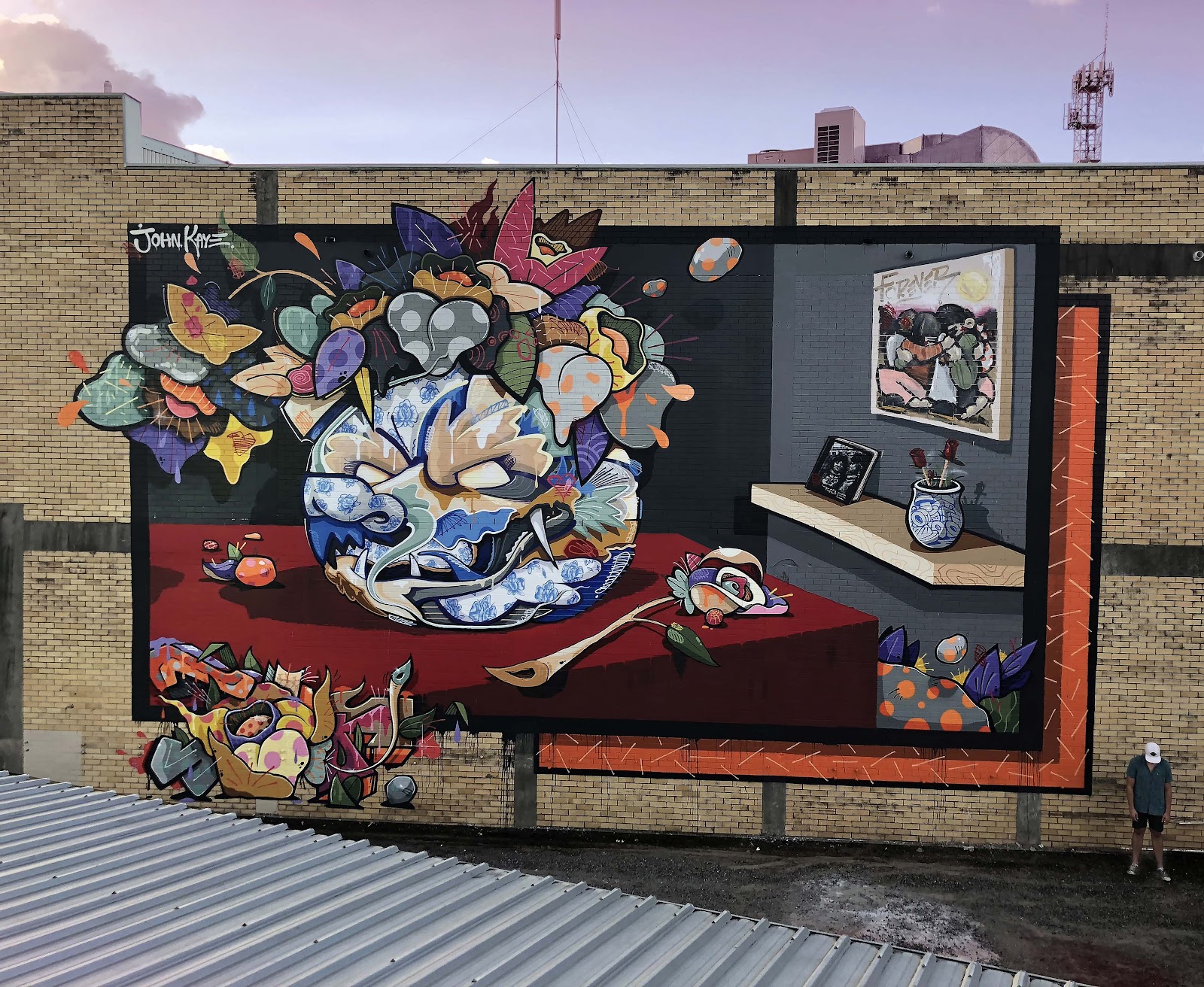
Brisbane Street Art Festival is back in 2019 bigger and better. One of the highlights of this year’s BSAF is the live painting and panel happening in Nundah this weekend.
Brisbane Street Art will set up a pop-up studio at the Toombul Shopping Centre on Saturday, 11 May from 3:30 p.m. to 5:00 p.m. for the Live Painting and Panel event.
Established mural artists will complete an artwork live, whilst a small group of participating BSAF artists converse in a panel discussion.
The participating artists will be encouraged by a mediator to elaborate on their development and experiences in the arts, and take questions from the audience.
Panellists will contribute to the painting to illustrate ideas and techniques that will be unveiled in the discussion.
For more details about the upcoming live mural event, check out the Brisbane Street Art Events Page.
Leans, a 23-year-old artist based in Brisbane, gets inspiration from his daily intake of the Internet, the people that surround him, the manmade environment, the past, the future and everything in between. He strives to create entities that can be seen by the viewer on numerous occasions and enjoyed in alternative ways on each visit.
Karri was born in Hong Kong and emigrated to Australia soon after. She is a contemporary painter and muralist living in Queensland, Australia, and is currently undertaking a Bachelor of Creative Arts (Honours) at the University of Southern Queensland.
Gus holds a Bachelor of Fine Art from the Queensland College of Art, Griffith University. He is compelled and influenced by the environment around him – the problematic high-rise development in the city, the gentrification in the suburbs, the fascinating abandoned industrial areas on the outskirts of town. These spaces are his subject matter and his canvas.
Kristopher Ho is a Hong Kong-based artist and illustrator. Born in Hong Kong and raised in Blackpool, UK, he is well known for his monochromatic and highly intricate murals and illustrations. His work has been described as both impactful with his strokes yet also filled with intricate details.
John is a self-trained Australian born painter currently based in Seoul, South Korea. He specialises in large-scale paintings with a conscious split practice that focuses on public street work and private studio work, and the separation and balance of these two worlds colliding.
Sortwo has been doing art since he was 13 years old. Born and raised in Spain, he got an appreciation for the street art around his neighbourhood and it developed into his lifestyle. Art has opened doors for him and allowed him to travel to different countries and practice his passion.
Wasp Elder is a socially engaged artist whose aim is to paint murals that communicate varying levels of history and social-poetics with people and in place. He often paints pictures populated by figures and unstressed backgrounds, enticing a sentiment of an obscure journey.
Nundah State School, found on 41 Bage Street, was built in 1892 and expanded until 1955. However, it first opened in 1865 as the German State National School, which was managed by Lutheran missionaries from Germany.
Major Cotton, then the Commandant of the Moreton Bay Penal Settlement, granted the Lutheran missionaries 260 hectares of land when they arrived in Queensland in 1838. Calling their settlement as Zion Hill, they did missionary work until 1849, when most of them turned to farming.
The missionaries then bought land in Nundah in 1848 and developed a small community. By the 1860s, the residents helped raised funds to build a German school at the corner of Buckland Road and Bage Street in Nundah.
State School with 62 Enrollees
A state-administered school was important to the colonial governments because it helped communities develop and progress. When the German school opened, it only had 62 enrollees. By the time the State Education Act, which afforded Queensland youngsters free and compulsory primary education, was passed in 1875, the number of students gradually increased.
By 1886, the German school had 118 students, which necessitated the expansion of the school building. As the facilities expanded, the student body also grew.
By the early 1890s, the German school had 200 students attending classes in three classrooms in a school property that had a verandah, a play shed, a garden and an oval for outdoor activities. The school’s name was also changed to Nundah State School.
The design for the expansion of the school’s timbre structure in the 1880s. Photo Credit: Queensland State Archives
Nundah State School, the Main Centre
Nundah’s population grew to 1,675 by 1910 and at least 342 children were attending Nundah State School at this time. Thus, the institution became the main centre of the suburb and its surrounding district. Enrollment at the Nundah State School became a priority for families even if their children were still infants.
So, infant classrooms were added and completed in the building in 1915. The school’s student body rose to 700 by the time the school year opened in 1916.
The Department of Public Works did more building expansions for the state school. Issues like classroom size, ventilation and light were addressed to ensure that the children have the best school environment.
Nundah State School During the War
Some of Nundah State School’s former students served during World War I. The school saw it fit to honour these men by planting five hibiscus trees and one Indian laburnum, to be known later as the Anzac tree, in the garden.
Following the war, more improvements to the school were done to include more sectional classrooms, a tennis court and a new playground with additional equipment. Some facilities were also relocated to align with the new layout of the school.
Renovations, however, stalled during the Great Depression in 1929. Funds to finish the school fences, leveling and retaining walls were later secured after the Queensland Government devised a program to help its constituents find work and earn a living. Part of this program prioritised the employment of skilled workers to continue building schools, hospitals, and government offices.
By 1935, Nundah State School was technically open and in operation for 70 years. The government then began the construction of the brick school building to replace the timber structure.
But then World War II happened and all state schools were ordered closed from January to March in 1942. After that, school attendance became optional as Japanese air raids took place. Like other state schools in Queensland, Nundah State School had trenches to protect the students who still opted to go to class.
Despite the war, however, improvements to the building still continued with the addition of a front driveway, a centre garden, and new lavatories. When World War II ended, Nundah State School’s enrollment escalated to 1,600. Thus, further expansion was undertaken to address the number of students choosing to go to this state school.
Nundah State School’s expansion in the 1950s. Photo Credit: Queensland State Archives The building was completed around 1955. Photo Credit: Queensland State Archives
Past 1955, other facilities were added to the school grounds, such as:
the swimming pool in 1956
the dental clinic in 1975
the prep school building in 2006
the resource centre in 2009
the school hall in 2011
double tennis courts in 2011
More commemorative trees were also planted in and around the school grounds.
A 1970 school ball at the Nundah State School. Photo Credit: Roland Ott/Facebook
Nundah State School Today
Nundah State School occupies 3.24 hectares of land in a residential community. It still stands on its original site although the school building is now a lot bigger than its original structure.
The school is regarded as one of Brisbane’s finest schools because of its facilities. It also has plenty of areas where the kids can play and participate in sports. The trees which were planted decades ago have now matured and continues to provide shade for the students.
The school was added to the Queensland Heritage Register in the 15th of July 2016 for its valuable significance to the history of education and the development of a suburb in Queensland.
Queensland Rail will add 32 weekly services to Shorncliffe, Redcliffe Peninsula, and five other lines during peak times, which means an additional 14,000 seats for customers in Northgate and across SEQ.
Beginning 13 May 2019, customers of Queensland Rail in South East Queensland can expect less waiting time as extra train services will be added Shorncliffe, Cleveland, Redcliffe Peninsula, Ferny Grove, Springfield, Gold Coast and Airport lines.
The initiative was Queensland Rail’s response to widespread customer feedback. After analyzing patronage data, wait times, and operational efficiencies, 32 priority weekly services were identified which will be added during morning and afternoon peak hours.
Monday to Friday additions
Line
Departing station
Departure time
Arrival station
Arrival time
Redcliffe Peninsula
Kippa-Ring station
7.10am
Central station
8.05am
Cleveland
Cleveland station
6.39am
Central station
7.34am
Cleveland
Central station
5.09pm
Cleveland station
6.05pm
Monday to Thursday additions to the services already running on a Friday
Line
Departing station
Departure time
Arrival station
Arrival time
Springfield
Springfield Central station
6.51am
Central station
7.32am
Shorncliffe
Shorncliffe station
7.39am
Central station
8.16am
Shorncliffe
Central station
6.58am
Shorncliffe station
7.35am
Friday additions to the services already running Monday to Thursday
Line
Departing station
Departure time
Arrival station
Arrival time
Ferny Grove
Ferny Grove station
7.25am
Central station
7.56am
Gold Coast
Varsity Lakes station
5.55am
Central station
7.14am
Airport
Central station
7.16am
Domestic Airport station
7.40am
Airport
Domestic Airport station
7.49am
Central station
8.13am
Cleveland
Central station
5.32pm
Cleveland station
6.35pm
The additional weekly train services was announced ahead of timetable improvements planned this 2019. These changes will be available in the TransLink Journey Planner website beginning mid-April.