


A 37-year-old Chermside man is set to face court later this month following his arrest over an alleged robbery at a Nundah pizza shop late Friday night.
Police allege Francis Bowman walked into the Buckland Road establishment around 11.15pm on August 29 and demanded money from the till. According to a Queensland Police spokeswoman, a staff member handed over cash before Bowman allegedly left the premises on a bicycle.
The incident was short-lived, with police locating and arresting Bowman a short time later. He has since been charged with two counts of robbery, one count of possessing suspected property, one count of failing to take reasonable care in respect of a syringe, and one count of contravening a requirement.
Bowman’s matter was briefly mentioned in Brisbane Magistrates Court on Saturday, though he did not appear in person and no bail application was made. The case has been adjourned until September 22 for committal mention.
The incident adds to concerns about crime trends in the local area. According to recent crime statistics, crime in Nundah increased by 25.66% from 2022 to 2023, with theft, drug dealing and trafficking, and burglary being the most common offences in the suburb.
The Friday night robbery occurred during what would typically be a busy period for local hospitalities, with many residents expressing concern about safety in the area’s commercial precinct.
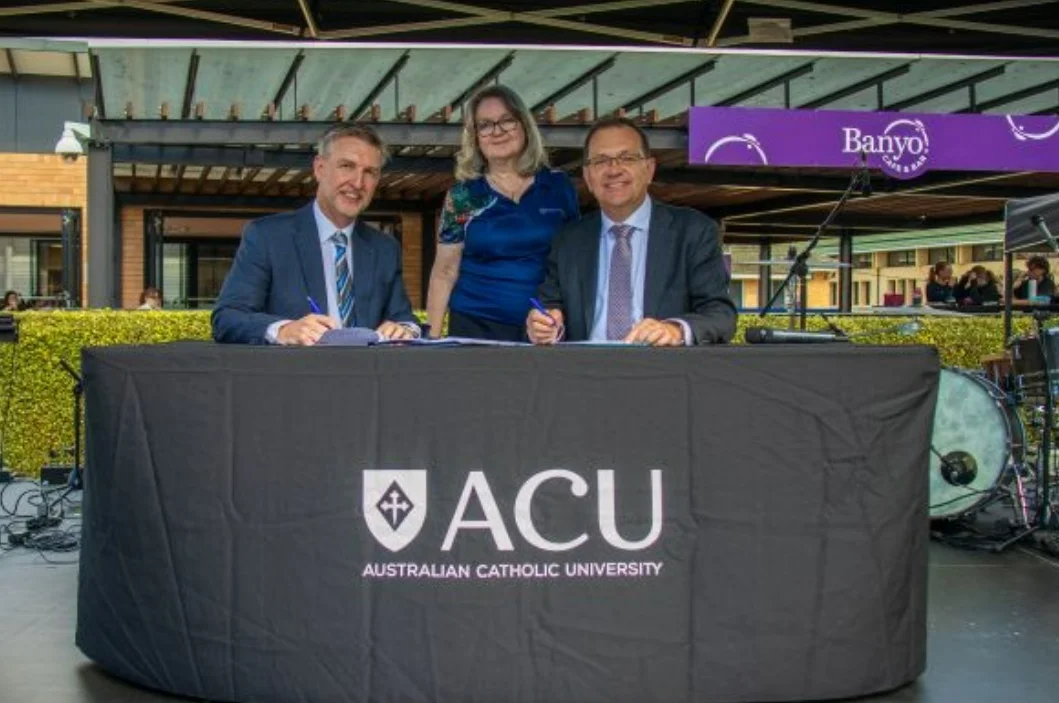
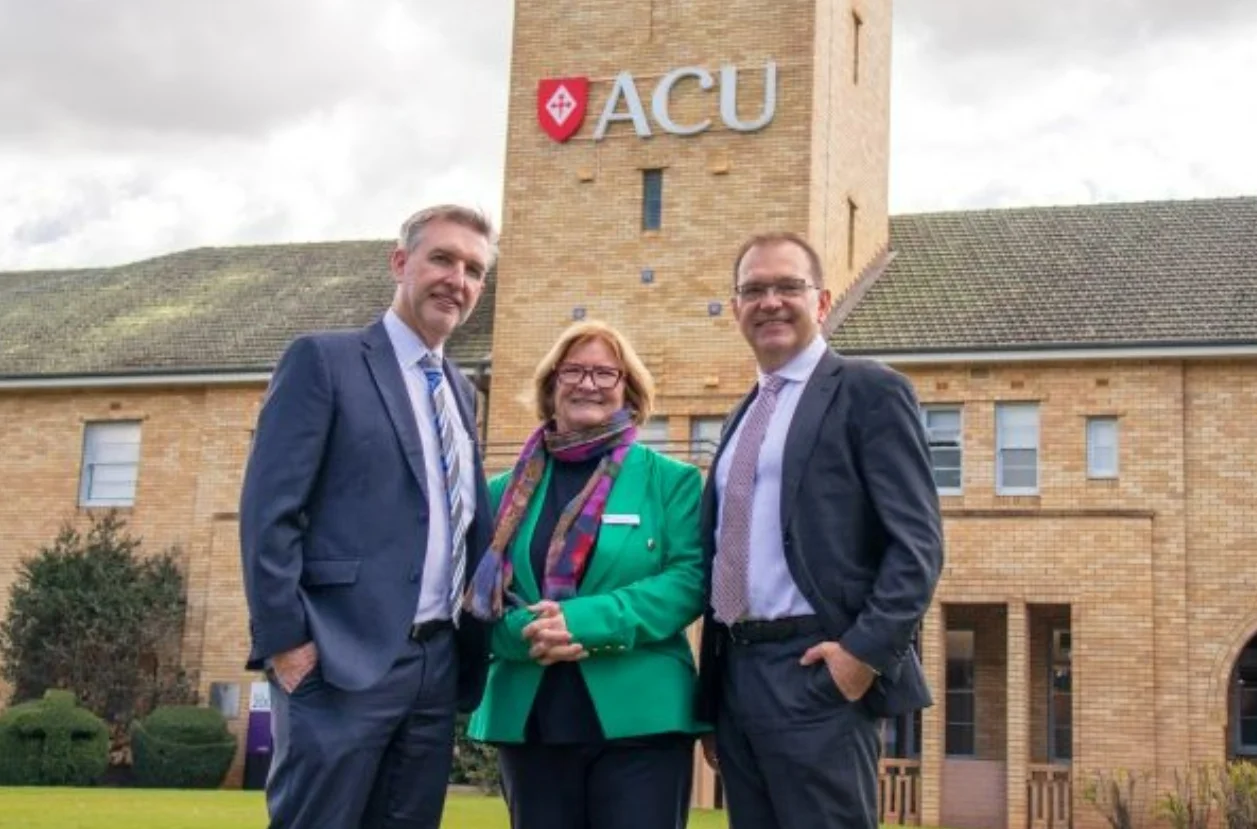
On 15 August 2025, Australian Catholic University (ACU) and the St Vincent de Paul Society Queensland formalised a partnership to establish a new campus hub at ACU’s Banyo site. The hub has been adopted as a special work of the Society’s Banyo Conference, connected to the Banyo-Nundah Catholic Parish. This marks the first time the Society has created a formal hub on an ACU campus.
Photo Credit: ACU
Purpose of the Hub
The hub will give students and staff experiencing immediate crisis direct access to emergency relief. It is designed as both a support system and a place for members of the university to engage in charitable work. Staff will be able to volunteer as members or associates of the local Conference, while students can take part in activities that support the work of the Society.
Student Involvement
A new student-led group, Vinnies@ACU, has been created on campus. This society, working with Vinnies Youth, will provide peer-to-peer support, assist in fundraising efforts, and contribute to volunteering projects. Some of these activities may count towards course assessment, giving students opportunities to connect academic study with community service.
Photo Credit: ACU
Broader Context
ACU and the St Vincent de Paul Society Queensland have collaborated for more than a decade across 13 programs, including Clemente Australia, Buddies Day, and Sense. The new partnership formalises this long-standing relationship and strengthens ACU’s capacity to provide direct assistance to its community.
Historical Connection
The Society was founded in 1833 by Frédéric Ozanam, a 20-year-old student motivated to respond to poverty in Paris. Nearly 200 years later, this collaboration continues that legacy by embedding social service directly within a university environment.
The Banyo campus hub will provide ongoing volunteer opportunities and direct support for students and staff in need. Both organisations see the hub as a model that links education, community service, and practical relief in one setting.
Police are stepping up patrols on the Kedron Brook Bikeway, which stretches from Mitchelton to Nundah, as part of a new operation targeting unsafe and illegal riding of e-scooters and e-bikes along the busy northside corridor.
Running throughout August, Operation X-ray Stamp aims to make the bikeway safer for everyone — from early-morning commuters and families to joggers and dog walkers — by tackling speeding, illegal modifications, and reckless behaviour on personal mobility devices.
Senior Sergeant Saskia Toohey said the operation is focused on education as much as enforcement, with police taking a firm but fair approach to improve safety and prevent injuries. She said many of the issues involve young riders using unregistered or modified e-scooters and e-bikes, often without understanding the rules or risks.
“For an e-bike or e-scooter to be legal, pedals must be the main source of power and the motor can’t exceed 250 watts,” she explained. “If it doesn’t meet those standards, it’s classed as a motorbike and requires a licence, registration, and insurance.”
While the focus is on awareness, Senior Sergeant Toohey said officers will issue fines or confiscate non-compliant devices if necessary to stop unsafe behaviour. Parents can also be fined if they allow their child to use an e-scooter or e-bike illegally or dangerously.
“These devices can be powerful, and when used irresponsibly, they can cause serious injuries or even fatalities,” she said. “We’re encouraging parents to familiarise themselves with the rules and help their children understand them — this is about preventing life-changing harm.”
The operation also includes partnerships with local high schools to reinforce safety education and address reports of dangerous or illegal activity, including incidents shared on social media.
Police are urging residents in and around Nundah to report unsafe or illegal e-scooter and e-bike use to help keep the Kedron Brook Bikeway safe for everyone.
On 2 February 1920, Virginia State School opened its doors to the children of a growing northern Brisbane suburb. The very first pupil, 11-year-old William Edward Ernest Smith, symbolised the beginning of an institution that would become a cornerstone of community life for generations.
With 266 students enrolled at the time of its official opening ceremony, the school was already a sign of the area’s rapid transformation from farmland to suburb.
Virginia itself had only begun to change in the late 19th century, following the arrival of the North Coast railway line in 1888. What had been rural paddocks soon attracted families seeking homes within reach of Brisbane City. By the early 1920s, the demand for education was so strong that the school expanded almost as soon as it was established.
The Sectional School Design
Virginia State School, 1924 (Photo credit: State Library of Queensland)
One of the most distinctive features of Virginia State School is its architecture. The Queensland Department of Public Works designed the school’s timber sectional buildings to suit the subtropical climate and the shifting needs of a growing population. Constructed in stages between 1920 and 1933, Blocks B, C, and D made up a three-wing formation that maximised natural ventilation and lighting. Verandahs, south-facing windows, and modular layouts were all hallmarks of this interwar-era design philosophy.
Block D, the western wing, was completed in 1933 at a cost of £1781 10s 8d, a significant investment at the time. The sectional design also meant the school could be enlarged as enrolments grew, which proved vital when numbers surged from 135 students at the start to more than 380 by 1923.
The school’s grounds were shaped not just by government planning but also by strong community involvement. Local families took part in Arbor Day celebrations during the 1920s, planting shade trees along Sandgate Road that still stand today. In 1925, a tennis court was built in the southwestern corner of the site, reinforcing the school’s role as a social and recreational hub. By the 1950s, forestry plots of pine and cypress were introduced, part of a statewide educational initiative combining environmental awareness with practical training.
Post-war growth brought further changes. The population boom of the 1950s led to new classroom blocks, extensions, and the construction of a swimming pool and second tennis court by the mid-1960s. The school grounds also expanded, growing from an initial three hectares to nearly five by the late 1950s.
A Living Heritage
Photo credit: Virginia State School/Facebook
Virginia State School has been more than just a place of learning. It has hosted social gatherings, sporting events, and commemorations that have bound the community together. In 2015, its distinctive interwar architecture and long-standing role in local life were recognised when it was entered into the Queensland Heritage Register.
A century after its founding, Virginia State School marked its centenary in 2020 with around 480 students enrolled—similar in size to the bustling numbers of the 1920s. While the suburb has grown and modernised, the school remains a visible link between past and present. The old timber wings, shaded by mature trees planted by earlier generations, continue to welcome children, just as they did more than 100 years ago.
The story of Virginia State School is not only about classrooms and buildings, but about community resilience, foresight in design, and the deep connections between education and place. It stands today as one of Brisbane’s enduring reminders of how a school can shape, and be shaped by, the community around it.
For more than half a century, Holy Trinity Church has relied on the steady service of Val Stafford, who has quietly filled nearly every role needed to keep parish life running.
Val Stafford has volunteered at Holy Trinity Church in Banyo for more than 53 years, beginning in 1972 when her eldest child started school. Now 83, she has shared plans to retire from parish service when she turns 85. Over the decades, she has served as sacristan, managed audio-visual needs, read during Mass and stepped in whenever practical help was required.
Her work extended beyond the church, with 27 years as a catechist in public schools and contributions to tuckshops, sewing groups and parish projects. Growing up in Warwick with limited access to Mass, she said this experience motivated her to help Catholic children in state schools strengthen their faith.
Deep Roots In Banyo
After marrying her late husband Keith, Val Stafford settled in Nudgee, just around the corner from Holy Trinity Church, where their family home has stood for 62 years. Generations of her children, grandchildren and great-grandchildren have attended the parish school.
She began volunteering when her eldest daughter started at St Pius V Primary School, as many women of the time left paid work after marriage. What started as helping the parish nuns with small tasks soon grew into decades of dedicated service.
Recognition And Change
During National Volunteers Week in May, Banyo-Nundah parish publicly recognised Val Stafford’s decades of service, a surprise she had not expected. Over the years, she witnessed major changes at Holy Trinity, including the rebuilding of the church after St Pius V was destroyed by fire in 1976.
She served on the committee that selected the design of the new building and later saw the introduction of English in the liturgy, which she believed made Mass more accessible. Across her service, she has worked with eight priests and watched the parish community continue to grow.
Community Response
Parishioners have described Val Stafford as humble, welcoming and generous, with many praising the way she made newcomers feel at home at Holy Trinity. When news of her long service was shared online, community members expressed their gratitude and congratulated her on her commitment.
She has said she hopes her example inspires others to volunteer, though she recognises that it is harder for families today to find the time. As her 84th birthday approaches in October, she has decided to step back at 85, saying more than five decades of service is long enough.
A fundamental shift in how Brisbane manages household waste has begun, with Nundah residents joining a citywide movement to make the three-bin system the new standard and divert nearly a quarter of all residential rubbish from landfill.
A fundamental shift in household waste management is now underway, making the three-bin system of general waste, recycling, and green waste the new standard for eligible homes. The citywide delivery of up to 160,000 new green-lidded bins officially started this month.
For residents in Nundah, as well as suburbs like Algester, Milton, and Northgate, deliveries are scheduled to take place between August 11 and August 22. The broader rollout will continue across Brisbane on a suburb-by-suburb basis until December, eventually expanding the service from 170,000 homes to all eligible properties.
This initiative gives residents a direct role in tackling one of the city’s biggest waste challenges. Garden organics currently make up almost a quarter of the contents in the average general waste bin. By separating this material, the community can help divert between 65,000 and 80,000 tonnes of green waste from landfill each year.
This diversion has a significant financial benefit, with Brisbane City Council projecting it will offset between $2 million and $3 million in state government waste levy costs in the first year alone, and up to $32 million over five years. The collected green waste will be recycled into valuable mulch and compost.
As the green waste service becomes a core part of council’s collection, the fee structure is also being standardised. Households receiving a new bin will see a Universal Waste Charge of $49.52 added to their annual rates.
Property owners who already have a green bin will have the separate charge for that service removed and rolled into the standard waste charge, resulting in no extra cost. In a significant expansion of the program, renters are now eligible to receive and use a green bin. Once a new bin is delivered to a property, collections will begin the following fortnight, alternating weekly with the yellow-lidded recycling bin.
To ensure the program’s success, it’s important for residents to place only acceptable items in their new green waste bins. This includes grass clippings, leaves, flowers, weeds, and small prunings from trees and shrubs. All garden material should be placed in the bin loose, not in bags. To allow for effective processing, items should be no larger than 10 centimetres in diameter and 75 centimetres in length. It is also important to ensure the bin lid can close completely. All other items, including soil, rocks, and general rubbish, must not be placed in the green waste bin.
Lord Mayor Adrian Schrinner said the rollout builds on the city’s track record of sustainability and supports residents in doing the right thing for the environment. He stated that the council’s focus is on reducing waste, saving money, and making Brisbane a clean and sustainable capital city while supporting households through cost-of-living pressures.
Brisbane Airport has released its 2026 Preliminary Draft Master Plan for public consultation, outlining expansion projects and noise measures affecting surrounding suburbs.
The Brisbane Airport 2026 Preliminary Draft Master Plan was made public on 4 August 2025, opening a 60-business-day consultation period ending on 30 October 2025. The document outlines a 20-year vision, including more than $5 billion in planned sustainable infrastructure investment over the next decade.
Brisbane Airport Corporation projects passenger numbers will grow from 25.7 million in 2026 to 52 million by 2046. The airport’s direct workforce is expected to double from 25,000 to 50,500 jobs during the same period. Economic contribution is forecast to increase from $5.6 billion to $11.5 billion annually.
A third terminal is planned within the next decade to meet future demand. It is expected to be a domestic–international hybrid, allowing passengers to connect between flights without moving to a different terminal. The terminals will be renamed numerically as 1, 2, and 3.
Work on the new terminal’s tarmac is scheduled to begin next year, with expansion capacity built in for future growth. No name change for the airport is proposed.
Photo Credit: Brisbane Airport
Transport and Connectivity
The plan reserves a rail corridor for a future Metro line connection, although operations cannot begin before 2036 due to an exclusivity agreement with the current Airtrain service. Upgrades to cycling, pedestrian, and motorist access are also proposed.
Noise and Community Concerns
Aircraft noise remains a concern for nearby suburbs. The master plan suggests quieter jet engine technology and routing more flights over Moreton Bay to reduce suburban noise. Airservices Australia is seeking feedback on possible flight path changes to address community concerns.
Photo Credit: Brisbane Airport
Security and Emerging Technology
Security screening upgrades will allow passengers to leave laptops in carry-on luggage, aiming to reduce wait times. The plan also allocates space for electric vertical take-off and landing (eVTOL) aircraft, sometimes referred to as flying taxis, though this technology remains in early development and faces regulatory challenges.
Public engagement activities include community events across Brisbane, information booths in airport terminals, and online access to the full draft plan. Members of the public can review the document and provide feedback until 30 October 2025 via the airport’s website.
Stralis Aircraft, headquartered at Brisbane Airport, has formalised a new aviation research agreement in Japan, reinforcing Queensland’s role in advanced manufacturing and sustainable flight technologies.
Queensland recently concluded its largest education and research trade mission to Japan and Taiwan, focused on rebuilding international partnerships across education, research, and high-tech manufacturing. The delegation of 37 sector representatives showcased the state’s capabilities and met with overseas institutions, education agents, and government partners. The mission also supported the rollout of the Queensland–Japan Trade and Investment Strategy 2025–2028.
Hydrogen-Electric Aircraft Agreement Anchored at Brisbane Airport
A central outcome of the mission was the signing of a Memorandum of Understanding between Brisbane Airport-based Stralis Aircraft and Japan’s Akita University and Akita Prefectural University. The agreement will see Stralis test its hydrogen-electric propulsion systems at Japan’s Joint Research Center for Electric Architecture.
The company’s Brisbane Airport facility is the base for its development of hydrogen-electric aircraft technology aimed at significantly reducing emissions and operating costs. Stralis claims its proprietary powertrain is six times lighter than traditional fuel cells and offers ten times the range of battery-electric aircraft. A demonstration of the hydrogen-powered Bonanza aircraft in Japan is planned for late 2026.
Beyond aerospace, the trade mission enabled new student mobility programs, research collaborations, and exchange agreements with Japanese and Taiwanese universities. A biotech roundtable in Taiwan focused on clinical trials and medtech development.
The mission also promoted Queensland’s immersive education model to Japanese students and connected regional Queensland institutions with education agents in Tokyo and Taipei. These activities are aimed at boosting enrolments and ensuring benefits reach communities beyond the southeast.
Photo Credit: Trade and Investment QLD/Facebook
Strategic Support for Clean Aviation Growth
Japan is targeting 2035 for the commercial rollout of decarbonised passenger aircraft. The Stralis partnership supports this timeline while expanding research and workforce development opportunities in Queensland. The agreement also includes training programs for aviation technicians and engineers to support hydrogen-powered aircraft development.
Trade and Investment Queensland assisted in linking Stralis with Japanese research centres and aviation stakeholders. The collaboration reflects Queensland’s broader aim to contribute to global aerospace innovation through its Brisbane Airport-based industry assets.
The hydrogen-electric propulsion trials are expected to begin in partnership with Japanese institutions, while Stralis continues development and workforce expansion at its Brisbane Airport base. The broader trade mission outcomes are projected to support over 30,000 jobs in Queensland’s international education sector and further establish the state as a hub for advanced manufacturing and sustainable aviation.
New data has identified Nundah as one of Queensland’s leading suburbs for pet ownership, placing it among a handful of communities across the state recognised for having a high concentration of furry family members.
A recent analysis of pet insurance data has offered a glimpse into where Australia’s most devoted animal lovers live. The figures, released by pet insurance provider Petsy, ranked the top five suburbs for pet ownership across the major states. The study highlights a fascinating divide in lifestyle choices among the nation’s pet owners.
In Queensland, the Gold Coast emerged as a significant hub for pet ownership, with Pimpama taking the top spot. The suburbs of Southport and Coomera tied for second place. Nundah was ranked equal fifth alongside Buderim, Redbank Plains, and Palm Beach, cementing its status as a key community for pet lovers in the state.
The report showed a clear trend difference between the eastern and western states. In New South Wales and Victoria, many of the top-ranking suburbs, such as Rosebery in Sydney and Melbourne’s CBD, are known for high-density apartment living. This suggests that limited space is not a barrier for residents wanting to bring a pet into their home.
Conversely, in South Australia and Western Australia, the suburbs with the most pets are those offering more space, larger backyards, and access to beaches or parks. Adelaide’s Woodcroft and Perth’s beachside Scarborough topped their respective state lists, showing a preference for open, green environments.
Petsy Founder Monica Limanto stated that the data provides a fun look into the suburbs where pets are most loved. She also noted that the figures indicate a positive trend of households choosing to protect their animals like family members. According to Ms Limanto, having pet insurance helps owners manage the cost of unexpected vet bills, giving them peace of mind and the ability to approve necessary medical treatments for their pets.
Updated 4-August-2025. Published Date 22-July-2025
St Joseph’s College, Nudgee old boy James O’Connor has secured a remarkable return to the Wallabies in a 36-man squad announced in Brisbane, placing him on the verge of playing in a second consecutive British & Irish Lions series.
The selection marks a significant comeback for James O’Connor, who has not been part of a national squad since 2022. His inclusion follows an injury to flyhalf Noah Lolesio and a period of strong form. The recall highlights the enduring strength of Brisbane’s schoolboy rugby programmes, particularly at Nudgee College in the city’s northern suburbs, which is well-known for shaping elite players. O’Connor’s career was fostered at the GPS school, which also produced other professional players like former Wallaby Joe Tomane.
Veterans Chasing History
O’Connor’s return puts him alongside fellow veteran James Slipper in a position to achieve a rare feat in Australian rugby. If either player takes the field during a Test match, they will join Wallaby great George Smith as the only Australians to play in two successive series against the Lions, which tour only once every 12 years. Slipper, the most-capped Wallaby with 144 appearances, came off the bench in all three Tests in 2013, while O’Connor started at flyhalf for that entire series.
The squad, comprising 20 forwards and 16 backs, also includes two uncapped players in Brumbies speedster Corey Toole and Western Force backrower Nick Champion de Crespigny. Queensland lock Josh Canham is the only other change from the squad that prepared for Fiji last month.
In another historical note, Tom Lynagh is in line to create the first Australian father-son duo to play against the Lions, with his father Michael having featured in the 1989 tour. The three-Test series begins at Suncorp Stadium next Saturday night, before moving to Melbourne on Saturday, July 26, and concluding in Sydney on Saturday, 2 August.
Wallabies Head Coach Joe Schmidt stated that the selection process involved difficult decisions as the coaching staff worked to balance team continuity with recent player form. He explained that the group understands the special nature of playing the Lions and that all selected players will be competing for a Test jersey. Schmidt stressed the immediate need for the team to improve its accuracy and cohesion, with the first Test just eight days away.