




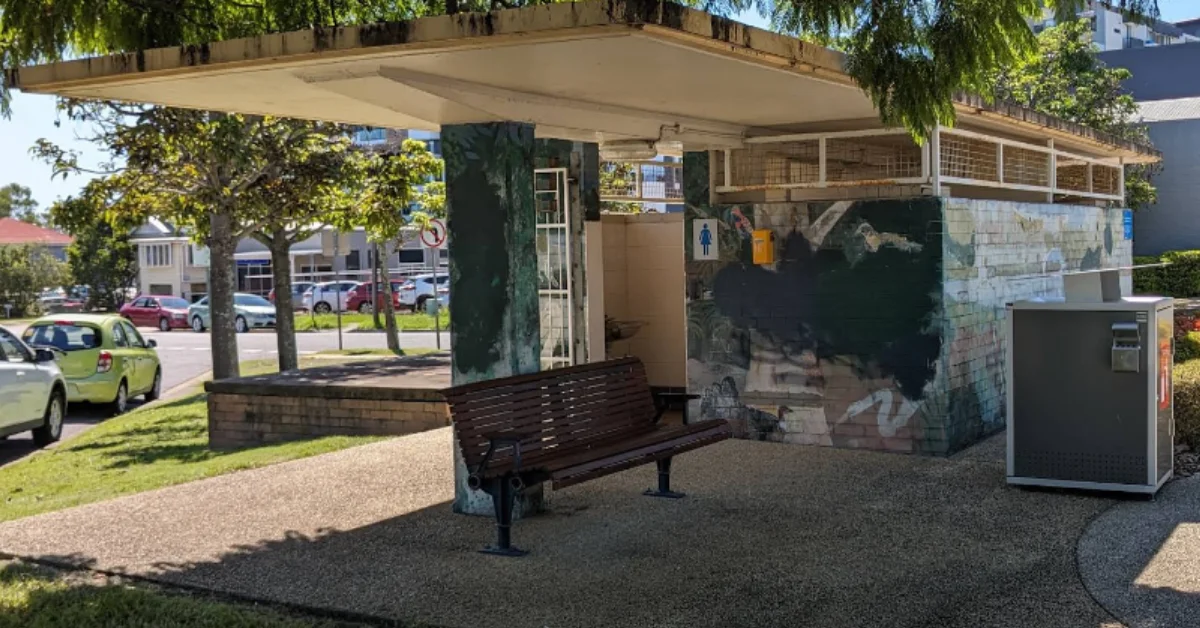
There is more to Nundah’s Sandgate Road public toilet than meets the eye. The heritage-listed structure was constructed in 1942 as an air raid shelter, when Brisbane was preparing for the possibility of Japanese bombing raids.
Read: Heritage Listed Public Toilet at Nundah
The concrete shelter was built as part of Brisbane’s wider preparations for possible attacks and was designed by Brisbane City Architect Frank Gibson Costello. Costello was responsible for the design of Brisbane’s surface air raid shelters, including reusable versions intended to have a practical purpose after the war.

By 1942, Brisbane had become an important military centre as Australian and American personnel arrived in Queensland and facilities were established to support the Pacific war. The city was considered a potential target for bombing, prompting rapid action to protect the population from possible air raids.
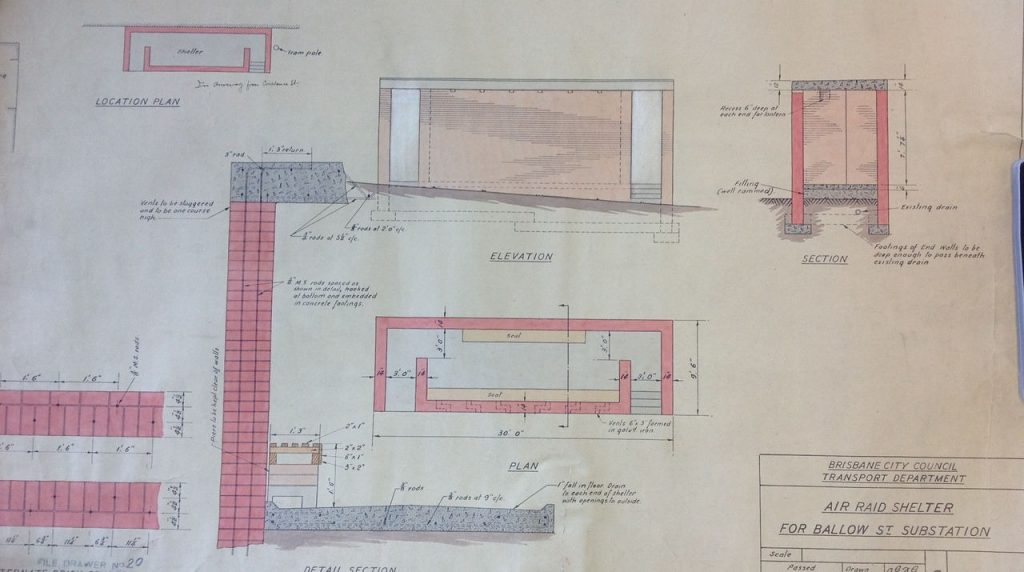

Nundah’s shelter formed part of that wider network. Brisbane’s Nundah Heritage Trail records that the structure was constructed in 1942 because of the possibility of Japanese bombing raids.

Built For A City Preparing For Air Raids
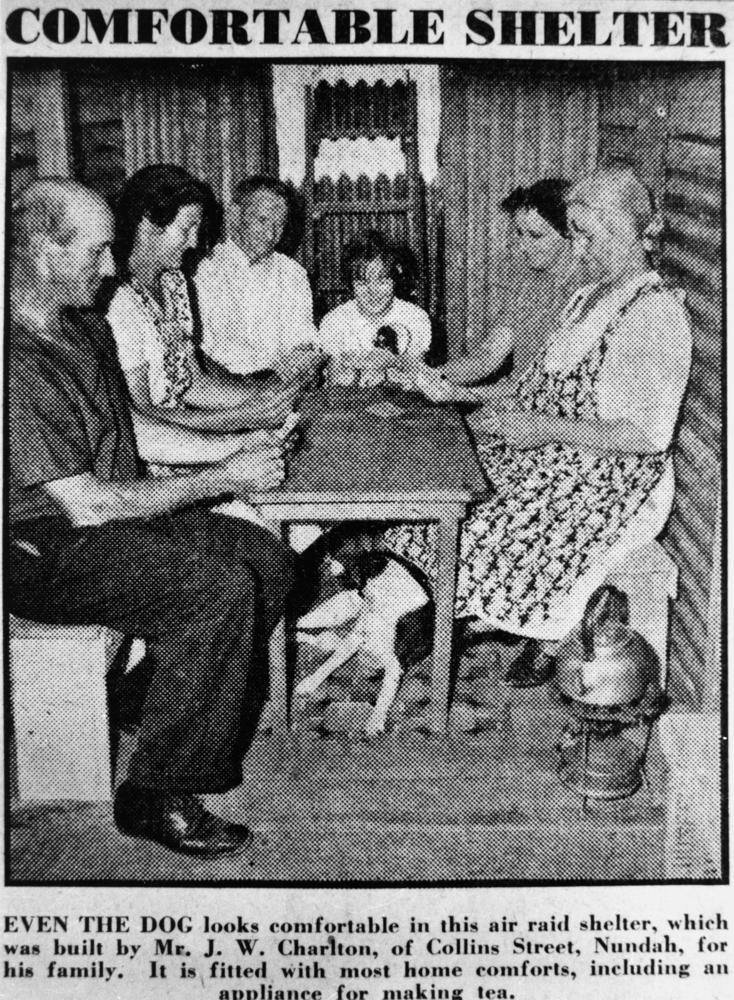
The Nundah shelter was part of a much larger wartime shelter programme in Brisbane. Under an emergency order issued in December 1941, Brisbane was directed to construct public surface shelters across the city, with work already underway before the order was formally issued.
The program eventually resulted in 235 public air raid shelters being built in Brisbane, while covered trenches were also constructed in public parks. Other shelters were provided at wharves and workplaces as preparations continued for the possibility of attack.


The shelters had to be constructed during a period when building materials, skilled labour and other resources were under pressure. Standardised designs helped address those constraints, while Costello developed several variations of the concrete pillbox shelter that were designed to have practical uses after the war.
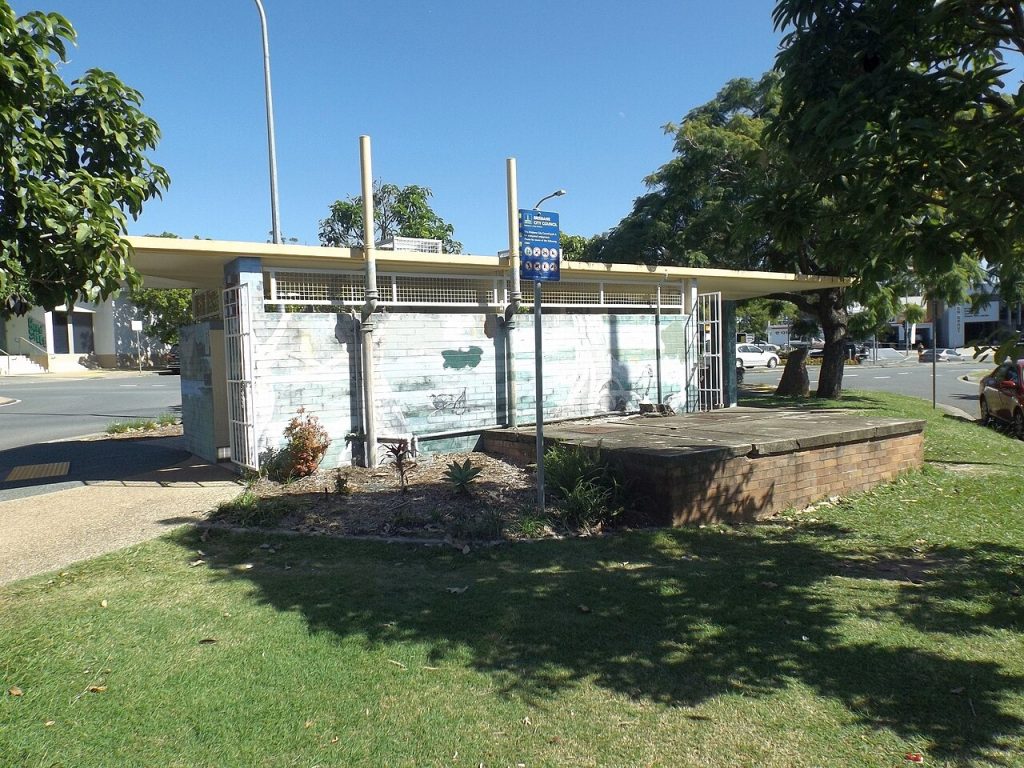
The Nundah structure was one of those reusable designs. Costello served as Brisbane City Architect from 1941 to 1952, and his shelter designs were intended to allow some structures to be adapted once their wartime purpose was no longer required.
The Nundah shelter was modified after World War II rather than being removed. Its original blast walls were taken away according to the planned post-war adaptation, although evidence showing where those walls stood remains visible.
The former shelter was later enclosed with concrete walls to accommodate public toilets, while skylights were cut into the roof. A mural has since been painted across the exterior walls.
One Of The Survivors
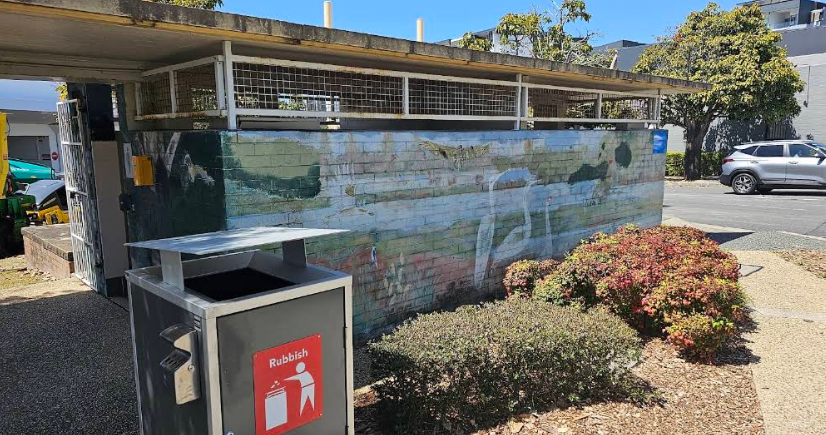
Much of Brisbane’s wartime air raid infrastructure disappeared after World War II. Saltwater mains, trenches, sirens and many of the standard shelters disappeared, while only a small number of the reusable public shelters survived.
Of the 235 public surface shelters built in Brisbane, 21 remain in Brisbane ownership, including several variations of Costello’s reusable designs. Most of the surviving park-type shelters are now used as simple park shelters, while the Nundah example was modified for use as a public toilet.
The structure was added to the Queensland Heritage Register on 6 April 2005. The official heritage listing identifies it as the Nundah Air Raid Shelter and records its association with World War II and its use as an air raid shelter.
Read: Take a Nostalgic Stroll Through Nundah Heritage Trail
Today, the former shelter continues to serve as a public toilet on Sandgate Road. The structure remains a surviving part of Nundah’s wartime history and of the air raid precautions introduced across Brisbane during World War II.
Published 30-September-2026