

Banyo Researcher Sounds Warning as AI Chatbots Land in Every Queensland State School

Every Queensland state school will have access to a state-built artificial intelligence chatbot by the start of June 2026, but a Brisbane-based education researcher is warning that students need structured guidance to use the technology effectively.


Read: Music and Arts Boost for Banyo School with New Hall Upgrade


Dr Luke Rowe, an AI in learning expert from Australian Catholic University’s National School of Education, based at the McAuley Campus in Banyo, says the evidence is clear: handing students a chatbot without structure or purpose is unlikely to produce meaningful educational outcomes. Students need structured guidance about what AI is, how it works, and what it should and should not be used for.
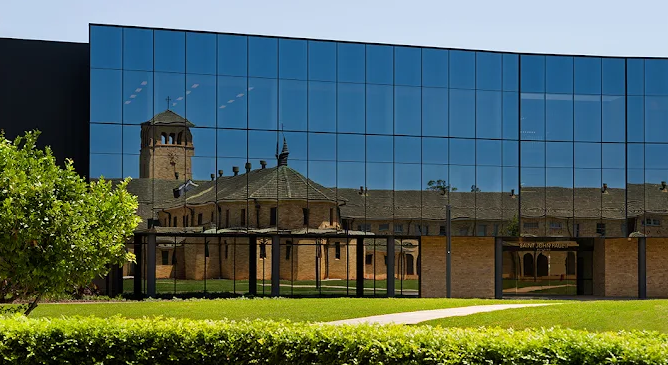
Photo credit: Google Maps/Australian Catholic University, Brisbane Campus

Dr Rowe argued that conversations about AI need to begin early and happen regularly, covering not only its potential benefits but also its environmental impact and the ways it can be misused. He draws a firm distinction between learning with AI and learning about AI, and believes schools need to carve out dedicated time for the latter rather than simply folding the technology into existing subjects.

When students lack the foundational research and critical thinking skills that proper AI use demands, he warns, they risk outsourcing their learning rather than deepening it. The teacher and fellow students remain rich resources in any classroom, he says, and should not be ignored just because a new tool has arrived.

What is Corella AI?
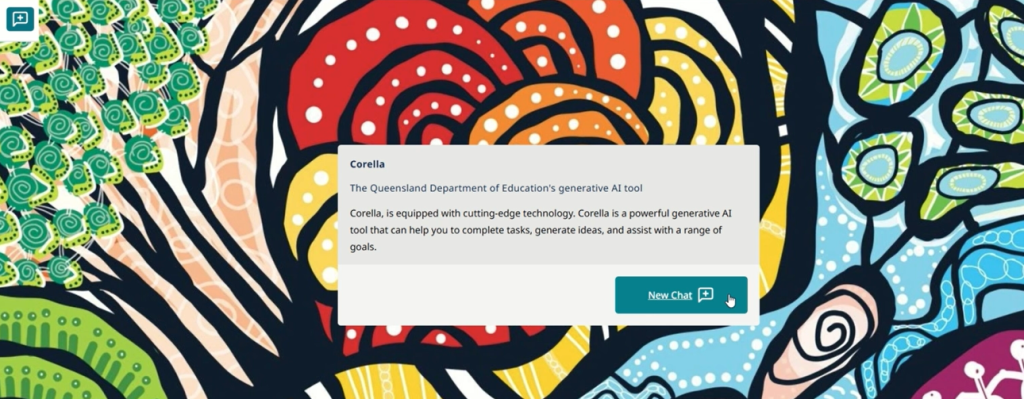
Photo credit: LinkedDepartment of Customer Services, Open Data and Small and Family Business

Corella AI is a $1.5 million chatbot program developed in-house by the Queensland Department of Education. So far, access has been limited to Year 9 and 10 students, with parental consent required. From June, Year 7 and 8 students will also be brought on board, and the department is in discussions with the Queensland Curriculum and Assessment Authority about integrating the program into senior schooling.

Education Minister John-Paul Langbroek described Corella as a tool for the future, saying the rollout was designed to help students engage with AI responsibly and think critically about the information they encounter. 

According to the department, students will be able to use Corella to brainstorm ideas, check, draft and revise work, conduct research, and summarise information. Because the software is hosted on the department’s own infrastructure, the department says students can safely upload material they would ordinarily access in the classroom.

For teachers, the picture looks somewhat different. Corella gives staff access to training modules that support lesson planning and the creation of assessment tasks, though it cannot be used for grading. Dr Rowe sees real value in this: when AI handles time-consuming administrative work like building assessment rubrics, teachers can redirect that effort toward activities that more directly benefit their students.

Not everyone feels the rollout has been handled transparently. P&Cs Queensland, the peak body for parents and citizens associations, released a formal position on AI in schools this week. Chief executive Timothy Horne said parents feel they have not yet been brought into the conversation, and that while there is genuine interest in AI among Queensland families, there is also real concern about how much the technology is creeping into the classroom.


Read: Speed Awareness Monitors Back on Duty as Nundah Students Return to School


For families in Nundah, Banyo, and the surrounding suburbs, the Corella expansion is worth keeping a close eye on. With an AI in education expert based right here at ACU’s Banyo campus, the local community is well placed to be part of the broader conversation about what responsible AI in schools actually looks like.

Published 25-May-2026
How Campus Life Helps Young Adults with Disability Transition to Work and Study

Campus Life, a program operating from Australian Catholic University’s campus in Banyo, is quietly revolutionising what’s possible for young people with disability, creating pathways to employment and further study where few existed before.


Read: New Campus Hub to Support ACU Students and Staff in Banyo


Bringing small groups of young adults with disability together each week for activities designed to build confidence, skills and independence, the initiative has become the flagship program of the Centre for Inclusive Supports Inc charity.

The program’s origins lie in a mother’s determination to create better opportunities for her son. When Kathy Harris looked at what awaited her son Rory after he finished special school, she was disappointed by what she found. The available options were limited, with many programs offering what she characterises as adult minding rather than genuine preparation for work or further study.

Harris decided to design something different. What began as a six-month research project with six participants in 2021 has evolved into a comprehensive three-year program that’s changing lives.

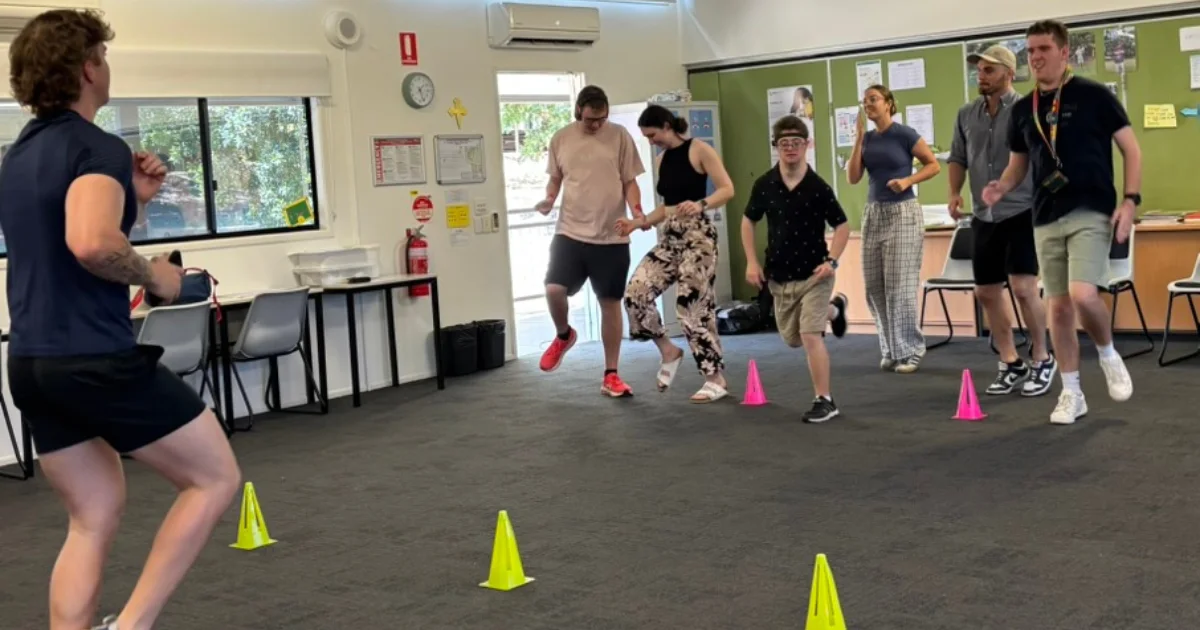
Campus Life participants engage in diverse activities including speech and music therapy, learning content from first-year business courses, and attending exercise classes. The campus setting provides an authentic tertiary education environment, helping participants envision themselves as university students or workers rather than perpetual program attendees.

Photo credit: Facebook/Campuslife

The partnership with ACU has proven particularly valuable. University students volunteer to run exercise sessions and lead activities during their semesters, creating meaningful connections between the Campus Life participants and the broader student community. Harris describes the collaboration as wonderful, noting that genuine friendships have developed between the two groups.

For Rory Harris, now 22, the program opened doors he didn’t know existed. He was part of that first cohort in 2021 and says, using a text-to-speech device, that there really were no other options available. His favourite aspect of Campus Life has been making new friends—a benefit that research has confirmed as one of the program’s most important features. Studies conducted with Autism Spectrum Australia and Griffith University found that the friendships formed during the program were crucial to participants’ development.

Since graduating from Campus Life, Rory has transitioned into work programs where he makes items to sell in a shop. He also works in a games library connected to the charity. His mother has observed significant changes in long-term participants, including improved confidence, enhanced problem-solving abilities and developed work skills. Some participants have even shown physical improvements, with young men who previously struggled with walking and navigating stairs growing noticeably stronger through the program’s exercise components.

The emotional impact on families has been profound. Harris recalls one parent expressing shock and delight that their youngest son could attend university just as their eldest had done—something they’d never imagined possible.

Photo credit: Facebook/Campuslife

The need for programs like Campus Life is becoming increasingly urgent. Recent research from Griffith University reveals a troubling trend: a statistically significant decline in education and training opportunities for people with disability over the past three years. The Voice of Queenslanders with Disability report found that just over 50 per cent of participants with disability could access courses and training with support in 2025—a 15 per cent decrease since 2023.


Read: Banyo’s Holy Trinity Church Honours Val Stafford After Decades Of Service


Given that more than 290,000 Australians have an autism diagnosis and are six times more likely to be unemployed than people without disability, according to the national autism strategy released last year, initiatives like Campus Life represent more than just a nice idea—they’re a necessary response to a significant gap in support services.

For Harris, the most rewarding moments come when participants become restless near the end of the program—not from dissatisfaction, but because they’re ready for their next challenge. It’s a sign that Campus Life has done its job, preparing young people to move forward into employment, further study or other opportunities. Watching different pathways open up for young people who once had so few options has been, she says, genuinely exciting.

Published 15-January-2026

Talent Factory: ACU Brisbane North Cougars Dominate State Netball Squads

ACU Brisbane North Cougars have secured thirteen positions in Queensland’s reduced state netball squads for 2025, cementing their status as the state’s premier development program.


Read: Community Engages Strongly with Proposed 24/7 Fast-Food Chain Development in Hendra


ACU Brisbane North Cougars dominates the field

The program’s athletes represent more than one-third of the total 37 players selected for Queensland’s pathway program, more than doubling the representation of any other institution.

This achievement builds on the program’s established success under coach Liz White, whose leadership has delivered 17 premierships in 24 years, including a remarkable four consecutive Sapphire Series championships through 2023.

The under-17 squad showcases both experienced and emerging Cougars talent. Returning athlete Simoné Botha, fresh from her 2024 AIS selection, leads a strong contingent of newcomers including Matilda Canning, Chelsea Edwards, Ariana Ransfield, Embah Tait, and Tereneah Tapuai.

In the under-19 division, five athletes have successfully progressed from the under-17s: Marley Burns, Rio Burns, Sienna Jones, Ella McCartney, and Tia Molo. The squad is further strengthened by two-time Judy Sampson Memorial Trophy winner Ellie Brice and talented athlete Gemma Hutchings.


Read: Banyo Educator First to Graduate from Ground-breaking Accelerated Teaching Programme


“The talent displayed made the process very competitive,” notes Netball Queensland head of talent and development Roselee Jencke.

These athletes now focus on preparing for the 2025 National Netball Championships, scheduled for April in Sydney. Final team selection, comprising 12 players plus training partners, will be announced in early 2025.

Published 31-October-2024