


Brisbane Airport Industrial Precinct Set to Become Global Quantum Hub

The Brisbane Airport industrial precinct has been chosen as the site for one of the most ambitious technology projects in the world: the development of the world’s first utility-scale, fault-tolerant quantum computer by Silicon Valley-based company PsiQuantum.


Read: Quantum Cooling Facility to Power Computer Project Near Brisbane Airport


Backed by nearly $1 billion in funding from the federal and state governments, this groundbreaking facility will put Brisbane at the forefront of the quantum computing revolution.

Why Brisbane Airport Industrial Precinct?
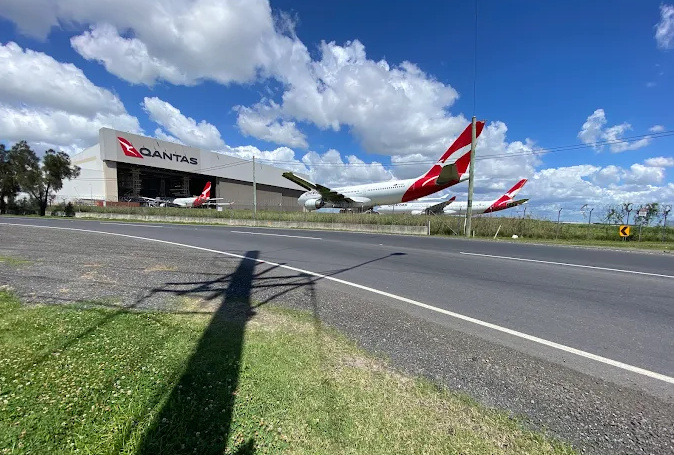
Brisbane Airport industrial precinct
Photo credit: Mark Brian/Google Maps

The Brisbane Airport industrial precinct offers a perfect combination of advanced infrastructure, stable power supply, and close proximity to leading research institutions—making it an ideal location for such a complex and large-scale project. Situated near the Qantas maintenance hangars, the site provides ample space for the quantum computer’s massive warehouse-style structure, as well as office and laboratory facilities.

This location supports efficient logistics and collaboration, positioning Brisbane Airport not just as a transport hub, but as a global innovation centre where cutting-edge quantum technology will be developed and scaled.

What is a Quantum Computer?

Quantum computers are not just faster versions of the laptops or smartphones we use today. They’re an entirely different kind of machine, built on the rules of quantum physics.

While traditional computers process information using bits (which can be either a 0 or a 1), quantum computers use qubits, which can be both 0 and 1 at the same time. This strange property, known as superposition, allows quantum computers to explore vast numbers of possibilities all at once.

A regular computer is like reading one book at a time. A quantum computer is like reading every book in the library at once.

Why does it matter?

Quantum computers have the potential to solve problems that today’s computers would take thousands of years to crack. They’re expected to revolutionise a number of industries — and that could benefit all of us. Some of the most exciting possibilities include:

  • Medical breakthroughs – Designing new medicines by simulating molecules with extreme precision.
  • Climate solutions – Running complex models to better understand and respond to climate change.
  • Faster, smarter logistics – Helping airlines, delivery companies, and supply chains run more efficiently.
  • Next-generation security – Creating new forms of encryption (and also challenging current ones).

Quantum vs. Classical Computers — A Quick Comparison

Classical ComputerQuantum Computer
Basic unitBit (0 or 1)Qubit (0 and 1 at the same time)
Computing powerGrows step by stepGrows exponentially with each added qubit
Best atEveryday tasks (emails, documents)Complex simulations, optimisation, AI modelling
Real-world use casesBrowsing, gaming, office workDrug discovery, climate modelling, advanced AI

The Quantum Leap Forward at Brisbane Airport
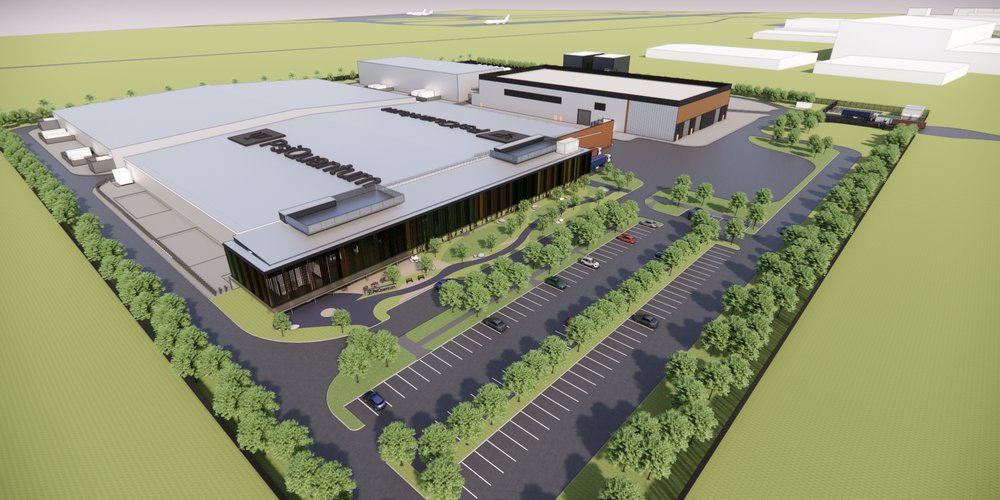
Brisbane Airport industrial precinct
Photo credit: PsiQuantum

PsiQuantum’s quantum computer will use photons—particles of light—as qubits, allowing the system to operate at a comparatively “warm” temperature of 4 Kelvin (-269°C), thanks to advanced silicon photonic chips. This is a significant advantage over other quantum machines that require temperatures close to absolute zero, making it easier to scale up to the millions of qubits necessary for fault-tolerant computing.

A key part of the project is a massive cryogenic cooling plant, designed and built by global leader Linde Engineering, which will keep the quantum chips at the ultra-cold temperatures they need to function reliably. Construction at the Brisbane Airport site will begin in 2025, with an initial operational launch expected by the end of 2027.

PsiQuantum aims to reach a full-scale quantum computer with about one million qubits by 2029, unlocking unprecedented computing power that could transform fields such as drug discovery, climate modelling, artificial intelligence, and beyond.


Read: New Look, New Era: Brisbane Airport Celebrates Centenary with Brand Refresh


With this landmark project, Brisbane Airport’s industrial precinct is poised to become a global centre for quantum technology and innovation, marking a major step forward for Australia’s role in next-generation computing.

Published 28-May-2025

Quantum Cooling Facility to Power Computer Project Near Brisbane Airport

A large-scale cryogenic facility comparable to a supermarket is set to be installed near Brisbane Airport to support PsiQuantum’s development of a full-scale quantum computer.


Background and Context

A global initiative to build a utility-scale quantum computer has taken a major step forward with the planned installation of a large cryogenic cooling plant near Brisbane Airport. The project is being led by Silicon Valley-based firm PsiQuantum and is supported by a $470 million commitment from the State. A matching contribution from the federal government brings the total investment to nearly $1 billion.

The project was outlined in the Managing Queensland’s Debt and Investments 2024 report, which detailed various financial priorities, including the state’s rising capital program and infrastructure outlays.

quantum computer
Photo Credit: PsiQuantum

Quantum System Requirements

At the centre of the Brisbane development is a cryogenic plant built by German company Linde Engineering. The system will operate at 4 Kelvin, or -269°C, using helium gas cooled to a liquid state. The facility will span nearly 3437 square metres, making it the largest cryoplant built specifically for quantum computing.

PsiQuantum’s approach differs from traditional quantum computing designs by using photons instead of matter-based qubits, allowing operation at slightly higher temperatures than systems that require near absolute zero conditions.

This design has enabled faster development towards a 1-million-qubit computer — the level at which quantum systems are expected to begin solving complex, real-world problems in fields such as medical research, clean energy, and industrial chemistry.

PsiQuantum
Photo Credit: PsiQuantum

Local and International Links

The site near Brisbane Airport was chosen partly due to existing research networks in Queensland. PsiQuantum is collaborating with five Queensland universities—including UQ, Griffith, QUT, and USC—leveraging local academic links, with two of its founders having studied in the state.

PsiQuantum is also establishing a test laboratory at Griffith University while the primary facility is under construction, with an aim to develop a skilled local workforce.

cryoplant near Brisbane Airport
Photo Credit: PsiQuantum

Next Steps

The cryogenic plant is being built in Europe and will later be transported to Brisbane for assembly. Once completed, it will be assembled by local engineers. The facility is expected to form the foundation of the world’s first commercial-scale quantum computing system.


The state’s investment is part of a broader capital works program contributing to increased debt levels, with total borrowings reaching $139.2 billion as of 30 June 2024. Despite this, Queensland’s investment signals a focus on long-term innovation and technology development through projects such as the Brisbane quantum computer.

Published 10-May-2025

Brisbane Airport Contamination Case Delayed as Court Grants More Time

The ongoing legal dispute over toxic chemical pollution at Brisbane Airport has been delayed after Airservices Australia was allowed to file new expert evidence.


Background to the Contamination Dispute

Brisbane Airport Corporation (BAC) is pursuing legal action against Airservices Australia (ASA) over contamination linked to firefighting foam used at Brisbane Airport between 1988 and 2010. The firefighting foams contained per- and polyfluoroalkyl substances (PFAS), often labelled as “forever chemicals” because they remain in the environment for extended periods.

The case was initiated in 2017 and is considered one of Queensland’s most complex environmental legal proceedings. BAC is seeking to recover clean-up costs from ASA.

Court Allows New Expert Evidence

On 24 April 2025, the Supreme Court of Queensland ruled that ASA could submit two additional expert reports, one from an environmental chemist and the other from a hydrologist, by 31 August 2025. These reports are expected to support ASA’s defence ahead of the scheduled 12-week trial in August 2026.

BAC maintained the reports should be submitted by 2 June 2025 to minimise additional delays. However, the court opted for a later deadline to ensure the completeness and reliability of the evidence.

Delays and Criticism of ASA

The court noted ASA’s repeated failures to meet deadlines, including missed document submissions in late 2024. The delays have placed pressure on BAC’s lead expert witness, who is 71 and expected to retire by the end of 2025.

Justice Paul Freeburn criticised ASA’s conduct but concluded that a fair trial required allowing the new evidence. He acknowledged the potential for further procedural delays due to dependencies between expert reports.

Brisbane Airport
Photo Credit: Brisbane Airport/Facebook

Next Steps in the Legal Process


The court will next consider formal orders and which party should bear the legal costs associated with ASA’s late application. The trial remains listed in the Supreme Court’s Commercial List and is scheduled to commence in August 2026.

Published 1-May-2025

New Look, New Era: Brisbane Airport Celebrates Centenary with Brand Refresh

Brisbane Airport is celebrating its centenary this year not just by looking back—but by looking forward. As part of the 100th year milestone, the airport has revealed a dynamic new brand identity, reflecting years of transformation ahead and the growing role of Brisbane as a global city.


Read: Brisbane Airport Expands Digital Declarations for International Arrivals


The refreshed look, launched on April 2, introduces a sleek new logo featuring ribbon-like jet streams that evoke motion, freedom, and the journey from land to sea to sky. The design replaces the previous corporate-style logo with something more expressive, aiming to capture the energy and optimism of Brisbane’s future.

Photo credit: Brisbane Airport/Facebook

“Our previous logo was designed to be quite corporate and business-like,” said Sarah Whyte, Head of Communications & Brand Marketing at Brisbane Airport. “But today, we want to signal anticipation, excitement, and the limitless possibilities that aviation brings.”

The visual overhaul launched in time for the Brisbane Airport centenary also comes during a major redevelopment phase. The airport is currently investing $5 billion through its ‘Future BNE’ transformation, which includes major upgrades to both Domestic and International terminals, alongside improvements to passenger experience and infrastructure.

Brisbane Airport centenary
Photo credit: Brisbane Airport/Facebook

The new brand system—developed with creative agency Traffic—draws on the forms of the airport apron to create dynamic design containers for signage and digital platforms. These will soon be visible across terminal screens, social media, and bne.com.au.

“I’m very aware that our passengers care about their experience of travelling through the airport far more than they care about our logo,” Whyte said. “But in addition to all the work we’re doing to make using the airport better, it’s important we also send a visual message about the optimism and excitement that is pervading Brisbane right now.”

A Century in the Sky

Photo credit: bne.com.au

Brisbane Airport’s story began in 1925 when the Commonwealth Government officially opened the Eagle Farm Aerodrome on 36 hectares of farmland. At that time, Brisbane was only just beginning to connect with the world by air.

In 1928, a crowd of 25,000 gathered to witness history as Sir Charles Kingsford Smith’s Southern Cross landed in Brisbane.

Brisbane Airport centenary
The Southern Cross (Photo credit: bne.com.au)

In 1988, ahead of Expo 88, the airport was relocated 5 kilometres towards Moreton Bay, making space for future growth. Since then, it has become one of the busiest airports in Australia—and a hub for innovation.


Read: How Brisbane Airport’s Parking Rates Compare Internationally


In 2012, it opened a $180 million, nine-storey car park with 5,000 spaces, smart parking technology and direct undercover access to terminals. In 2017, it was recognised as Australia’s first dementia-friendly airport. And in 2020, Brisbane Airport opened a new parallel runway—one of the largest aviation construction projects ever completed in the country.

Now, with the launch of a bold new brand and an ambitious vision for the next decade, Brisbane Airport is once again charting a course for the future—one that stays rooted in its heritage while embracing what lies ahead.

Published 4-April-2025

Brisbane Airport Expands Digital Declarations for International Arrivals

Brisbane Airport is expanding its digital Incoming Passenger Card system, replacing traditional paper forms for international arrivals. 


Read: Net-Zero Achieved: Brisbane Airport Reaches New Heights with Emissions-Free Operations


From 19 March 2025, all eligible passengers on Qantas international flights arriving at Brisbane Airport will be able to complete the Australia Travel Declaration (ATD) digitally.

international arrivals
Photo credit: Australian Border Force

The initiative, led by the Australian Border Force (ABF) in partnership with the Department of Agriculture, Fisheries and Forestry (DAFF) and Qantas, aims to streamline the arrival process. The ATD pilot program first launched in October 2024 for passengers flying from New Zealand. 

After a successful five-month trial, the system was expanded last week to include Qantas flights from Los Angeles and is now being rolled out to all Qantas international arrivals at Brisbane Airport.

Passengers can complete the digital declaration up to 72 hours before departure via the Qantas app, receiving a QR code instead of a paper card. This code is presented to border officials upon arrival, eliminating the need for manual paperwork. Since the trial began, nearly 12,000 passengers have used the ATD, with many praising its convenience and efficiency.

international arrivals
Sample of ATD QR code (Photo credit: Australian Border Force)

ABF Commissioner Gavan Reynolds stated that moving away from paper Incoming Passenger Cards is a key step toward creating a fully digital and streamlined border system.

“The expansion of the Australian Travel Declaration pilot program marks a significant advancement in our mission to modernise border processes and enhance the traveller experience,” Commissioner Reynolds said.

“The positive feedback so far has demonstrated a clear demand for a more efficient and user-friendly approach. As we prepare for global events like the 2032 Olympics, the ABF is committed to using technology to create a seamless travel experience while maintaining our high standards of security and compliance.”


Read: Brisbane Airport to Adjust Flight Paths to Reduce Noise for Local Residents


The transition is expected to phase out paper forms entirely over time, preventing the use of millions of paper copies each year. Officials also note that the digital system speeds up the airport process, reducing delays at border control. The Brisbane pilot is providing valuable insights for potential expansion to other airports and airlines, marking a step towards a fully digital border system in Australia.

Published 26-March-2025

Be Ready, Nundah: How to Protect Your Home and Family from Cyclone Alfred

As Tropical Cyclone Alfred approaches Brisbane, residents, especially those in flood-prone suburbs like Nundah, must take immediate action to safeguard their homes and families. 


Read: What’s Next for Toombul Shopping Centre? Mirvac Announces Redevelopment Plans


Alfred, currently a Category 2 system, is expected to hit Queensland around Thursday or early Friday, bringing damaging winds, heavy rainfall, and potential flooding.

Preparation Steps for Cyclone Alfred

  1. Assemble an Emergency Kit: Prepare a ‘grab and go’ kit with essential supplies to last five to seven days. This should include non-perishable food, water, medications, important documents, cash, and supplies for pets. Given the potential for power outages, include a battery-operated radio, torch, spare batteries, and power banks for charging mobile devices.
  2. Secure Your Property: Remove or secure any loose items around your property that could become projectiles in strong winds. Clean gutters and check drainage systems to ensure they are clear of debris, reducing the risk of water accumulation and potential flooding.
  3. Utilise Sandbags: Sandbags can help reduce the impact of flooding on your property. While they won’t stop water entirely, they can minimise water entry. Sandbags are available at several Brisbane locations, Darra, Lota, Morningside, Newmarket, and Zillmere. The nearest one to Nundah is the one at Newmarket, located at the SES Depot, 66 Wilston Road.
Photo credit: BCC (As of 4 March 2025)

Ensure you check your vehicle’s weight restrictions before loading sandbags, as each weighs approximately 18–20 kilograms.

Photo credit: BCC (As of 4 March 2025)
  1. Protect Vehicles: Avoid parking cars on the street, especially in areas prone to flooding or under trees and power lines. If possible, move vehicles to higher ground or secure garages to prevent damage from rising waters or debris. Brisbane officials have warned of higher-than-predicted high tides in foreshore and riverside areas from Saturday, 1 March, to Wednesday, 5 March 2025.
  2. Stay Informed: Keep updated with the latest weather forecasts and warnings through official channels such as the Bureau of Meteorology or Council’s emergency dashboard. A battery-operated radio can be invaluable during power outages. Follow advice from local authorities and be prepared to evacuate if necessary.

Nundah’s Flood Risk

Nundah has a documented history of flooding, particularly due to its proximity to Nundah Creek. Back in February 2022, the Toombul Shopping Centre suffered extensive flood damage, leading to a decision not to reopen. Business owners were notified in a letter stating that restoring the centre to its previous condition was neither practical nor desirable.

Photo credit: Jared Pollack/Facebook

As of February 2025, the shopping centre has been fully demolished, with Mirvac announcing plans to redevelop it into a mixed-use precinct. However, since the area is prone to flooding, any new plans must include strong flood resilience measures to avoid a repeat of the past.

Council has conducted detailed flood studies for the Nundah Creek area to manage and mitigate flood risks. Residents can access the Flood Awareness Map to understand their property’s flood likelihood and prepare accordingly.

Impact on Brisbane Airport

Photo credit: Brisbane Airport/Google Maps

Brisbane Airport has not yet announced flight cancellations, but there is a possibility of disruptions if conditions worsen.

Passengers with upcoming flights should monitor airline updates and Brisbane Airport’s official channels for real-time information. As always, safety is a priority—if roads leading to the airport become flooded, it is advised not to attempt to travel. “If it’s flooded, forget it.”

Community Resources and Support

Brisbane offers resources to assist residents in preparing for severe weather events. Free green waste drop-off is available at all four resource recovery centres (RRCs) until further notice, with extended opening hours from 6:30 a.m. to 8:45 p.m. to aid in preparation efforts. 

However, kerbside collection has been suspended due to the significant risk posed by Cyclone Alfred. Residents are advised to secure any items placed on the kerb as soon as possible to prevent hazards during the cyclone.


Read: Net-Zero Achieved: Brisbane Airport Reaches New Heights with Emissions-Free Operations


Final Considerations

Preparation is crucial in mitigating the impacts of Tropical Cyclone Alfred. By taking proactive steps, residents of Nundah and the greater Brisbane area can enhance their safety and resilience against the impending severe weather. Remember, if it’s flooded, forget it—never attempt to drive or walk through floodwaters.

Published 3-March-2025

How Brisbane Airport’s Parking Rates Compare Internationally

Brisbane Airport’s long-term car parking rates have soared to among the most expensive in the world, drawing comparisons to major international airports. Brisbane’s long term parking fees now rival those of global transport hubs such as London Heathrow, San Francisco, and Doha’s Hamad International Airport.


Read: Net-Zero Achieved: Brisbane Airport Reaches New Heights with Emissions-Free Operations


According to Brisbane Airport Corporation’s (BAC) official website, the cost for parking in its ParkLong facility, its most popular car parking option, is now at $69 for a stay of between 4 and 24 hours, while a full week of parking will set travellers back $205. These prices place Brisbane among the top-tier of costly airport parking worldwide.

Photo credit: Brisbane Airport/Facebook

For context, the world’s most expensive airport for long-term parking is Hamad International Airport in Doha, where a week of parking costs an astonishing $538. London’s Heathrow Airport follows at $324 per week, while San Francisco International Airport rounds out the top three at $245 per week.

Despite Brisbane’s high ranking, BNE maintains that its pricing is competitive and designed to cater to a wide range of needs. A spokesperson defended the fees, stating that they were fair and catered to various budgets and requirements. 

They also pointed out that the increasing demand for parking services, ranging from budget-friendly options like Airpark to premium Valet services, reflects the suitability of their pricing strategy.

Photo credit: Brisbane Airport/Facebook

For travellers seeking lower-cost options, Brisbane Airport offers AIRPARK and AIRPARK 2, budget-friendly open-air car parks located on airport grounds. These facilities operate 24/7 with surveillance, while a free shuttle service runs from early morning until midnight. Parking in these areas costs $7 for 1-2 hours.

While some travellers may balk at the rising costs, the airport asserts that it offers a variety of parking choices to suit different budgets. However, for many frequent flyers and holidaymakers, Brisbane’s rising fees may further encourage alternative transport options, such as rideshare services or off-site parking facilities.


Read: Brisbane Airport to Adjust Flight Paths to Reduce Noise for Local Residents


As air travel continues to rebound post-pandemic, the cost of airport services—including parking—remains a hot topic for discussion among travellers looking for value and convenience.

Published 25-February-2025

Brisbane Airport to Host Australia’s First Hydrogen-Powered Commercial Flights

Brisbane Airport is set to become the launch site for Australia’s first hydrogen-powered commercial flights as Brisbane-based Stralis Aircraft prepares for test flights and a 2027 rollout.


Stralis Aircraft, with headquarters in Brisbane Airport, is set to become a key player in Australia’s shift towards clean aviation, with plans underway to introduce the country’s first hydrogen-powered commercial flights.

In collaboration with Central Queensland (CQ) University, Starlis Aircraft is developing a hydrogen-electric propulsion system that could make air travel cheaper and more sustainable. If successful, the technology will be used for regular flights between Brisbane and Gladstone by 2027, potentially transforming regional air travel.

A Push for Cleaner Skies

Stralis Aircraft is working to integrate high-temperature proton-exchange membrane (PEM) fuel cells into aircraft, which provide greater efficiency and power compared to traditional hydrogen fuel cells. The company has already completed ground tests, successfully using gaseous hydrogen to turn a propeller, and is now preparing for a test flight later this year.

The aviation industry has long struggled to cut emissions, with most airlines still relying on fossil fuels. Hydrogen, however, produces zero carbon emissions, releasing only water vapour into the atmosphere. 

CQ University hydrogen expert Jonathon Love noted that while batteries work for short-haul flights, hydrogen is better suited for mid-range routes, making it an ideal solution for regional travel in Australia.

Stralis Aircraft Brisbane Airport
Photo Credit: Stralis

Brisbane’s Role in the Green Transition

For Stralis Aircraft’s hydrogen flights to become a reality, Brisbane Airport will likely need new refuelling infrastructure. Green hydrogen production is still in its early stages in Australia, but Stralis is actively sourcing hydrogen from local suppliers, particularly in Gladstone.

Dr Emma Whittlesea from Stralis Aircraft stated that while liquid hydrogen offers greater energy efficiency, handling and storage challenges remain.

With the aviation sector under pressure to decarbonise, Brisbane Airport’s involvement in hydrogen-powered flight could position the city as a leader in sustainable air travel. While major international airports focus on sustainable aviation fuel (SAF) as an interim solution, regional airports like Brisbane are exploring alternative pathways to reduce their carbon footprint.

Global Interest and Future Outlook

The demand for cleaner aviation technology is growing, and Stralis Aircraft has already attracted $372 million in letters of intent from 10 airlines across multiple continents. While specific airlines remain confidential, interest spans the United States, Europe, Asia, Australia, and New Zealand. 

SkyTrans Airlines, a regional carrier, has already signed on as a launch customer, aiming to operate Brisbane-to-Gladstone flights using Stralis’ hydrogen aircraft.


As test flights approach, the next major challenge will be scaling up hydrogen production and infrastructure to support regular commercial use. Dr Whittlesea expressed confidence that these hurdles will be overcome for the 2027 launch.

Published 30-January-2025

Net-Zero Achieved: Brisbane Airport Reaches New Heights with Emissions-Free Operations

Brisbane Airport (BNE) has become a trailblazer in sustainability, officially achieving net-zero emissions, making it one of the first airports in Australia to reach this significant environmental milestone.


Read: Brisbane Airport to Adjust Flight Paths to Reduce Noise for Local Residents


Brisbane Airport Corporation (BAC), the operator of the airport, has successfully reduced its Scope 1 and 2 emissions by an impressive 97 percent. This was accomplished through a series of innovative and forward-thinking measures, including:

  • Partnering with Stanwell to purchase 100 percent renewable electricity sourced from Queensland-based wind and solar farms, supplying up to 185 GWh of clean energy annually.
  • Expanding the airport’s on-site solar energy capacity to 10 MW.
  • Replacing 24 traditional internal combustion engine vehicles in its fleet with electric-powered alternatives.
Photo credit: Brisbane Airport/Google Maps

The remaining 3 percent of emissions have been offset through native bush regeneration projects in southwest Queensland, facilitated by Tasman Environmental Markets.

Gert-Jan de Graaff, CEO of Brisbane Airport Corporation, described the achievement as a significant milestone for the airport. He explained that the renewable power purchase agreement with Stanwell enables wind and solar energy to power critical airport operations, including check-in systems, baggage conveyors, escalators, air conditioning, and runway lights.

Photo credit: Suryani Tan/Google Maps


De Graaff emphasized the importance of this achievement, noting that it represents a major shift in the aviation industry’s approach to sustainability and climate responsibility.

Regarding its targets towards sustainability, Brisbane Airport stated through their website:

“Brisbane Airport recognises that being a leader in sustainability means constantly challenging ourselves to create the best future possible. Our revised sustainability targets demonstrate our focus on building a sustainable Airport City. 

“This includes a commitment to be a Net Zero airport by 2025 (Scope 1 and 2), which is a significant advancement from our original 2050 target. In addition, our 2030 waste and water targets will greatly reduce our environmental footprint.

The airport’s commitment to renewable energy not only benefits the environment but also sets a benchmark for the aviation sector, showcasing how airports can lead in the fight against climate change while maintaining efficient operations.


Read: Brisbane Airport Welcomes Brooki Bakehouse’s Second Store


As global air travel rebounds, Brisbane Airport’s accomplishment signals a promising future for sustainable aviation in Australia and beyond.

Published 3-January-2025

Machinery Incident Leaves Worker Hospitalised at Brisbane Airport

A worker at Brisbane Airport was rushed to hospital after being injured in a machinery accident while handling baggage on the tarmac.


About 8:00 p.m. last 24 December 2024, the incident occurred when an employee of Swissport was running baggage loading machinery. Emergency services arrived fast at the scene, and the worker with severe leg injuries was sent to Royal Brisbane And Women’s Hospital.

Brisbane Airport Machinery Incident
Photo Credit: Brisbane Airport

What Happened?

The accident occurred during one of the airport’s busiest times of the year. Swissport, which oversees ground-handling operations, attested that the employee was utilising baggage equipment at the time of the incident.

Workplace Health and Safety Queensland (WHSQ) is now looking into the matter. Swissport and Brisbane Airport Corporation have both stated that they are reviewing their safety procedures and are fully cooperating with the investigation.

According to a Swissport representative, employee safety is their first concern. They are completely supporting the injured worker and their family and are extremely concerned about this incident.

Safety Measures Under Scrutiny

The incident has highlighted the importance of stringent safety protocols for high-risk airport operations. Machinery accidents, while uncommon, serve as a reminder of the potential hazards faced by ground-handling staff. This event has prompted discussions about improving training programs and ensuring regular maintenance of equipment used in daily operations. Swissport has indicated it will review its current safety procedures as part of the investigation process.

Brisbane Airport Corporation, which oversees the broader airport infrastructure, expressed its concern and affirmed its commitment to a safe working environment. Peter Doherty, the airport’s representative added that such occurrences highlight the necessity of ongoing attention to detail and cooperation among all parties involved.

Ongoing Investigation

WHSQ is working to determine exactly what went wrong and how similar incidents can be avoided. Both Swissport and Brisbane Airport Corporation have stressed their commitment to maintaining safe working conditions. Initial findings from the investigation are expected to guide future safety enhancements.


As investigations continue, the community’s focus remains on the recovery of the injured worker and any safety improvements that may result from the inquiry. Meanwhile, employees have been reminded of available support services to address concerns about workplace risks or provide counselling for those affected by the incident.

Published 27-Dec-2024