




An apparent ram raid attempt at Triple Eight Racing’s Banyo headquarters has left the Supercars team’s Brisbane base damaged, after a Nissan SUV crashed through a fence before the driver fled on foot.
The incident happened at the team’s Depot Street premises, where CCTV footage showed the vehicle travelling at speed before entering the property and striking the building area. The driver then exited through the passenger side and ran from the scene.
Triple Eight was contacted by police about 3:30 am this week and told the team may have been the victim of a ram raid. No property was reported stolen, although the crash left visible damage to the site and the vehicle.
CCTV Shows Crash At Banyo Headquarters
Footage of the incident showed the Nissan moving through the fence line and into the Triple Eight premises. A ute was also seen stopping nearby as the SUV went through the gap.
Jamie Whincup later appeared in footage shared online, walking through the damage near the crashed vehicle. He explained that the Nissan had come up Depot Street before going through the fence and into the property.
The vehicle appeared to narrowly miss a pylon sign and fire hydrant before hitting the building area. Other footage showed the driver leaving through the passenger side and running away.
A headlight from the Nissan was found inside the factory, while the vehicle was left with significant visible damage. A protective pole near the building had reportedly been installed only weeks before the crash.
Nothing Stolen After Failed Attempt
Despite the damage, nothing was reported stolen from the Banyo headquarters. The incident instead left Triple Eight dealing with damage to the premises and the crashed Nissan SUV.
Triple Eight Race Engineering is a leading Supercars team based in Brisbane’s north. The incident occurred while the team’s Supercars equipment was on its way back to Australia after the New Zealand double-header.
Broc Feeney had claimed the Jason Richards Memorial Trophy following the Taupo and Christchurch rounds, where the award went to the top points scorer across the events.
The immediate focus remains on the unusual early-morning crash at the Banyo facility, where the driver fled on foot and the team reported that no property had been taken.
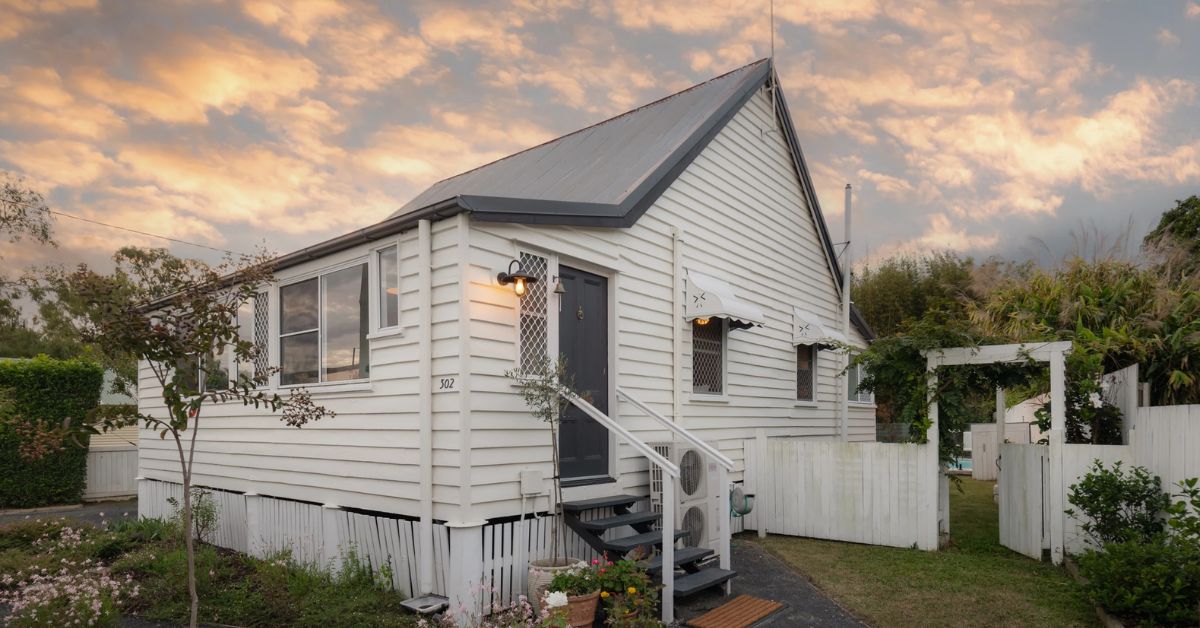
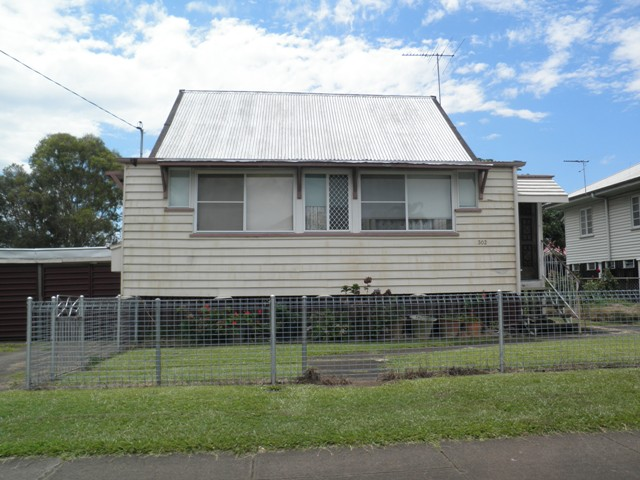
Robinson Farmhouse at 302 Saint Vincents Road in Banyo, the oldest surviving residence in Banyo and the Nudgee area, has come to market for the first time in nearly five years, giving buyers a rare chance to own a piece of Brisbane history that has been standing since 1882.
The four-room cottage is a recognised local heritage place under the Brisbane City Plan 2014, listed as the earliest surviving residence in the Banyo and Nudgee area and the oldest nineteenth-century residence in Banyo. There are two nineteenth century farmhouses left in the entire suburb; the Robinson Farmhouse is the older of the two. For Nundah and Banyo residents, seeing this address come up for sale is the kind of thing that stops people mid-scroll.
A Cottage With a Story Older Than the Suburb Itself
William Bulcock Robinson built this modest cottage around 1882 along the road to St. Vincent’s Orphanage, on an 18-acre block he had purchased in August 1880. The style of the cottage, with its very steep gable-ended roof, is typical of houses built earlier than the 1880s, suggesting the structure may have been relocated to the property from elsewhere in Brisbane.
The house stumps were cut from local trees, and rough-edged timber hewn by axe, adze or saw was used to construct the four-roomed cottage. The roof trusses were made from tea tree timber, and the roof was originally covered with timber shingles before being replaced with galvanised iron sheeting. It is the kind of construction detail that makes you appreciate both the craftsmen who built it and the people who have kept it standing ever since.
William B. Robinson first appears as a resident in the Nudgee District in the 1889 edition of the Queensland Post Office Directories. The Robinson family held farms throughout Banyo, Virginia, Geebung and Aspley, and Robinson Roads East and West in Banyo are named after the family. The land around the farmhouse remained sparsely settled for decades, with the area only beginning to urbanise in earnest after the Robinson family created the Robinson’s Paddock Estate in 1928, which opened up Paradise and Langdon Streets and Redhill Road to residential buyers.
What the Home Is Today
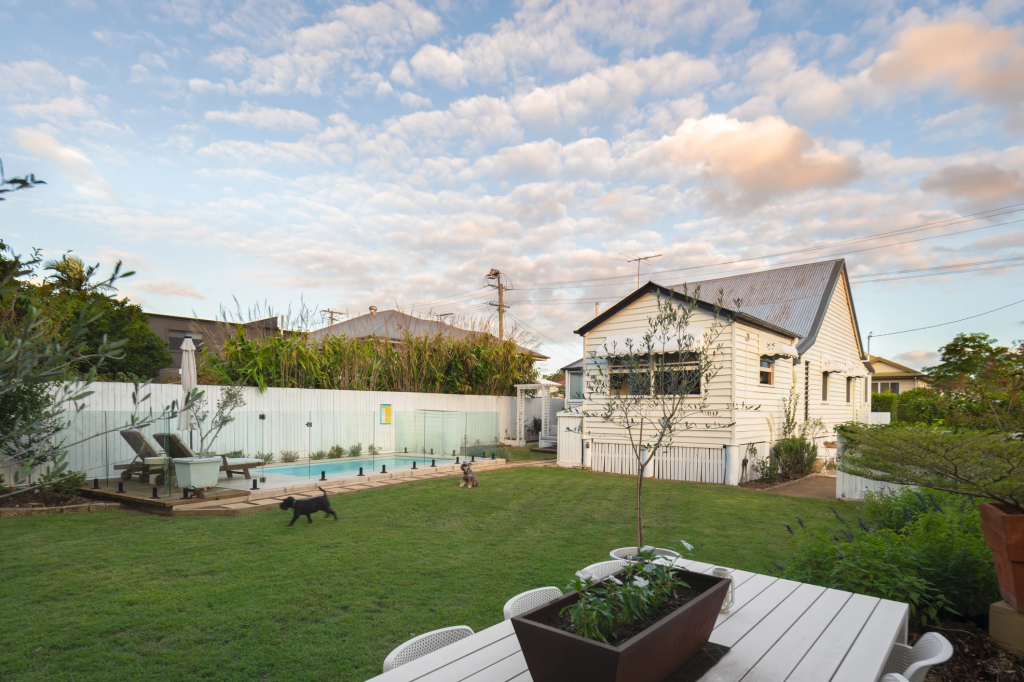
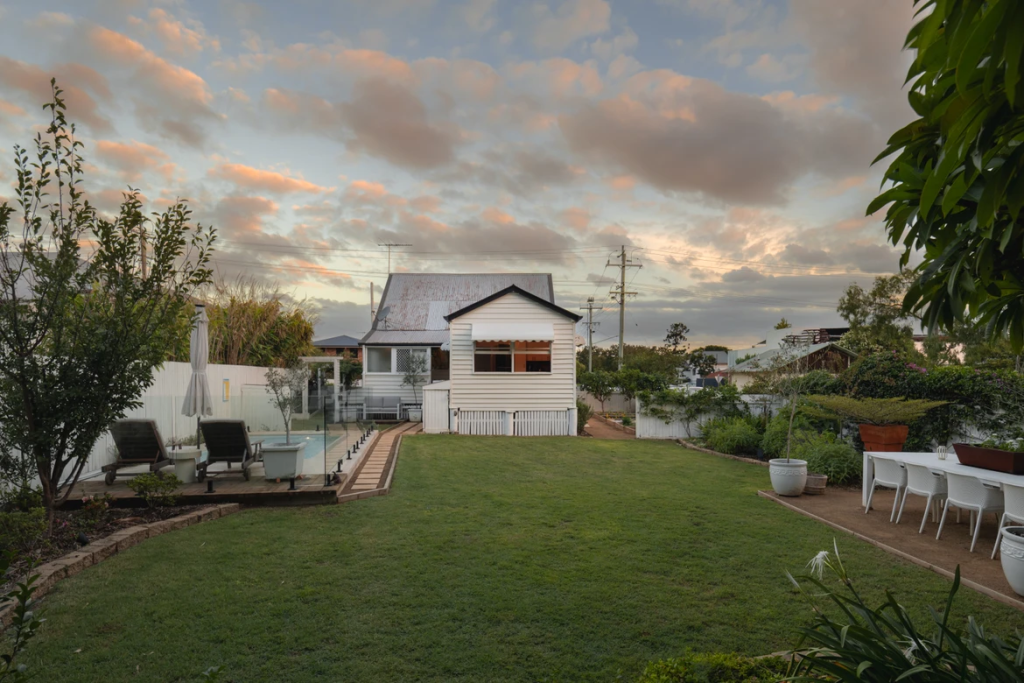
The current owners, Katherine Young and Brett Advocaat, purchased the property in August 2021 for $735,000 and have spent their time there maintaining its heritage character while integrating contemporary comforts. The three-bedroom, one-bathroom home now features landscaped surrounds and a newly installed pool on the 647-square-metre block, which backs onto parkland.
“We fell in love with the rich history and the unique soul of the house,” Brett Advocaat said. “It’s been a privilege to maintain a landmark where locals still stop by to share stories of the house from their childhood.”
That last detail says something important about what this address means to the people who grew up near it. Robinson Farmhouse is not just old; it is remembered. Locals carry it in their personal histories, and the current owners have found themselves the custodians of those memories as much as the building itself.
“Being so central and near the park, we have experienced the growth of Banyo, watched birthday parties, and observed the locals playing volleyball or pickleball,” Advocaat said. “These are all things that we can take in from our kitchen window or while tending to the garden.”
The Last of Its Kind
There are only two nineteenth century houses remaining in Banyo. Robinson Farmhouse at 302 St Vincent’s Road is one, and the Blinzinger Farmhouse former at 274 Tufnell Road is the other. While both are former farmhouses, each represents a different period in Banyo’s development and a different nineteenth century architectural style. Losing either to neglect or unsympathetic redevelopment would remove something irreplaceable from the suburb’s physical record.
In 2000, a group of community members comprising the BANGEE Festival Committee identified 302 St Vincent’s Road as a local heritage place and listed it as Location 22 in the Banyo-Nudgee Heritage Trail publication. That community recognition, driven not by planners but by local residents who understood what they had, says more about the house’s place in the suburb’s identity than any formal listing could.
A Home That Belongs in the Right Hands
For anyone who has walked past Robinson Farmhouse and felt the pull of it, this is one of those listings that does not come around often. It is heritage-listed, which means future owners take on the responsibility of stewardship that comes with that designation, but it is also a genuinely liveable, renovated family home in one of Brisbane’s most accessible northern suburbs, a short walk from Banyo Station and adjacent to parkland that the current owners have watched come alive with community life for the past four years.
Properties like this do not simply sell; they find their next keeper. Enquiries for Robinson Farmhouse at 302 Saint Vincents Road, Banyo can be directed to the listing agent.
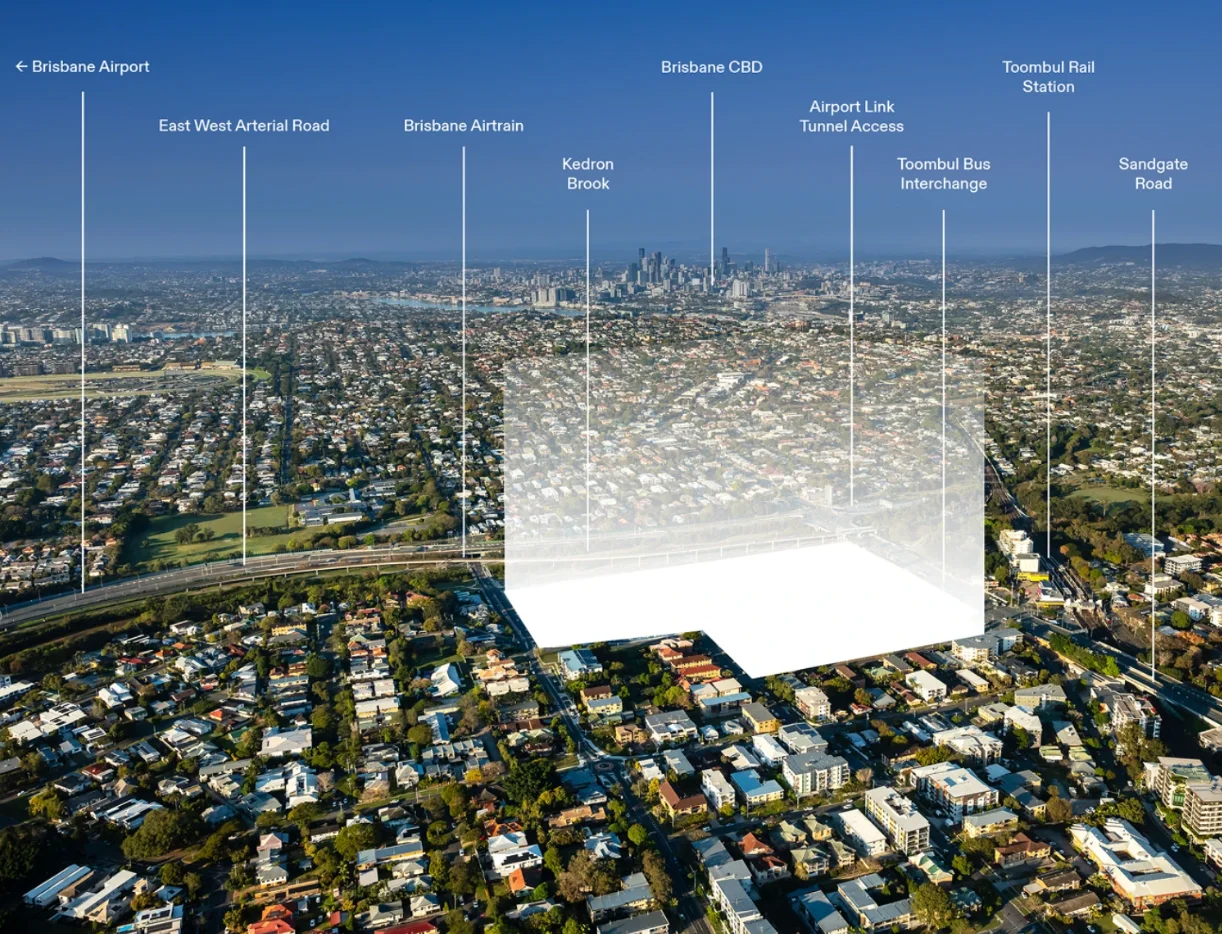
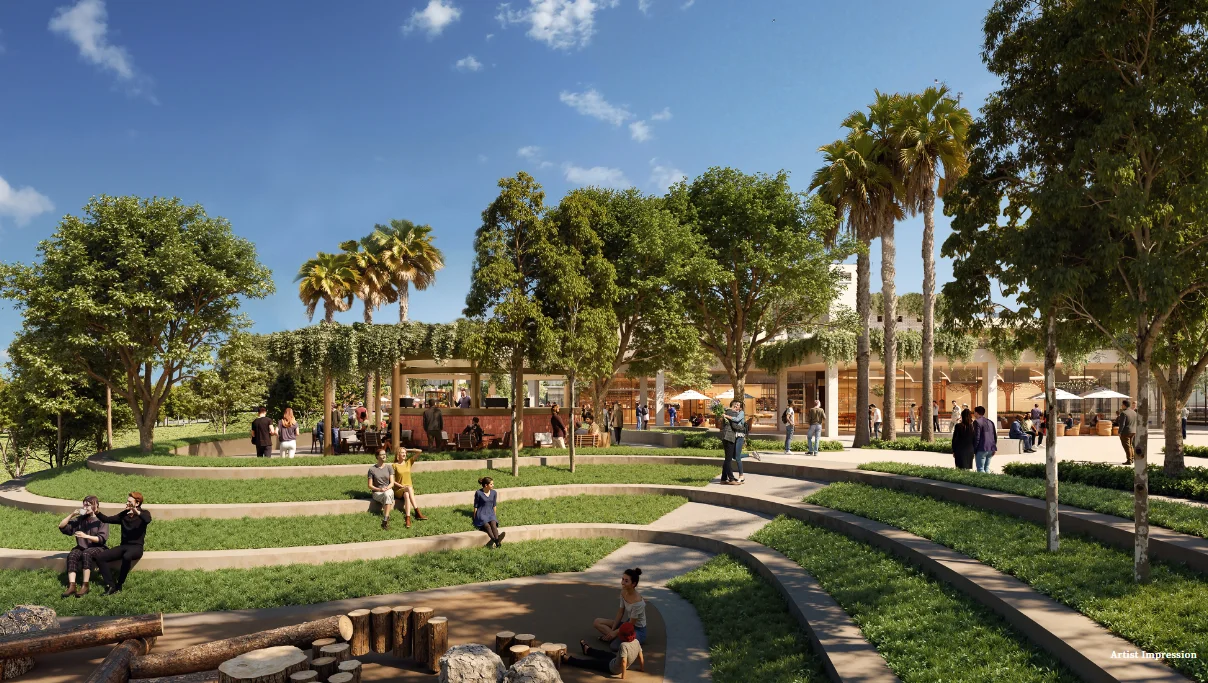
A six-hectare block on Blinzinger Rd in Banyo, once used as an Energex depot and left idle for about a decade, will be the first site brought to market under the new Land Activation Program. The site, which sits close to transport links, shops and schools, is expected to deliver up to 400 new homes and is being promoted as a way to lift housing supply more quickly in Brisbane’s north.
The Banyo site covers just over six hectares and has remained fenced and unused despite growing demand for housing in the surrounding suburbs.
Program material published by Economic Development Queensland states the land is suitable for residential development and could support several hundred dwellings. Information about how industry participants can register interest and submit proposals is available on the Economic Development Queensland Land Activation Program page.
How the Program Works
The Land Activation Program allows private developers to identify under-used public land and register interest in building housing, while public agencies are expected to flag sites that are no longer required for operational use. Economic Development Queensland will assess proposals to determine whether land is genuinely surplus and suitable for housing, with additional sites expected to be released across the state following the Banyo rollout.
Details of the program were published through an official statement outlining the aim of accelerating land supply and reducing delays tied to planning and approvals.
The Key Flashpoint: Affordability
Unlike earlier land partnership models, the current approach does not require social or affordable housing to be included when sites are sold to private developers. Supporters of the program argue that removing these conditions allows housing to be delivered faster and at lower upfront cost.
Critics say the absence of affordability settings means the plan is unlikely to help households on low incomes or those waiting for social housing, particularly as prices and rents continue to rise.
Why the Approach Has Shifted
The move follows reporting on a KPMG review of the former Ground Lease Model, which found the approach would have required significant public funding while delivering a limited number of homes. That analysis estimated a cost of $1.7 billion for 715 dwellings, prompting a shift toward a market-led strategy focused on releasing land rather than subsidising rents.
Property forecasts cited in recent reporting warn Brisbane home values could continue climbing, intensifying debate about whether increased supply alone will ease affordability pressures.
History of the Energex depot site in Banyo
The site on Blinzinger Rd in Banyo has a long industrial past tied to the electricity network in Brisbane’s north. A public notice about remediation works states that the facility was originally built for the electricity arm of Brisbane City Council and was later transferred to the former South East Queensland Electricity Board in 1977, before becoming known locally as the Energex Banyo depot.
The property operated from the 1950s until 2007, including use as an electrical transformer refurbishment facility. It was listed under Queensland’s Environmental Management Register due to its historical use for oil storage.
Planning material within Brisbane’s City Plan neighbourhood plan documents flags the Blinzinger Road precinct and notes housing outcomes tied to the site’s future once it was no longer needed for its former purpose. Separately, an industry project page on a replacement distribution centre states that the new facility was intended to replace the ageing Banyo operation for warehousing needs, supporting the view that activities shifted away from the Banyo depot over time.
Police have launched Operation Voltair in Nudgee and across Brisbane’s north to target drink and drug driving, speeding, fatigue, distraction, and failure to wear seatbelts in the lead-up to Christmas.
Operation Voltair began on 17 October 2025 under the North Brisbane District, focusing on the “Fatal Five” — key risk factors responsible for serious and fatal road crashes. These include speeding, drink and drug driving, not wearing seatbelts, fatigue, and distraction.
On the first night of the operation, officers conducted 855 roadside breath tests and 11 drug tests, resulting in 16 drivers being charged. Offences included six cases of drink driving, three of drug driving, and several incidents of unlicensed driving. Police also issued 28 traffic infringement notices.
Photo Credit: Queensland Police
Targeted Enforcement Along Gateway Motorway
In Nudgee, a 26-year-old Griffin man was stopped along the Gateway Motorway just after 7:30 p.m. and allegedly returned a blood alcohol reading of 0.170 — more than three times the legal limit. His licence was suspended on the spot, and he is expected to appear in Brisbane Magistrates Court on 17 November.
Another driver, a 47-year-old Mount Nebo man, was intercepted for testing on Mount Nebo Road, Enoggera Reservoir, on 19 October. He allegedly returned a reading of 0.121 and was charged with driving over the middle alcohol limit. He is due to appear in court on 5 November.
Fatal Five Focus and Road Safety Data
According to the Queensland Police Service, serious crashes can be significantly reduced when drivers avoid the Fatal Five behaviours. Research by the Centre for Accident Research and Road Safety – Queensland (CARRS-Q) shows that:
Speeding increases the likelihood of a casualty crash, even at just 5 km/h over the limit.
Drink driving contributes to around 30 per cent of fatal crashes nationally.
Drug driving carries similar crash risks to a blood alcohol level between 0.1 and 0.15 per cent.
Failure to wear a seatbelt makes drivers and passengers eight times more likely to die in a crash.
Fatigue and distraction remain leading causes of severe accidents.
Photo Credit: Queensland Police
Road Fatalities in 2025
By late October, the North Brisbane District had conducted more than 202,100 roadside breath tests this year. The district recorded ten road deaths in 2025, down from twenty in 2024.
Across Queensland, 243 lives have been lost so far this year, compared with 237 at the same time last year. The Brisbane Region reported 36 fatalities, a slight decrease from 38 in 2024.
Community Response
Community feedback on social media following the operation’s launch was mixed. Some residents supported the increased police presence and called for more patrols along busy corridors such as Gympie Road and the Bruce Highway. Others questioned the consistency of enforcement and urged greater visibility of police vehicles in suburban areas including Nundah and Nudgee.
Operation Voltair will continue through the remainder of 2025, with police maintaining proactive patrols and roadside testing across Brisbane’s north. The Queensland Police Service reiterated that preventing fatalities depends on shared responsibility among all motorists.