



Nudgee Oil Recycling Helps Tackle Brisbane’s Fatberg Problem

Used cooking oil collected through Brisbane’s resource recovery network, including at Nudgee, has helped build a local recycling business that now supplies refined oil to the poultry industry.


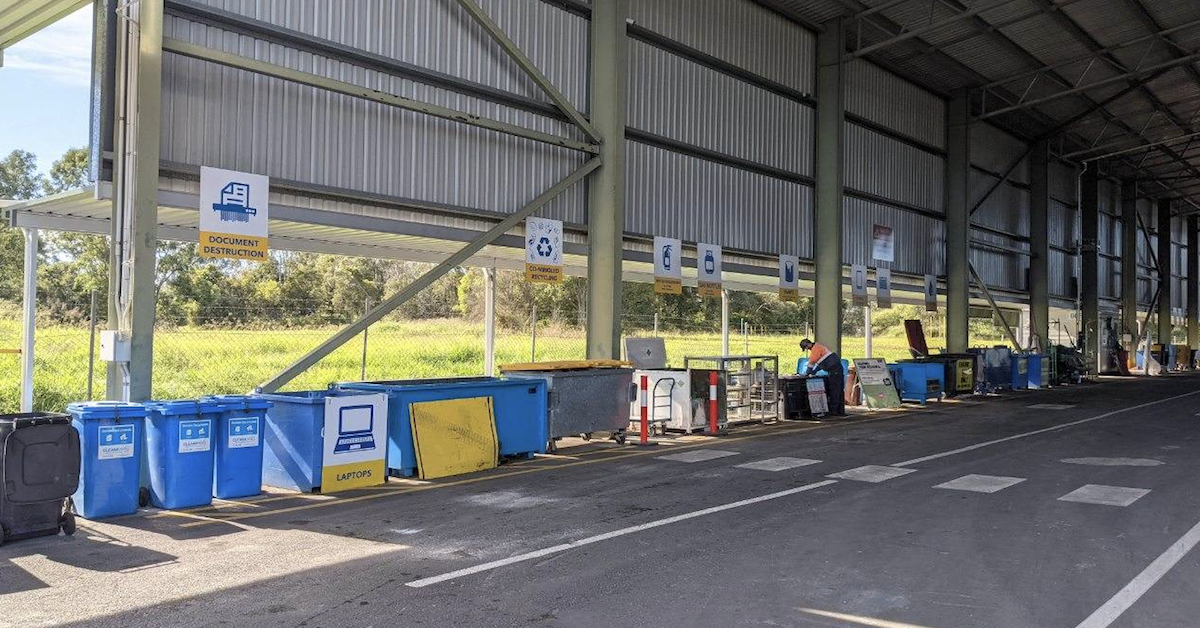
Brisbane City Council accepts up to 20 litres of cooking oil from residents at the Nudgee Resource Recovery Centre, giving households a disposal option that keeps fats and oils out of drains. Nudgee is one of four Council resource recovery centres across Brisbane and one of two classed as major centres.

From collection point to poultry feed

Gold Oil Solutions began operating in 2020 after directors Chris Chrysostomou and Len Hutton explored ways to reduce the amount of waste oil entering Brisbane’s wastewater system.

The company later established collection points at Council resource recovery centres in Nudgee, Chandler, Ferny Grove and Willawong. Those sites formed the foundation of its early collection volume before the business expanded into direct collections from cafes and restaurants across South East Queensland.

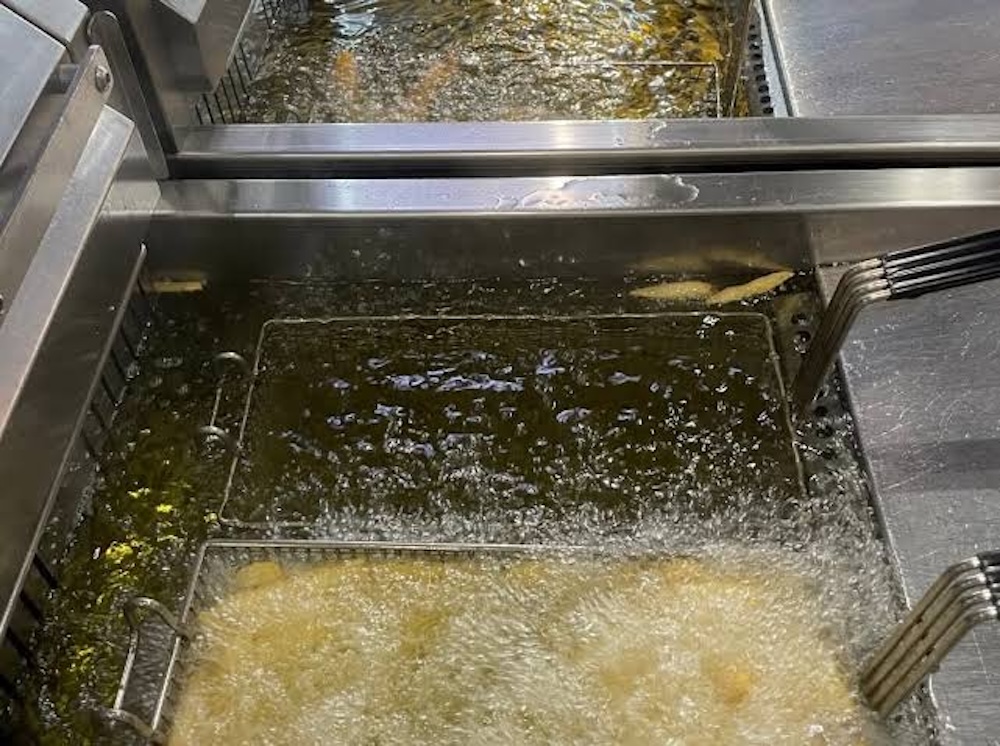
Used cooking oil collected by Gold Oil Solutions is processed by removing fine particles and heating it to kill bacteria before it is supplied to the animal-feed sector. Poultry producer Darwalla generally buys the refined oil for its Mt Cotton feed mill and breeding operation at Clifton.

The oil is used mainly as an energy source in poultry feed and also helps suppress dust during feed production. Wheat is one of Darwalla’s main feed ingredients but is relatively low in energy, so oil is used to lift the overall energy content of the feed.
Gold Oil Solutions now services hospitality businesses from Noosa to the Tweed and is seeking additional poultry and livestock customers as its supply grows and customer demand fluctuates.

When cooking oil becomes a fatberg

Cooking oil causes a different problem when it is poured down the sink. Fats and oils can cool and solidify inside sewer pipes before combining with wet wipes, food residue and other waste. Over time, the material can form hard blockages known as fatbergs.

In the 2017–18 financial year, fatbergs were blamed for more than 360 sewer blockages across the wastewater network serving Brisbane, Ipswich, the Lockyer Valley and Scenic Rim. More than 4,000 sewer blockages of all types were being cleared each year at the time.

Queensland Urban Utilities had earlier said one in four people poured cooking oils down the kitchen sink, warning that the oil could solidify after cooling and collect other material already inside sewer pipes.
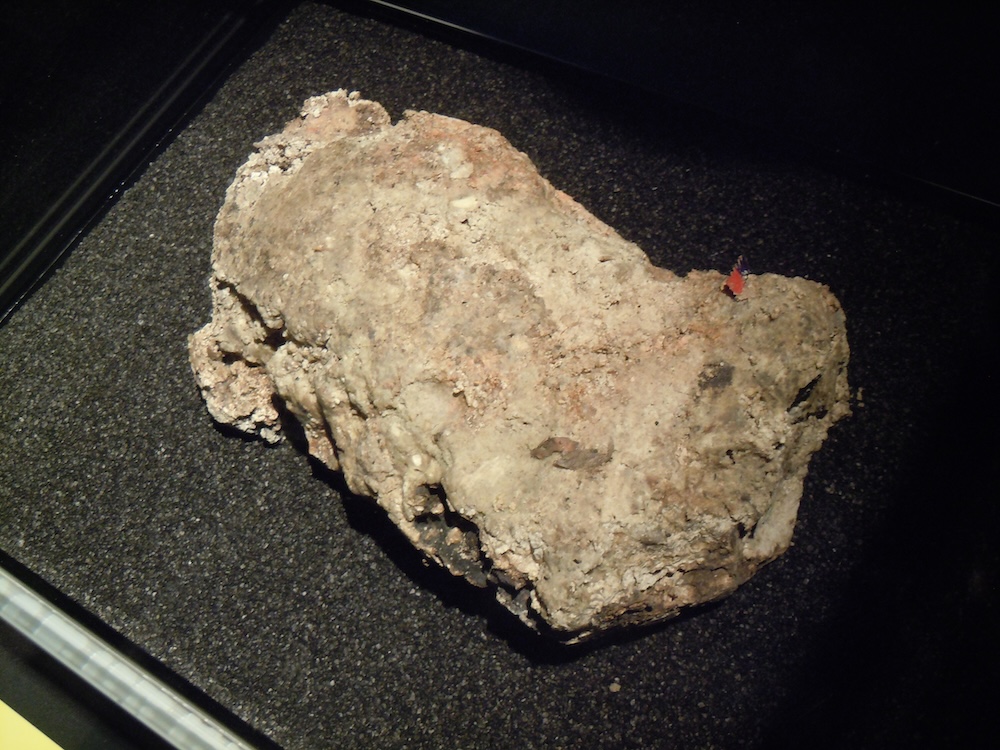
The largest fatberg the utility had recorded at the time was found beneath Bowen Hills. It measured about seven metres long and 60 centimetres wide and required a crane for removal. 

More recent national estimates put fat, oil and grease behind about 40 per cent of sewer blockages around Australia, with maintenance and rehabilitation costs estimated at about $100 million a year.

Nudgee’s recovery role is set to grow

Plans are also progressing to expand the amount of waste recovered at the Nudgee site.

The Queensland Government has approved a Brisbane City Council and Cleanaway project for a second surge pit at the Nudgee Resource Recovery Centre under the Resource Recovery Boost Fund.

The project is designed to separate more self-hauled dry waste and bulky kerbside material for external reprocessing instead of mixing it with material sent directly to landfill. The funding contract remains under development.


Nudgee already accepts a broad range of recyclable materials, including cardboard, metals, batteries, electronic waste, hard plastics, engine oil and cooking oil. For local households, taking used cooking oil to the centre keeps it out of household drains and places it into Brisbane’s recycling system, where recovered oil can be processed and reused rather than discarded.

Published 18-Sept-2026
Dog Owners Reminded to Check Off-Lead Rules in Community Parks

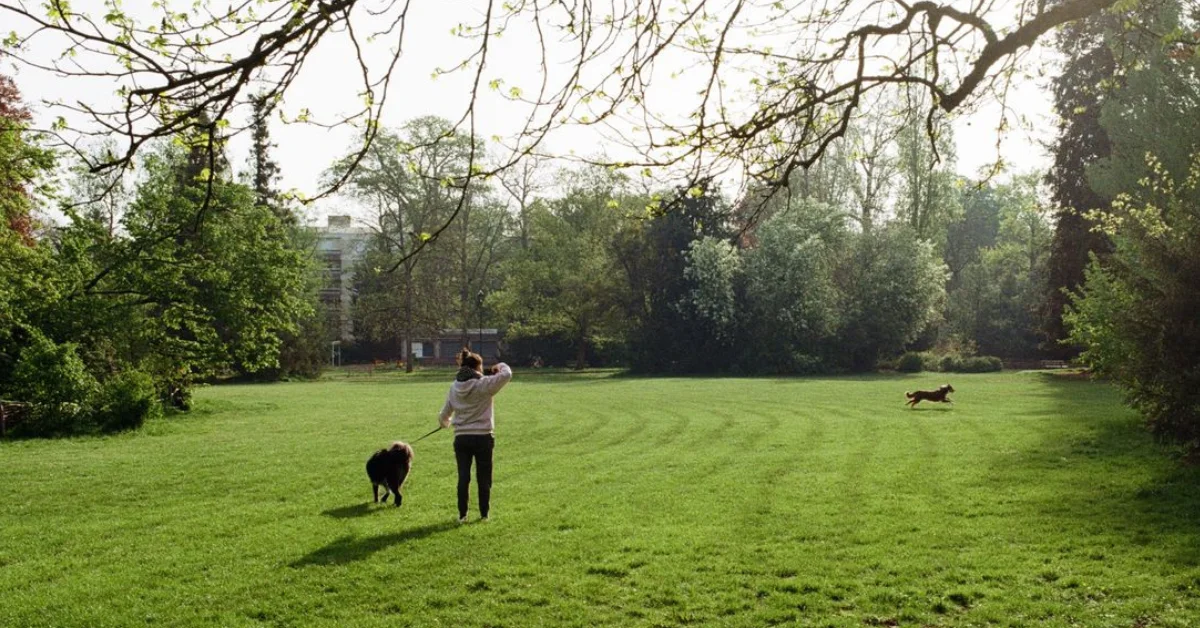
Dog owners are being reminded to check where their pets can be walked off lead, as concerns about dogs in community parks and fields highlight the importance of knowing designated areas and following local rules.


Read: The Therapy Dogs Turning Brisbane Airport Into a Happier Place to Travel


The reminder follows concerns raised by residents about dogs being walked off lead in community parks and fields. A post by Cr Adam Allan reminded dog owners that dogs must be securely on a lead in public unless they are in a designated and signed off-leash area.

Owners must also be able to physically control their dogs, including when inside an off-leash area. That means knowing the boundaries of the designated space and being prepared to respond if a dog becomes aggressive, barks excessively or displays other unwanted behaviour.

Off-leash options around Nundah and Nudgee

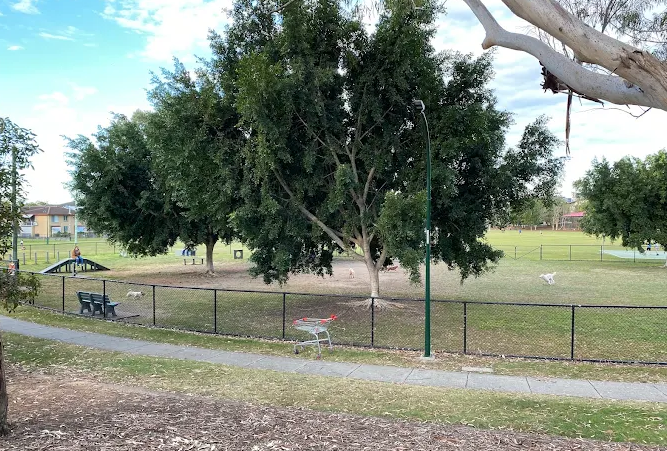
Boyd Park (Photo credit: Google Maps/Erin C)

There are several designated off-leash areas in and around Nundah and Nudgee, with a mix of fenced and unfenced spaces. In Nundah, Albert Bishop Park has a small fenced off-leash area accessed via Hedley Avenue, as well as a larger unfenced area. Boyd Park on Boyd Road is another fenced option.

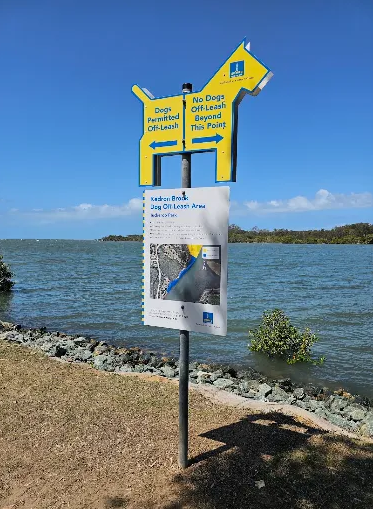
Nudgee has several designated areas, including Nudgee Waterholes Reserve and Nudgee Recreation Reserve on Elliott Road. Tuckeroo Park at Nudgee Beach also has an off-leash area, including access to Kedron Brook.

Other locations listed in the local reminder include Downfall Creek near Turquoise Place in Wavell Heights, with access to Downfall Creek, and the Kedron Brook access area via 5th Avenue in Kedron. The areas differ in their layout and facilities. Some are fenced, while others are unfenced, and some locations include separate spaces for smaller dogs.

The official Brisbane parks information identifies the Kedron Brook area as part of Tuckeroo Park at Nudgee Beach. It also notes that the former foreshore off-leash area on Nudgee Beach is now an on-leash area.

Rules and regulations for off-leash areas

Tuckeroo Park (Photo credit: Google Maps/Larry C)

Being in an off-leash area does not remove an owner’s responsibility to keep their dog under control. The rules state that owners should familiarise themselves with the specific regulations applying to each location, including the boundaries of unfenced designated zones and any restrictions that may apply.

Owners are expected to watch their dogs and respond promptly to signs of aggression, excessive barking or other unwanted behaviour. Dogs should also not create a nuisance for other dogs or their owners, including by entering areas designated for smaller dogs.

Another responsibility applies in off-leash areas: owners must clean up after their dogs and dispose of dog waste in the bins provided. Dog registration and vaccinations should also be kept up to date.

Check the signs before letting dogs off lead

For people walking dogs around Nundah and Nudgee, checking the signs before unclipping the lead can help clarify where off-leash access applies.

An off-leash designation applies to a specific area. It does not automatically extend beyond the boundaries of the designated zone, particularly at unfenced locations where there may be no physical barrier separating the area from surrounding parkland.


Read: Nudgee Dog Thwarts Early Morning Intruder and Sparks Community Security Drive


The official parks information provides a map search for finding designated off-leash areas and checking facilities at individual locations.

For local dog owners, the message is straightforward: know where off-leash access applies, keep dogs under control and clean up after them.

Published 20-August-2026

Childs Road Investigation To Examine Nudgee Intersection Changes

Separate road safety projects in Nudgee and Nundah will examine changes at the Childs Road intersection and add pedestrian refuges near three Nundah schools.


Funding has been secured for an investigation and upgrade design at the intersection of Childs Road and St Vincents Road in Nudgee, with the work focused on pedestrian and vehicle safety.

The investigation will consider widening the intersection, installing a splitter island and improving pedestrian crossing safety. The proposed island would be intended to slow drivers and discourage corner cutting.

The findings will be used to prepare a design for the location. Community input is expected once that design is available for consideration.

Pedestrian Refuges Near Nundah Schools

At Boyd Road and Park Road in Nundah, funding has been prioritised this financial year through Council’s Safe School Travel Infrastructure Program.

The project includes splitter island pedestrian refuges on Boyd Road and on both sides of Park Road. The refuges are intended to provide two-stage crossings for pedestrians while slowing vehicles and deterring corner cutting.

The intersection is next to Boyd Park and will serve Nundah State School, St Joseph’s Primary School and Mary MacKillop College.

Different Stages Across Nudgee And Nundah

The two projects address similar pedestrian and vehicle safety concerns but are at different stages.

Work at Childs Road and St Vincents Road remains in the investigation and design phase. At Boyd Road and Park Road, funding for the pedestrian refuge project has been prioritised during the current financial year.

Community Responses Raise Design Questions

Public comments on the announcements included support for the projects as well as questions about the proposed treatments.

One commenter argued that splitter islands could increase pedestrian risk and suggested road narrowing and raised pedestrian crossings as alternatives. Another asked for large vehicles to be considered during the Childs Road design process because the intersection was described as already tight.

Other responses raised concerns about possible parking impacts following the installation of pedestrian refuges and pointed to the nearby railway crossing as a broader issue. Requests were also made for improvements near Northgate State School and along other local roads, including Acacia Avenue, Earnshaw Road and Nudgee Road.


The Childs Road investigation will determine the design options for the intersection before the proposal is opened for community input.

Published 14-July-2026

Nudgee Beach Boardwalk Reopens After Loop Work 

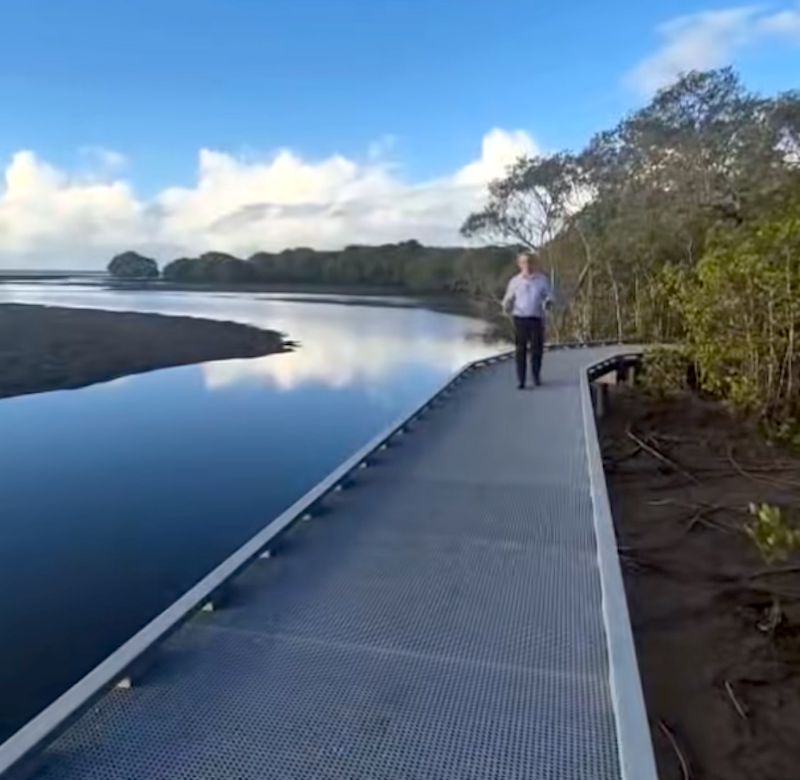
The Nudgee Beach Boardwalk has reopened after works to replace and realign part of the 1.5-kilometre loop were completed ahead of schedule, restoring full access for walkers, runners and sightseers.


Nudgee Beach Boardwalk Open Again

The Nudgee Beach Boardwalk has reopened after works to replace and realign a section of the loop were completed ahead of schedule.

The affected section had become unsafe, prompting works to restore a safer and more connected route through the Nudgee Beach area. With the construction now finished, the full 1.5-kilometre loop is available again for people using the boardwalk for walking, running and sightseeing.

The works ran from early May 2026 to early June 2026. The section that was closed during construction has now returned to public use.

Photo Credit: Facebook/Cr Adam Allan

Full Loop Restored At Nudgee Beach

The Nudgee Beach Boardwalk is a popular bayside route for locals and visitors, passing through coastal surrounds with wetlands, birdlife and views of the coastline.

The reopened section restores access to the complete loop, allowing visitors to move through the full boardwalk route again. The works involved replacing and realigning the affected part of the structure rather than only reopening the previous section.

The upgrade provides a safer and more continuous experience for walkers, runners and sightseers using the boardwalk. The full route is now available for short outings, morning walks and time outdoors around Nudgee Beach.

Wetlands And Coastline Back On The Route

The return of the complete loop reconnects visitors with the boardwalk’s bayside setting, including its wetlands, birdlife and coastal views.

The boardwalk’s reopening follows the end of the temporary closure needed for the replacement and realignment works. With the project finished, visitors can once again use the full circuit rather than only part of the route.


The completed works bring the Nudgee Beach Boardwalk back into full public use after the construction period, restoring one of the area’s short outdoor routes for local users and visitors.

Published 18-June-2026

Nudgee Angler Lands Monster Fish During Aussie Junior Fishing Classic

“Time spent fishing is time well spent” has become a guiding motto for Nudgee teenager Nate Willcox, whose love of Brisbane waterways is now leading to big catches in a national junior competition.


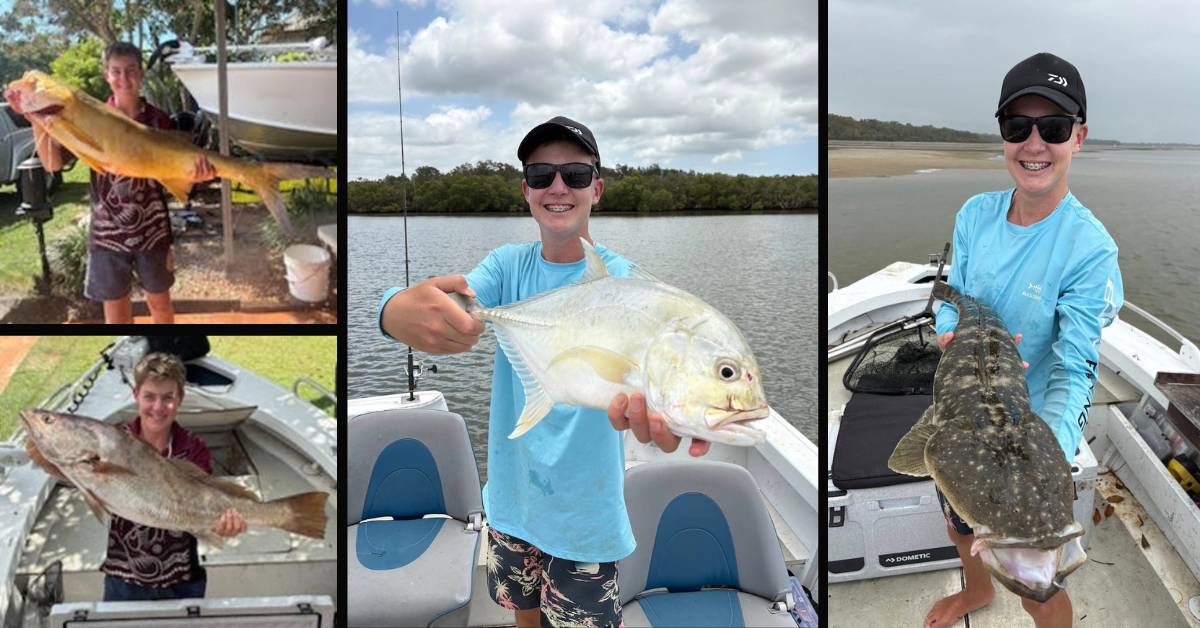
The 15-year-old recently landed several standout catches during the April round of the Aussie Junior Fishing Classic, including a 122 cm threadfin salmon and a 105 cm jewfish caught in local waters.

Run by Queensland organisation 2 Bent Rods, the competition gives young anglers aged between 3 and 17 the chance to fish anywhere in Australia while competing across multiple categories.

Growing Up Around Nudgee’s Waterways

Nate said he has loved fishing for as long as he can remember, with many of those early experiences happening alongside his mum, stepdad and relatives.

“My whole family loves going fishing,” he said.

“It doesn’t matter if we catch anything or not, it’s always good to spend time together and have a bit of rivalry on who catches the biggest fish.”

Fishing trips around Nudgee Beach and the Port of Brisbane eventually turned into something more serious as Nate began targeting larger species including jewfish, threadfin salmon and giant trevally.

He said the Port of Brisbane remains one of his favourite places to chase jewfish and threadfin, while Nudgee Beach is his preferred spot for whiting and flathead using yabbies and soft plastics.

Monster Catches During National Competition

During the April competition, Nate reeled in a 122 cm threadfin salmon using live herring and 20 lb leader. On the same night, he also hooked a 105 cm jewfish while chasing cod using live tailor bait.

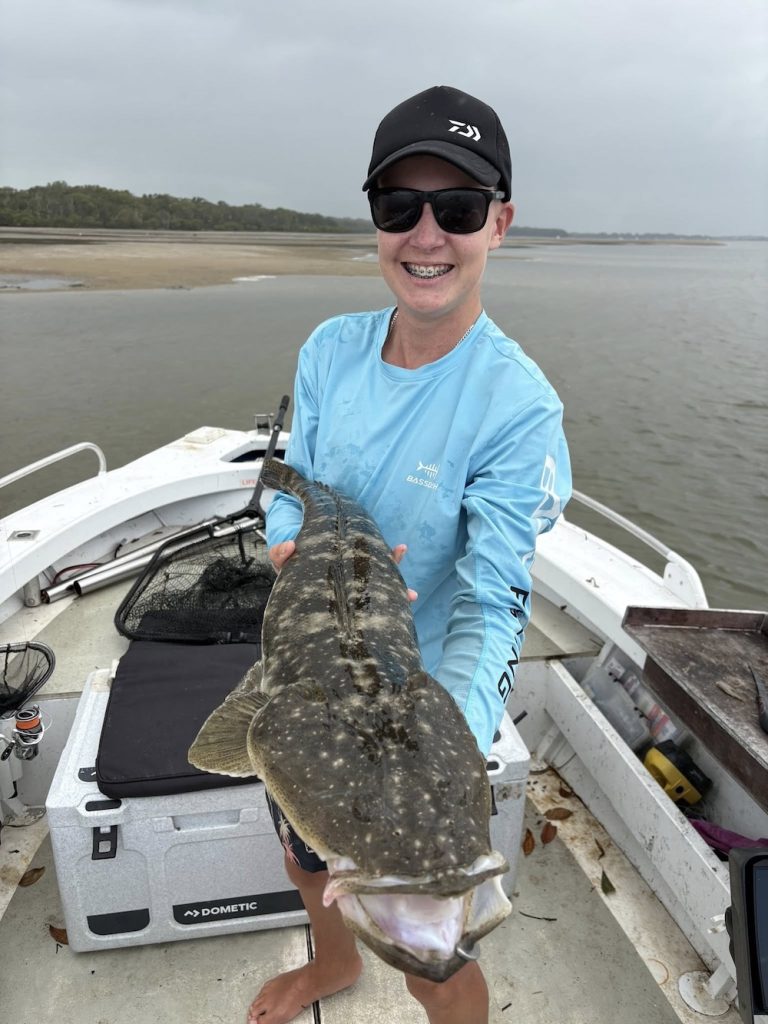
Photos shared from the event also show Nate holding an 85 cm flathead caught in shallow water near Bribie Island, along with a giant trevally landed on a topwater stick bait.

His favourite species, however, remains the mulloway, also known as jewfish.

“My favourite fish to catch is the Mulloway/Jewfish, especially when they get over that metre-10 mark,” he said.

Photo Credit: Supplied

Junior Fishing Event Continues to Grow

The Aussie Junior Fishing Classic started as the Queensland Kids Fishing Classic before expanding into a national competition over the past two years. According to 2 Bent Rods, the event was created to encourage young people to spend more time outdoors while building confidence through recreational fishing.

The competition now includes categories covering fish species, crab catches and environmental activities such as rubbish collection while fishing.

Organisers say the event has attracted families from across Australia as interest in youth fishing continues to grow.

Photo Credit: Supplied

More Than Just Catching Fish

While Nate’s catches have attracted attention online, he said one of the best parts of the competition is the chance to spend more time outdoors with mates and family.

“I can’t wait for the next AJFC so I can have an excuse to go fishing more but also to spend time with mates and get off screens,” he said. 

Another quote that has stayed with him is simple: “Chase fish, not drama and attention.”

Photo Credit: Supplied

The next Aussie Junior Fishing Classic will run from June 27 to July 12. The competition allows young anglers aged between 3 and 17 to fish from almost anywhere in Australia, provided they are fishing legally within local rules and regulations. 

Participants can enter catches across 15 categories, including species divisions, crab catches, most species caught and even a rubbish collection category designed to encourage care for waterways and the environment.

The event began as the Queensland Kids Fishing Classic before rapidly expanding into a national competition as more families joined from across the country. Organisers say the competition was created to give young people a fun and supportive way to enjoy the outdoors, spend time with family and build confidence through recreational fishing. 


More information is available through the 2 Bent Rods website and the AJFC Facebook group.

Published 25-May-2026

The Creek That Runs Through Nundah and Nudgee Has the Most Plastic of Any in Brisbane, New Research Finds

Kedron Brook, the waterway that winds through Brisbane’s north before emptying into Moreton Bay at Nudgee Beach, carries the highest plastic microparticle load of any creek studied in the city, according to new research from Queensland University of Technology.


The finding comes from a year-long study published in the journal Environmental Pollution, which examined microplastics in the sediment of three Brisbane creeks: Kedron Brook, Bulimba Creek and Enoggera Creek.

For residents in Nundah, Nudgee and the suburbs along the brook’s lower stretches, the results put into scientific focus something many may have long suspected: the waterway that runs through their backyards is carrying the weight of decades of urban runoff.

Kedron Brook recorded a median abundance of approximately 4,400 plastic microparticles per kilogram of dry sediment, the highest of the three waterways. Bulimba Creek came in second at roughly 4,100 items per kilogram, while Enoggera Creek recorded the lowest load at approximately 2,800 items per kilogram.

A waterway shaped by what surrounds it

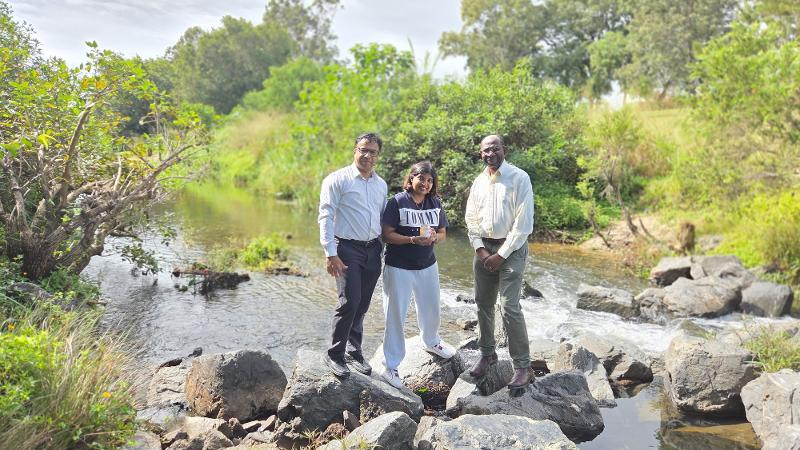
The research team, led by PhD candidate Heshani Mudalige from QUT’s School of Chemistry and Physics, sampled six sites on each creek from their upstream headwaters down to estuarine level, repeating the process four times across a full year to capture seasonal variation.

Photo Credit: CC BY-SA 4.0/Q8682/Wikimedia Commons

The results point squarely to land use as the driving force behind Kedron Brook’s elevated plastic load. The brook passes through commercial and industrial areas along its journey to Moreton Bay, including the Brisbane Airport precinct, where ongoing construction, single-use plastic disposal, food packaging waste and adjacent recreational areas all add to the plastic burden washing into the waterway.

Stormwater runoff from residential households, sports fields and parks further upstream in suburbs including Mitchelton, Stafford and Grange contributes to the accumulation.

“Kedron Brook has extensive flat areas surrounded by impervious surfaces which favour depositing of microplastics through runoff and the retention of them,” Mudalige said.

The dominant plastic types found across the waterways included polyethylene, polypropylene and polymethyl methacrylate, with Kedron Brook specifically showing high levels of polyethylene alongside polypropylene and polystyrene.

Photo Credit: Wikimedia Commons

These are, in other words, the everyday materials of suburban life, broken down into particles small enough to travel undetected through stormwater drains and into the creek system.

Mudalige found that seasonal variation played a significant role in the plastic load. Kedron Brook’s levels peaked in March, driven by high-flow periods from summer rains that deposit and trap particles in the sediment. By September, its load had dropped to its lowest point.

The brook’s path to Moreton Bay

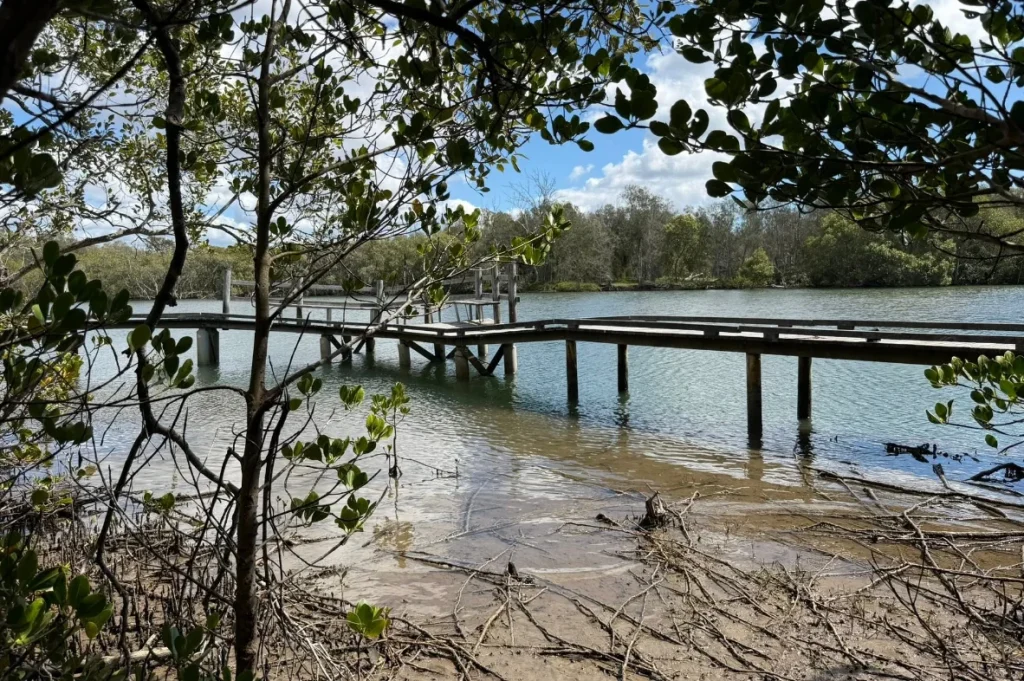
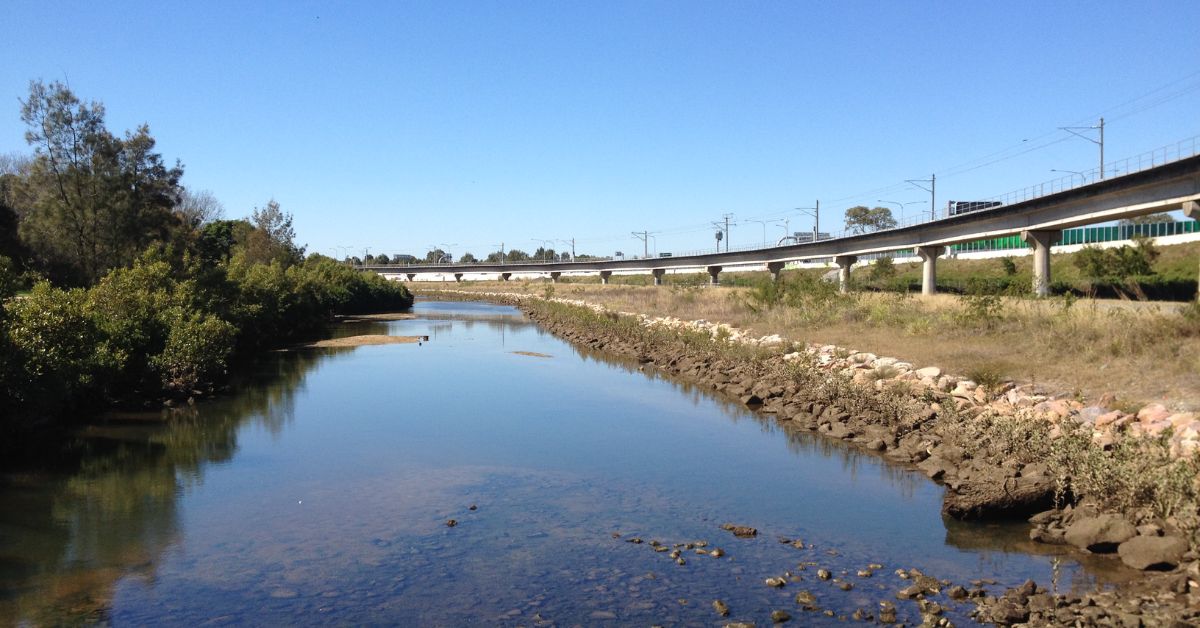
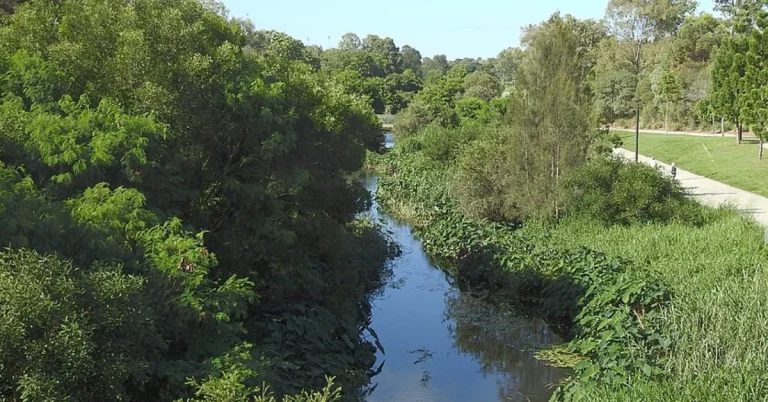
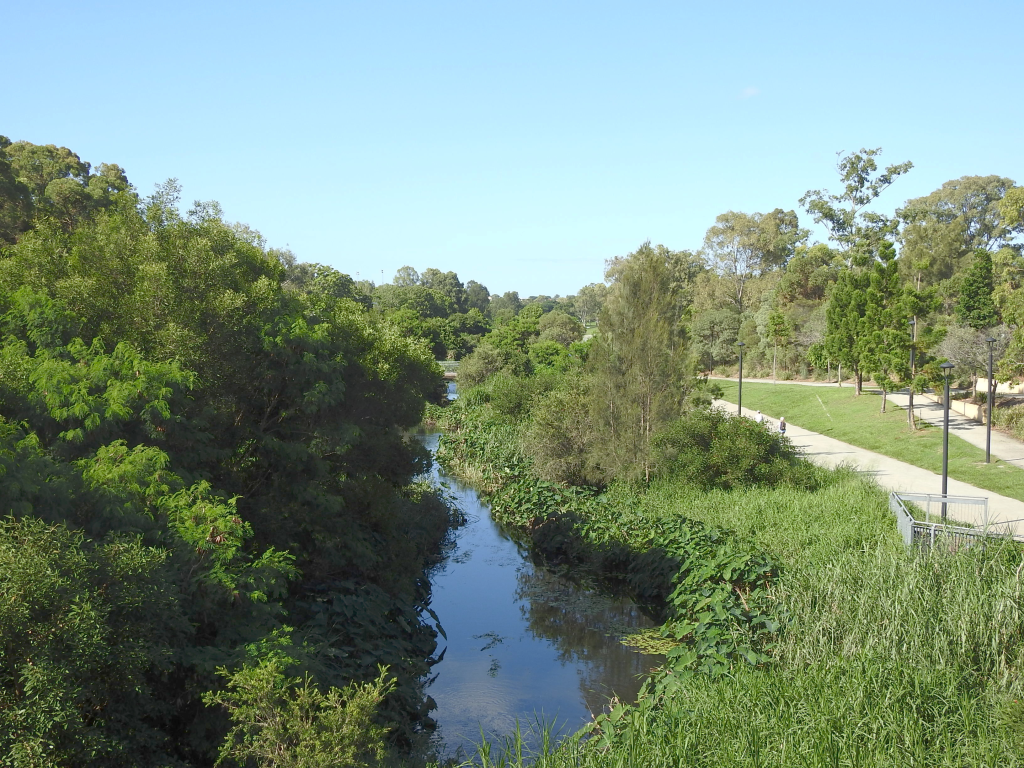
Kedron Brook originates in the Upper Kedron and Ferny Grove area before winding through Keperra, Mitchelton, Everton Park, Stafford, Grange, Lutwyche, Wooloowin, Clayfield and Hendra. In its lower reaches, it becomes the Kedron Brook Floodway, passing through Nundah and Nudgee before discharging into Moreton Bay at Nudgee Beach.

Photo Credit: Wikimedia Commons

The brook’s relatively flat gradient in these lower suburban stretches means plastic particles slow down and settle into the sediment rather than flushing through.

Associate Professor Prasanna Egodawatta, from QUT’s School of Civil and Environmental Engineering and a co-researcher on the study, described highly urbanised creek catchments in South-East Queensland as major contributors to microplastic pollution in Moreton Bay.

Photo Credit: QUT

“This study is a first step towards quantifying land-based microplastic inputs to Moreton Bay via the stormwater pathway,” Professor Egodawatta said. “The hydrologic and hydraulic characteristics of a creek, shaped by its morphology and longitudinal profile, dictate microplastic transport processes within the system.”

Enoggera Creek’s comparatively lower plastic load came with an explanation of its own. The Enoggera Dam sits upstream, regulating flow and trapping a significant portion of the plastic load before it travels further downstream, effectively acting as an unintended filter.

A first step, not a final answer

The research team, which also included Professor Godwin Ayoko from QUT’s School of Chemistry and Physics and Professor Ashantha Goonetilleke from Civil and Environmental Engineering, framed the study as foundational groundwork rather than a complete picture.

Understanding how much plastic reaches Moreton Bay through the stormwater pathway is still being mapped, and this study provides the first comparative data set across three catchments with distinct land-use profiles.

For Nundah and Nudgee residents who swim, fish or simply walk along the brook’s final stretches, the research underlines the connection between what ends up in street drains kilometres away and what accumulates in the waterway that passes their suburb before reaching the bay.

The full study, Catchment characteristics and land-use influence on microplastics distribution in freshwater sediments, is available through the journal Environmental Pollution.


Published 25-May-2026

Operation Voltair Targets High-Risk Driving in Nudgee Ahead of Christmas

Police have launched Operation Voltair in Nudgee and across Brisbane’s north to target drink and drug driving, speeding, fatigue, distraction, and failure to wear seatbelts in the lead-up to Christmas.


Operation Overview in Nudgee

Operation Voltair began on 17 October 2025 under the North Brisbane District, focusing on the “Fatal Five” — key risk factors responsible for serious and fatal road crashes. These include speeding, drink and drug driving, not wearing seatbelts, fatigue, and distraction.

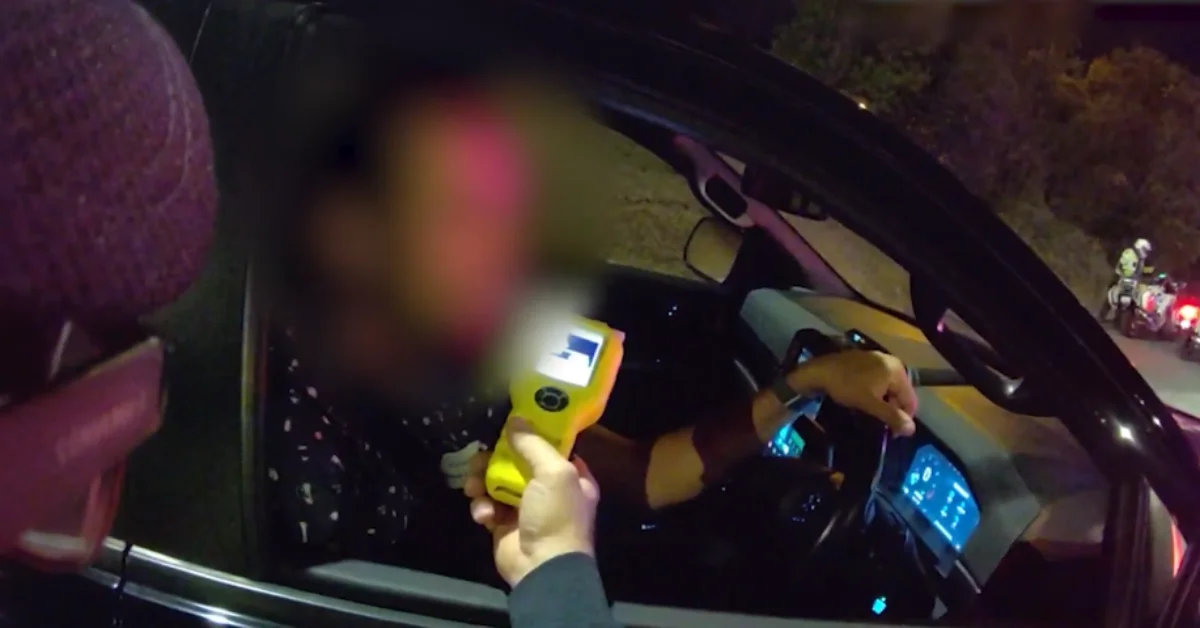
On the first night of the operation, officers conducted 855 roadside breath tests and 11 drug tests, resulting in 16 drivers being charged. Offences included six cases of drink driving, three of drug driving, and several incidents of unlicensed driving. Police also issued 28 traffic infringement notices.

Operation Voltair Nudgee
Photo Credit: Queensland Police

Targeted Enforcement Along Gateway Motorway

In Nudgee, a 26-year-old Griffin man was stopped along the Gateway Motorway just after 7:30 p.m. and allegedly returned a blood alcohol reading of 0.170 — more than three times the legal limit. His licence was suspended on the spot, and he is expected to appear in Brisbane Magistrates Court on 17 November.

Another driver, a 47-year-old Mount Nebo man, was intercepted for testing on Mount Nebo Road, Enoggera Reservoir, on 19 October. He allegedly returned a reading of 0.121 and was charged with driving over the middle alcohol limit. He is due to appear in court on 5 November.

Fatal Five Focus and Road Safety Data

According to the Queensland Police Service, serious crashes can be significantly reduced when drivers avoid the Fatal Five behaviours. Research by the Centre for Accident Research and Road Safety – Queensland (CARRS-Q) shows that:

  • Speeding increases the likelihood of a casualty crash, even at just 5 km/h over the limit.
  • Drink driving contributes to around 30 per cent of fatal crashes nationally.
  • Drug driving carries similar crash risks to a blood alcohol level between 0.1 and 0.15 per cent.
  • Failure to wear a seatbelt makes drivers and passengers eight times more likely to die in a crash.
  • Fatigue and distraction remain leading causes of severe accidents.
Queensland Police
Photo Credit: Queensland Police

Road Fatalities in 2025

By late October, the North Brisbane District had conducted more than 202,100 roadside breath tests this year. The district recorded ten road deaths in 2025, down from twenty in 2024.

Across Queensland, 243 lives have been lost so far this year, compared with 237 at the same time last year. The Brisbane Region reported 36 fatalities, a slight decrease from 38 in 2024.

Community Response

Community feedback on social media following the operation’s launch was mixed. Some residents supported the increased police presence and called for more patrols along busy corridors such as Gympie Road and the Bruce Highway. Others questioned the consistency of enforcement and urged greater visibility of police vehicles in suburban areas including Nundah and Nudgee.

Continued Safety Enforcement


Operation Voltair will continue through the remainder of 2025, with police maintaining proactive patrols and roadside testing across Brisbane’s north. The Queensland Police Service reiterated that preventing fatalities depends on shared responsibility among all motorists.

Published 25-Oct-2025

New Road Safety Cameras Planned in Nudgee

Nudgee will be part of Queensland’s new road safety enforcement measures, with point-to-point speed cameras planned for the Gateway Motorway North upgrade.


Rising Road Toll

Queensland has recorded 189 road deaths so far this year, two more than the same period last year. In 2023, 302 lives were lost, the highest toll since 2009. Speeding was a factor in almost one-quarter of those fatalities.

Safety Measures at Nudgee

As part of the Gateway Motorway North upgrade, point-to-point speed cameras will be installed in the Nudgee corridor. These cameras track average speeds over longer distances, targeting persistent speeding behaviour. They will undergo testing before enforcement begins in mid to late 2026.

Nudgee road safety
Photo Credit: Pexels

Statewide Road Investment

The installation forms part of a wider safety program. Over the next four years, $25.5 billion has been allocated to road projects, including $9 billion for the Bruce Highway program. Another $100 million has been set aside for the Country Roads Connect scheme, which aims to improve safety on rural and remote corridors.

Effectiveness of Point-to-Point Cameras

Research shows point-to-point cameras can reduce fatal and serious crashes by up to 85 per cent. Authorities describe them as preventative tools that deter speeding and support safer driving.

Gateway Motorway
Photo Credit: Pexels

Calls for Stronger Enforcement

RACQ has backed the rollout of new cameras, noting that speeding remains the leading cause of road trauma, with three-quarters of motorists admitting to the behaviour. Road safety advocates have also urged greater use of enforcement, including roadside drug and alcohol testing, stronger penalties, and more police presence on high-risk roads.

Cost of Road Trauma

Between 2019 and 2023, there were 31,742 crashes causing death or serious injury in Queensland, at a social cost estimated at $35.7 billion. This figure includes medical expenses, vehicle damage, lost productivity, and the broader social impact on families and communities.

Next Steps


With enforcement scheduled to start from late next year, drivers travelling through Nudgee on the Gateway Motorway will face stricter monitoring. Advocates say reducing speeding and changing driving behaviour remain central to lowering Queensland’s road toll.

Published 3-Sep-2025

Railway Parade Connection Project Begins in Nudgee

Preparations have begun for the construction of a new road connection between Railway Pde and Saint Achs St, aimed at improving local access and transport links.


Background to the Project

The works will connect Railway Parade with Saint Achs Street, contributing to improved connectivity within the local road network. Initial notices were delivered to residents earlier this year, with formal works beginning from 19 May 2025, subject to weather and ground conditions.

Railway Parade connection project
Photo Credit: BCC

What the Works Involve

A new segment of road will be built to establish a direct link between Railway Parade and Saint Achs Street. A pedestrian crossing will be installed on Saint Achs Street, along with new kerb ramps. BCC will also realign the kerb and extend the footpath network between Sheldon Street and Saint Achs Street. Additional features include lighting, signage, line marking, and landscaping within the project area.

To enhance visibility for drivers, yellow no stopping lines will be added on both Railway Parade and Saint Achs Street.

Nudgee road project
Photo Credit: Google Maps

Impacts on the Local Community

Residents and commuters in Nudgee can expect increased noise, vibration, dust, and construction vehicle activity while works are in progress. Traffic conditions will be adjusted to include reduced speed limits, and traffic management signage will be in place to guide pedestrians, cyclists and drivers.

The no stopping zones are being extended on key streets to maintain safe visibility and access throughout the work zone. While most activity will occur between 7 a.m. and 5 p.m. from Monday to Saturday, night works may also be required with prior notice.

Nudgee road development
Photo Credit: Google Maps

Community Communication

Local residents have received updates via flyers and council notices. A formal Works Notice was distributed in early May, detailing timelines, scope, and contact details for further information. BCC has encouraged residents to follow project updates through their website or via direct contact.

Project Timeline and Next Steps


Construction is scheduled to conclude by late 2025, pending weather and site conditions. BCC has committed to minimising disruptions and completing the works as efficiently as possible to deliver benefits to motorists, pedestrians and cyclists travelling through the Nudgee area.

Published 9-May-2025

Nudgee Community Unites for Jonny Munro’s Cancer Battle 

Jonny Munro, a Nudgee College graduate, is facing a life-changing battle. He was diagnosed with advanced Ewing’s Sarcoma, a rare and aggressive form of cancer. The local community unites to support him and his family as they navigate this challenging journey. 


A Life Changed Overnight 

Jonny Munro, 18, described as a fit and healthy young man, began experiencing pain in his leg a few weeks ago. After undergoing tests, specialists diagnosed him with advanced Ewing’s Sarcoma, a rare and aggressive cancer that primarily affects young people. 

Jonny, who graduated from Nudgee College in 2023, is a second-year apprentice. His diagnosis came as a shock to his family, friends, and the wider community. Jonny will undergo intensive chemotherapy and radiation for up to a year, with the possibility of reconstructive surgery. 

The Nudgee community is uniting to support Jonny after his diagnosis, as it has profoundly impacted him and his family. 

A Strong Support Network 

Jonny is surrounded by his close-knit family, including his parents, Lucille and Steve, his two older brothers, and his supportive girlfriend. Despite the emotional and financial toll of the diagnosis, Jonny remains determined to fight the illness, especially now that his first chemotherapy session has commenced. 

Jonny Munro
Photo Credit: GoFundMe

The Community’s Response 

Jonny cannot work during his treatment. To help cover the medical expenses, a fundraising campaign has been set up. The GoFundMe campaign, organised by Tricia Steffen, has already raised $74,905 AUD. 801 donations have been made, exceeding the initial $60,000 target. 

Nudgee cancer support
Photo Credit: GoFundMe

An Ongoing Battle 


Jonny’s journey through cancer treatment is going to be long and difficult. The Munro family remains resilient. The family is thankful to everyone who has donated and sent messages of encouragement. Tricia Steffen shared that the family’s spirit remains strong despite the challenges. The community’s support means the world to them as Jonny fights for a healthy future.

Published 1-Apr-2025