





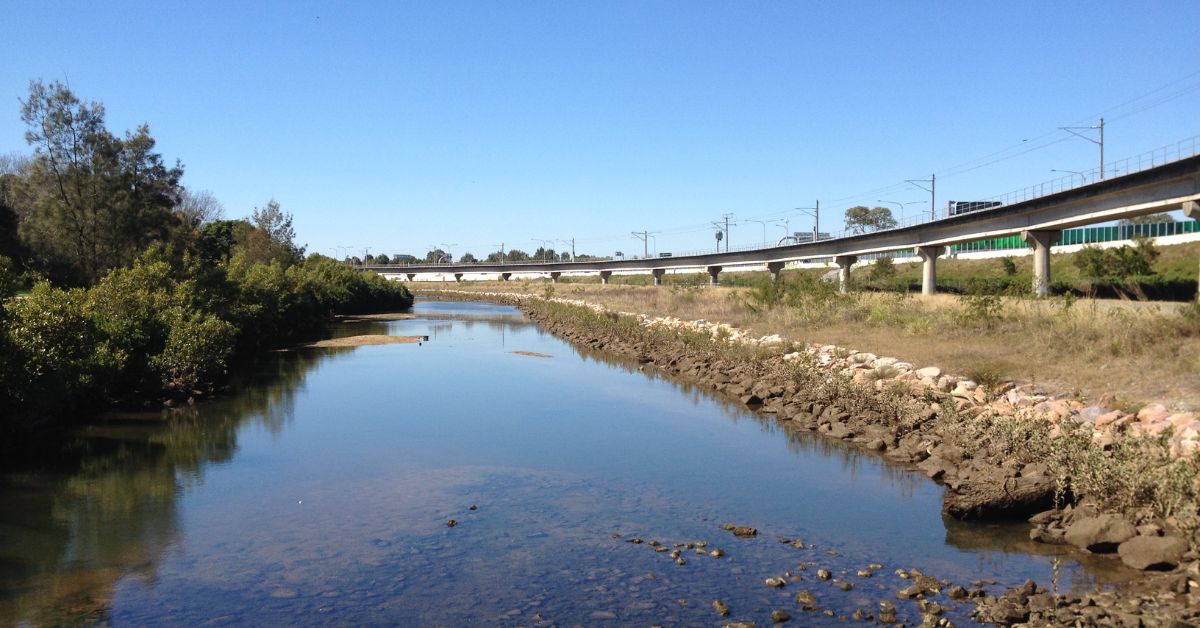
Kedron Brook, the waterway that winds through Brisbane’s north before emptying into Moreton Bay at Nudgee Beach, carries the highest plastic microparticle load of any creek studied in the city, according to new research from Queensland University of Technology.
The finding comes from a year-long study published in the journal Environmental Pollution, which examined microplastics in the sediment of three Brisbane creeks: Kedron Brook, Bulimba Creek and Enoggera Creek.
For residents in Nundah, Nudgee and the suburbs along the brook’s lower stretches, the results put into scientific focus something many may have long suspected: the waterway that runs through their backyards is carrying the weight of decades of urban runoff.
Kedron Brook recorded a median abundance of approximately 4,400 plastic microparticles per kilogram of dry sediment, the highest of the three waterways. Bulimba Creek came in second at roughly 4,100 items per kilogram, while Enoggera Creek recorded the lowest load at approximately 2,800 items per kilogram.
A waterway shaped by what surrounds it
The research team, led by PhD candidate Heshani Mudalige from QUT’s School of Chemistry and Physics, sampled six sites on each creek from their upstream headwaters down to estuarine level, repeating the process four times across a full year to capture seasonal variation.
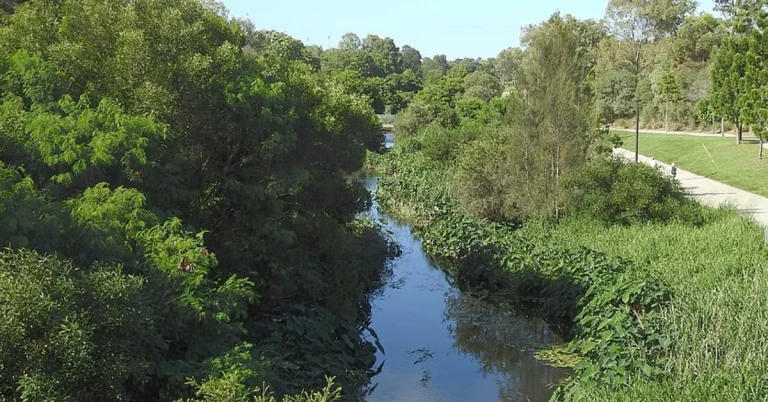
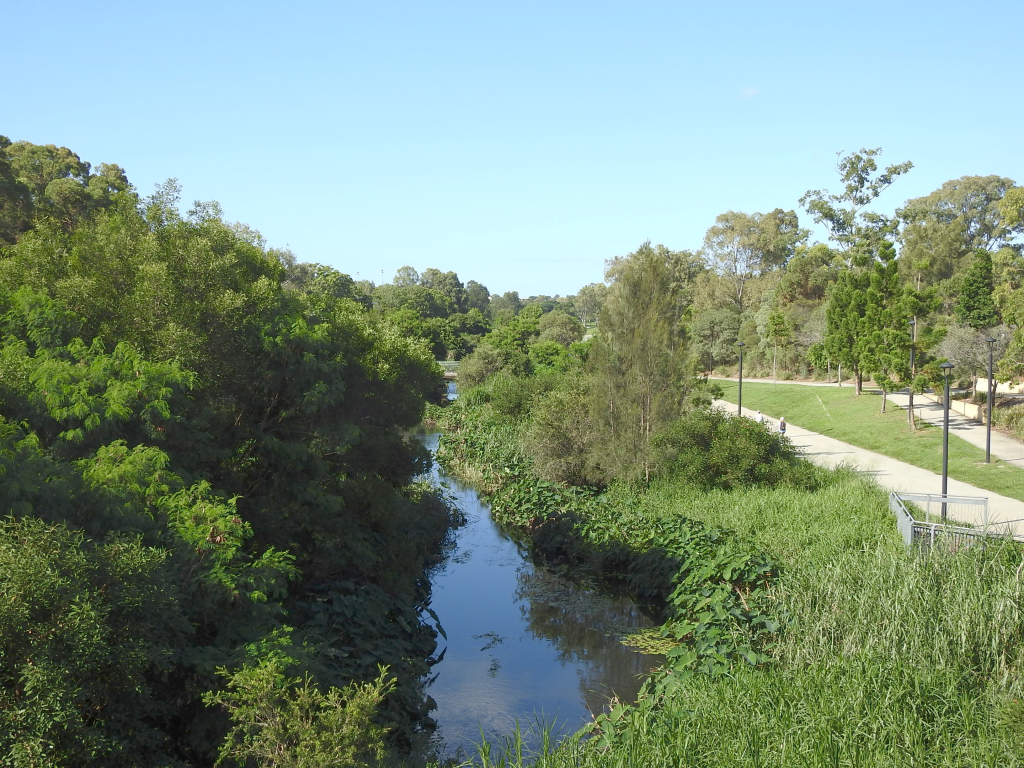
The results point squarely to land use as the driving force behind Kedron Brook’s elevated plastic load. The brook passes through commercial and industrial areas along its journey to Moreton Bay, including the Brisbane Airport precinct, where ongoing construction, single-use plastic disposal, food packaging waste and adjacent recreational areas all add to the plastic burden washing into the waterway.
Stormwater runoff from residential households, sports fields and parks further upstream in suburbs including Mitchelton, Stafford and Grange contributes to the accumulation.
“Kedron Brook has extensive flat areas surrounded by impervious surfaces which favour depositing of microplastics through runoff and the retention of them,” Mudalige said.
The dominant plastic types found across the waterways included polyethylene, polypropylene and polymethyl methacrylate, with Kedron Brook specifically showing high levels of polyethylene alongside polypropylene and polystyrene.
These are, in other words, the everyday materials of suburban life, broken down into particles small enough to travel undetected through stormwater drains and into the creek system.
Mudalige found that seasonal variation played a significant role in the plastic load. Kedron Brook’s levels peaked in March, driven by high-flow periods from summer rains that deposit and trap particles in the sediment. By September, its load had dropped to its lowest point.
The brook’s path to Moreton Bay
Kedron Brook originates in the Upper Kedron and Ferny Grove area before winding through Keperra, Mitchelton, Everton Park, Stafford, Grange, Lutwyche, Wooloowin, Clayfield and Hendra. In its lower reaches, it becomes the Kedron Brook Floodway, passing through Nundah and Nudgee before discharging into Moreton Bay at Nudgee Beach.
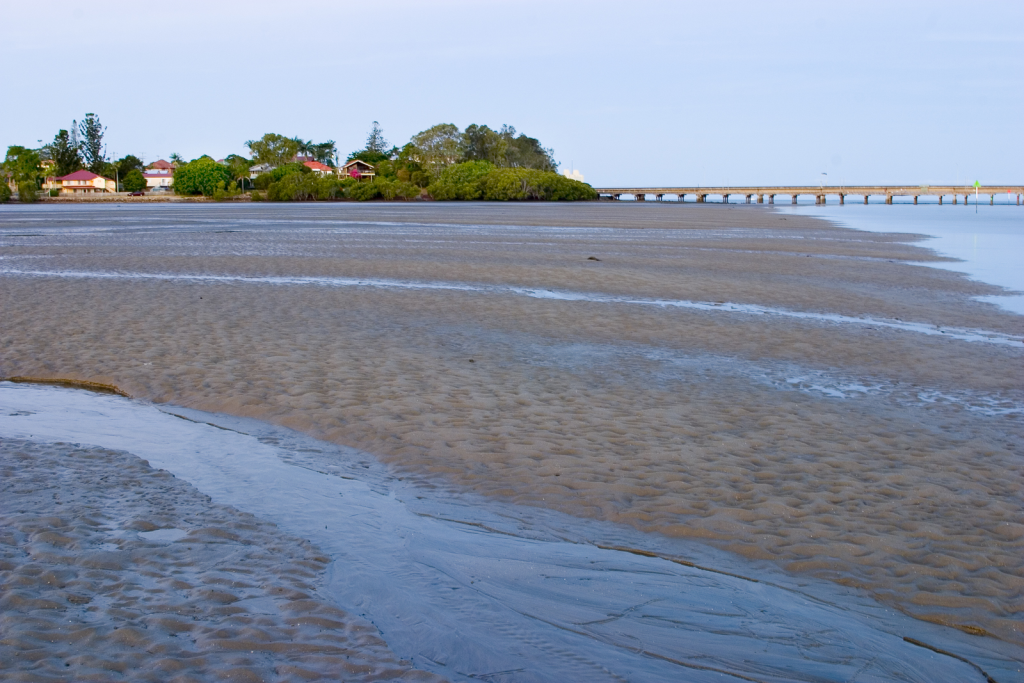
The brook’s relatively flat gradient in these lower suburban stretches means plastic particles slow down and settle into the sediment rather than flushing through.
Associate Professor Prasanna Egodawatta, from QUT’s School of Civil and Environmental Engineering and a co-researcher on the study, described highly urbanised creek catchments in South-East Queensland as major contributors to microplastic pollution in Moreton Bay.
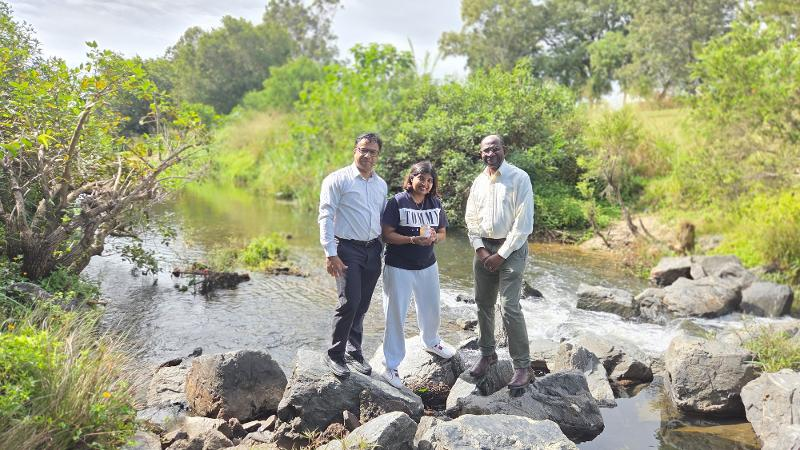
“This study is a first step towards quantifying land-based microplastic inputs to Moreton Bay via the stormwater pathway,” Professor Egodawatta said. “The hydrologic and hydraulic characteristics of a creek, shaped by its morphology and longitudinal profile, dictate microplastic transport processes within the system.”
Enoggera Creek’s comparatively lower plastic load came with an explanation of its own. The Enoggera Dam sits upstream, regulating flow and trapping a significant portion of the plastic load before it travels further downstream, effectively acting as an unintended filter.
A first step, not a final answer
The research team, which also included Professor Godwin Ayoko from QUT’s School of Chemistry and Physics and Professor Ashantha Goonetilleke from Civil and Environmental Engineering, framed the study as foundational groundwork rather than a complete picture.
Understanding how much plastic reaches Moreton Bay through the stormwater pathway is still being mapped, and this study provides the first comparative data set across three catchments with distinct land-use profiles.
For Nundah and Nudgee residents who swim, fish or simply walk along the brook’s final stretches, the research underlines the connection between what ends up in street drains kilometres away and what accumulates in the waterway that passes their suburb before reaching the bay.
The full study, Catchment characteristics and land-use influence on microplastics distribution in freshwater sediments, is available through the journal Environmental Pollution.
Published 25-May-2026


